
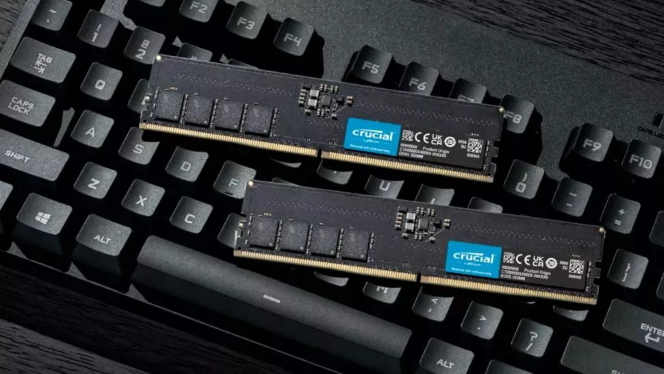
Soaring demand from artificial intelligence is pushing the RAM market to its limits, threatening to slow down smartphones and laptops while forcing consumers to pay more for less.
The growing pressure exerted by artificial intelligence companies on global supply chains is triggering an unprecedented memory crisis. One of its most tangible consequences could be a worrying step backward for smartphones and laptops alike. If current projections hold true, premium devices released around 2025 and 2026 may ship with less RAM than today’s models, without any corresponding drop in price.
Memory has become the key bottleneck. With price hikes becoming harder to justify, some manufacturers may opt to reduce RAM capacity instead. Over time, this could normalize lower configurations across mid-range and even high-end products. Industry analysts are already warning of a decline in smartphones equipped with 12 GB of RAM, combined with a renewed presence of 4 GB models at the low end. Even devices boasting 16 GB may not be immune to this trend.
What Will Happen to RAM in 2026?
If current plans move forward unchanged, 16 GB configurations – long associated with premium hardware – could become increasingly rare. And if they remain on the market, they are likely to be more expensive than today’s equivalents. The underlying message is clear: market conditions may be used to justify paying more for reduced specifications.
The laptop sector faces a similar outlook. While dropping below 8 GB remains difficult in the short term due to operating system requirements and processor pairings, 8 GB is poised to reclaim its place as the standard in the mid-range. High-end models are unlikely to escape either, bringing consumers closer to 16 GB systems than to machines offering 32 or 64 GB of RAM.
All of this translates into a more fragile user experience. Multitasking, demanding applications, and on-device AI features are all competing for limited memory. Reduced RAM availability leads to increased paging, stuttering, and performance hiccups in everyday use. Ultimately, consumers bear the cost: memory shortages have already driven prices up, and those increases are expected to trickle down to final products, even when specifications are scaled back.
Recent examples illustrate the issue clearly. In just a few weeks, the price of a DDR5 kit has jumped from around 120 euros to nearly 400 euros. This shift significantly alters the value proposition of building a PC, as total costs rise regardless of the chosen capacity. Unless an upgrade is urgent, waiting may be the wisest option, as buying during peak shortages often means inflated prices or reduced specs until supply stabilizes.
Source: 3djuegos















Leave a Reply