
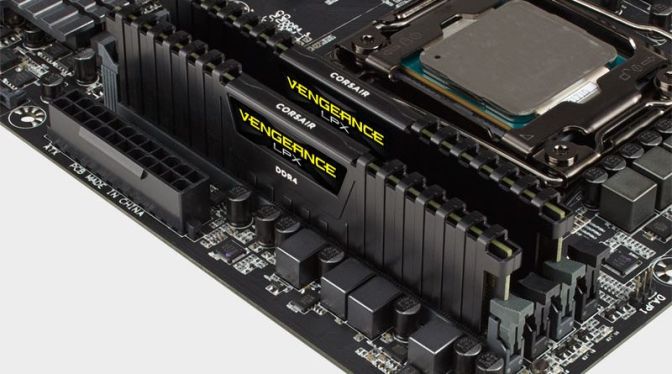
TECH NEWS – The situation has become so dire that the older memory standard is set to remain on the market longer than expected.
The DRAM supercycle has severely disrupted the global memory supply chain, to the point where manufacturers can no longer keep up with the demands of the AI industry. From general-purpose DRAM products to HBM, production lines are facing major bottlenecks, prompting companies such as Samsung, SK Hynix, and Micron to implement emergency measures.
According to DigiTimes, Samsung now plans to delay the end-of-life phase of DDR4 memory, as contract prices for modules have risen sharply. However, nearly all production will be redirected toward server-grade customers. Samsung Electronics will slow down DDR4 EOL production in the fourth quarter of 2025, followed by the signing of long-term supply agreements with selected customers in the first quarter of 2026. These contracts will feature fixed delivery terms that cannot be canceled or altered.
It appears that Samsung is offering non-cancellable and irrevocable contracts, allowing the South Korean tech giant to secure demand for both its DDR5 and DDR4 products without worrying about customers switching suppliers. More importantly, prices under these agreements are locked in based on current market conditions, meaning future fluctuations will not affect the quoted costs.
Interestingly, DDR4 memory had been gradually phased out just a few months ago, but customers are now competing for available supply. This surge in demand ultimately convinced Samsung to keep production running. During the memory shortage, DDR4 modules initially appeared to be a viable option for consumers, as they did not react as aggressively to price hikes.
That may soon change, as DDR4 could become increasingly unaffordable going forward. Interest in the aging standard is evident in the surprisingly strong market demand for AMD‘s AM4 platform, driven by PC users building new systems or upgrading existing ones.
The overall DRAM supply chain situation shows no signs of improvement, and manufacturers like Samsung appear unlikely to shift their focus back to the consumer market, given that the AI sector remains far more profitable.









![Stranded Deep 2: After Two Years, We Finally Get to See More of It! [VIDEO]](https://thegeek.games/wp-content/uploads/2026/09/Stranded-Deep-2-1280x720-1-302x180.jpg)
![Sony Is Following the Same Path Xbox Took in 2013! [VIDEO]](https://thegeek.games/wp-content/uploads/2026/09/Live-TV-on-PS5-1280x720-exact-302x180.png)




Leave a Reply