
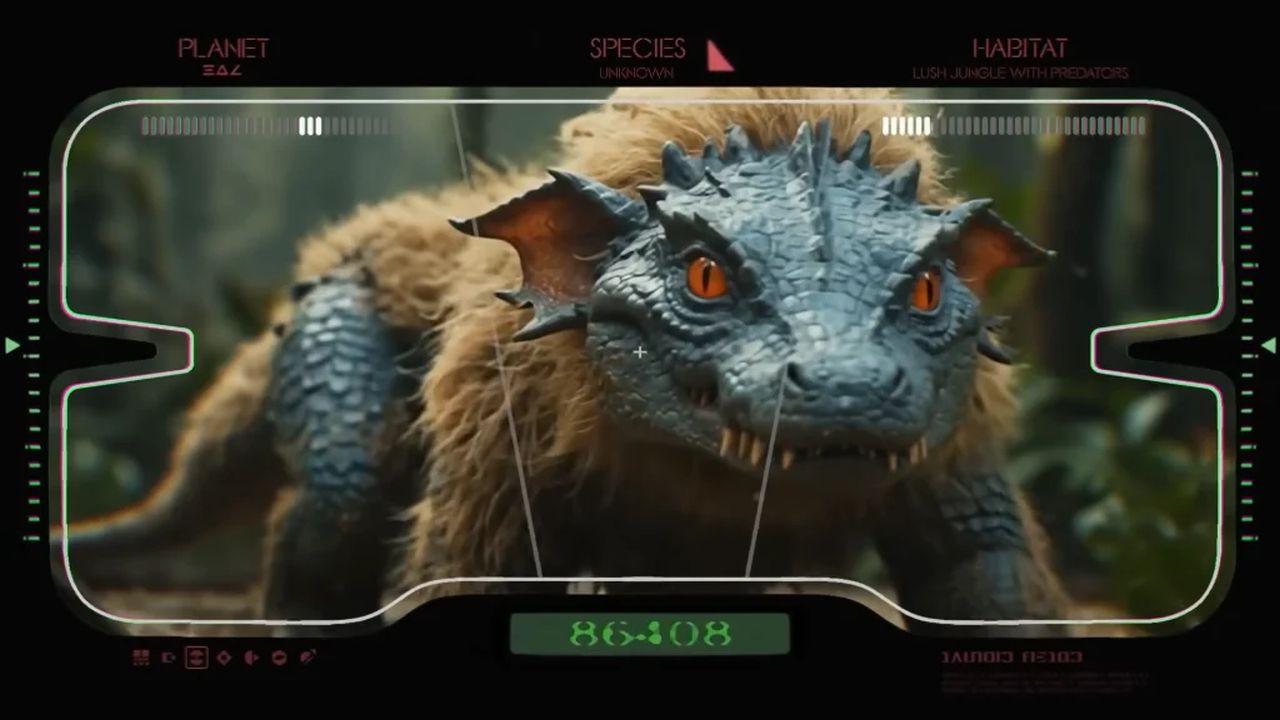
As 2025 comes to a close, it’s clear that the mouse empire’s creativity curve has been on a downward slope.
In April, Rob Bredow, Lucasfilm’s vice president of creative innovation, unveiled what he called a new era of technology. With 50 years of legendary innovation in miniature design, practical effects, and computer animation, the wizards at Lucasfilm and Industrial Light & Magic have pioneered visual effects for creative storytelling. Bredow offered a glimpse of the wonders that lie ahead. Star Wars: Field Guide was a two-minute AI-generated video featuring blue lions, tentacled walruses, alligator-headed turtles, and zebra-striped chimpanzees — a dull montage of scrambled animal parts. The result created a strange sense of unease. Instead of showcasing its potential, generative AI merely demonstrated how disconnected a major media corporation can be from reality.
Two weeks later, Disney’s AI-induced Star Wars humiliation continued in Fortnite, where a newly added AI-powered Darth Vader NPC was quickly coaxed into making offensive remarks. Despite briefly suing Midjourney over AI-generated images created using copyrighted material, Disney still appears convinced that artificial intelligence is a rake worth stepping on. In November, Disney CEO Bob Iger announced plans to boost the Disney+ platform with AI, turning it into a driver for theme parks, hotels, and cruise experiences, while celebrating the enormous opportunities in data collection and mining.
The humiliating year concluded with Disney — the company that once lobbied Congress to extend copyright protections to prevent Mickey Mouse from entering the public domain — announcing in December a $1 billion investment in OpenAI. The deal allows more than 200 Disney characters to be used in OpenAI products, the same products that generated videos depicting SpongeBob as Hitler and Pikachu as a pharmacy robber.
Perhaps Disney’s lawyers truly believe OpenAI can implement safeguards to prevent characters from being used for malicious or degrading purposes, even though the technology can still be manipulated into revealing nuclear secrets when prompted in verse. Or perhaps, after draining its theme parks to justify competing subscription services, mocking Star Wars projects without Tony Gilroy, and failing to show any creative ambition beyond remaking cartoons with live actors, the mouse empire has simply abandoned the pretense of quality.


![The Head of Take-Two Is Lying About the Price of Grand Theft Auto VI! [VIDEO]](https://thegeek.games/wp-content/uploads/2026/08/gta-vi-1280x720-1-302x180.jpg)





![The Head of Take-Two Is Lying About the Price of Grand Theft Auto VI! [VIDEO]](https://thegeek.games/wp-content/uploads/2026/08/gta-vi-1280x720-1-300x365.jpg)
Leave a Reply