
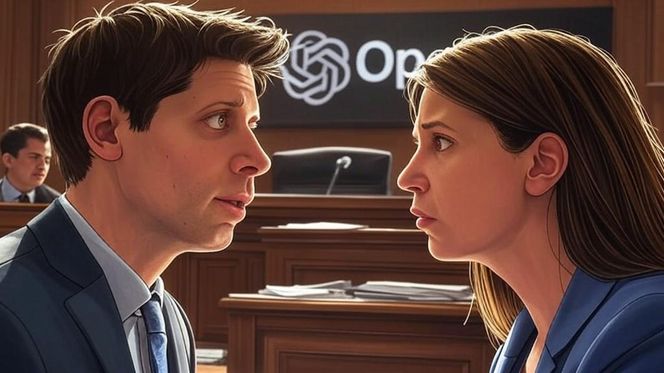
TECH NEWS – Caitlin Kalinowski is unhappy with the direction in which the Sam Altman-led company is currently heading.
Following the scandal involving OpenAI and the U.S. Department of Defense, a senior leader in the robotics division left the company and issued a warning to OpenAI on Twitter. Caitlin Kalinowski wrote: “I resigned from OpenAI. I care deeply about the robotics team and the work we built together. This wasn’t an easy decision. AI has an important role in national security. However, surveillance of Americans without judicial oversight and lethal autonomy without human authorization are issues that deserve more deliberation. This was about principle, not people. I have a deep respect for Sam and the team, and I’m proud of what we built together.”
Kalinowski’s full post can be read here:
I resigned from OpenAI. I care deeply about the Robotics team and the work we built together. This wasn’t an easy call. AI has an important role in national security. But surveillance of Americans without judicial oversight and lethal autonomy without human authorization are…
— Caitlin Kalinowski (@kalinowski007) March 7, 2026
Two weeks ago, Anthropic and the U.S. Department of Defense had a disagreement because Anthropic refused to remove the defense mechanisms from its AI tools that relate to use in weapons and mass surveillance. OpenAI then stepped in to close the deal. Sam Altman later clarified that they should not have rushed Friday’s announcement, and that the Department of Defense will not use OpenAI‘s tools in U.S. intelligence agencies such as the NSA. At the time, Altman said that the technology is not yet ready for many things and that the security trade-offs involved are not yet fully understood. They will address these issues gradually, in collaboration with the Department of Defense, using technical security measures and other methods.
The concern is not only that these tools could be used to monitor Americans, but also that the matter could have been put on the agenda without proper consideration. OpenAI initiated these discussions and then Altman walked back several of them. According to Kalinowski, the problem was that the decision was made rashly and without defined limits, and these issues are too important to rush into deals or announcements over. Kalinowski led the overall planning, recruitment, and operational rhythm of the rapidly growing robotics organization, created systems that turned ambiguous work into executable programs, and collaborated with the leadership team, engineers, and the finance, real estate, IT, and operations departments to support expansion in the physical world.
Kalinowski is taking some time before moving on to build something responsible in physical AI. Hopefully her public departure and strong words will encourage OpenAI to rethink its agreements with the U.S. government. OpenAI has relied on government support in recent years. Trump’s AI action plan aims to consolidate U.S. dominance in the field of AI, which would also benefit OpenAI, which has argued that the use of copyrighted content should be permitted, as otherwise it could lose its position to Chinese AI, and whose success would also serve the interests of the AI-friendly U.S. government. Although Altman said he does not expect government assistance if things go wrong, continued agreements with the U.S. government would certainly help cash flow.













Leave a Reply