
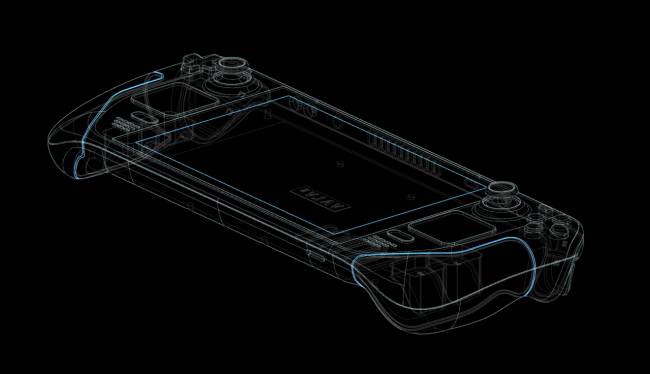
HANDHELD NEWS – The Steam Deck is starting to show its age, and if the latest industry chatter is accurate, Valve may be aiming for a 2028 launch for its successor – unless the ongoing RAM and NAND turmoil throws that plan off course.
According to AMD leaker Kepler_L2, writing on the NeoGAF forums, Valve was targeting 2028 for the Steam Deck 2, though the current RAM and NAND situation could still push that window back. That is not the same thing as an official announcement, of course, but it does line up neatly with the broader message Valve has been sending for a while now. The company is in no rush to ship a successor just for the sake of having one, and it clearly has no interest in releasing a half-step upgrade that looks new on paper but feels old the moment it lands.
One of the more interesting parts of the rumor is that the Steam Deck 2 would not be tied to a semi-custom SoC in the same way next-generation home consoles are expected to be. That means a delay would not necessarily be a disaster. In fact, it could give Valve room to adopt newer components and end up with a stronger handheld by the time it finally ships. That matters because the current Steam Deck is no longer the untouchable benchmark it once was. The market has moved on, and the competition is now faster, sharper, and far less polite.
That does not change the fact that the original Steam Deck was one of Valve’s rare hardware triumphs. After the messier legacy of the Steam Machine, this was the device that genuinely kicked open the modern handheld PC era, with companies like ASUS jumping in right behind it. Even so, the OLED model was only a careful refinement rather than a true next-generation leap. The faster memory and nicer screen helped, but it was still not the kind of upgrade that makes the older model instantly feel obsolete.
Valve’s more public comments point in exactly the same direction. Last year, Pierre-Loup Griffais made it clear that the company is not interested in a Steam Deck 2 that is merely 20, 30, or even 50 percent faster at the same battery life. The goal is something much more clearly defined as a generational jump, and in his view the current SoC landscape still is not there yet. In plain English, Valve does not want to patch over the gap. It wants to wait until it can land a machine that feels meaningfully new, even if the memory market chaos makes that harder and more expensive.
If 2028 really is the rough target, then the upside is obvious: by then, AMD’s next architectural steps could give Valve the kind of hardware foundation that finally delivers a genuine next-gen handheld PC. The downside is just as obvious. The longer the RAM and NAND crunch drags on, the harder it becomes to build that machine without wrecking the price point. So the real issue now is not just when the Steam Deck 2 arrives. It is whether Valve can arrive late, hit hard, and still preserve the value proposition that made the first Steam Deck matter in the first place.














Leave a Reply