
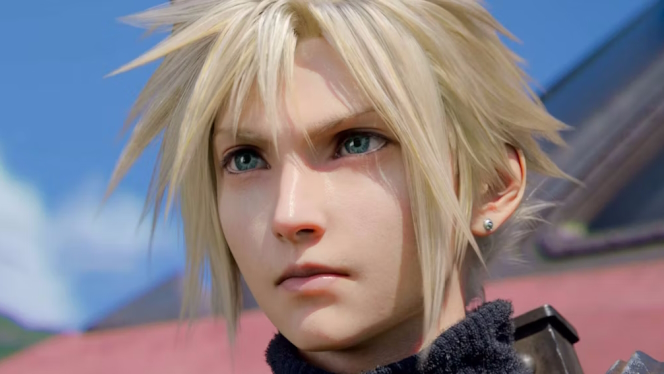
He works in two completely different genres. Which one does he prefer? He addressed this in an interview.
The debate over real-time versus turn-based combat is as endless as the debate over Coke versus Pepsi or Unreal Tournament versus Quake III Arena. Regardless of whether we prefer to defeat our opponents in free-flowing combat or through tactical moves, the director of Final Fantasy VII Rebirth believes he knows which is superior. In an interview with Game Informer, Naoki Hamaguchi said that RPGs and JRPGs are increasingly seen as genres of the past while action-focused games are becoming more mainstream.
He stated that games requiring players to assess the situation, think through their moves, and build upon the decisions they make are deeply universal and closely tied to the nature of human thought, so this doesn’t necessarily mean he prefers action games. Nevertheless, Hamaguchi believes the trend is shifting toward more reflexive, reactive experiences. He noted that younger players increasingly prefer real-time gaming experiences. They are a generation that has naturally grown accustomed to receiving immediate feedback on their inputs.
In light of this, Hamaguchi isn’t surprised at all that a game like Clair Obscur: Expedition 33 exists. It attempts to combine turn-based tactics and real-time reactions. Given this, it was perhaps inevitable that turn-based games incorporating real-time decision-making through action elements would take center stage. According to Hamaguchi, this reflects players’ desire for the excitement of strategy and the immediacy of reaction. This shift is evident in the Final Fantasy franchise; the newer games are notably more real-time than Clair Obscur. This doesn’t mean that future Final Fantasy games will follow this example. However, the change worked well in the first two parts of the Final Fantasy VII remake. According to Hamaguchi, when something works well, they think about how to carry these elements over to the next title.
This assertion seems convincing, and Hamaguchi likely has data to back it up. However, we aren’t sure if this is a new phenomenon. Turn-based combat in CRPGs began fading into the background with the release of Baldur’s Gate, a trend that continued during BioWare’s heyday and only returned with Larian’s rise. Turn-based combat is likely more popular than ever, given the massive fan base of games like Persona and the successful shift in Yakuza/Like a Dragon from real-time combat to turn-based tactics. In the West, we’ve recently seen Heroes of Might and Magic: Olden Era, which proves that there’s a demand for this style of RPG.
We wonder if this has more to do with expectations than demographics. Modern Final Fantasy games are big, flashy, AAA experiences generally associated with real-time action. In contrast, isometric or top-down RPGs tend to lean toward turn-based gameplay. We choose the approach that best suits the game, and we don’t want either to veer toward real-time, pauseable gameplay.
Source: PCGamer, Game Informer






![Moon Studios Has Postponed the Release of No Rest for the Wicked! [VIDEO]](https://thegeek.games/wp-content/uploads/2024/04/thegeek-no-rest-for-the-wicked-2024-302x180.jpg)
![Dragon’s Dogma II: Dark Arisen: Major Free Update Ahead of the DLC [VIDEO]](https://thegeek.games/wp-content/uploads/2026/09/dragons-dogma-dark-arisen-1280x720-2-302x180.jpg)


Leave a Reply