
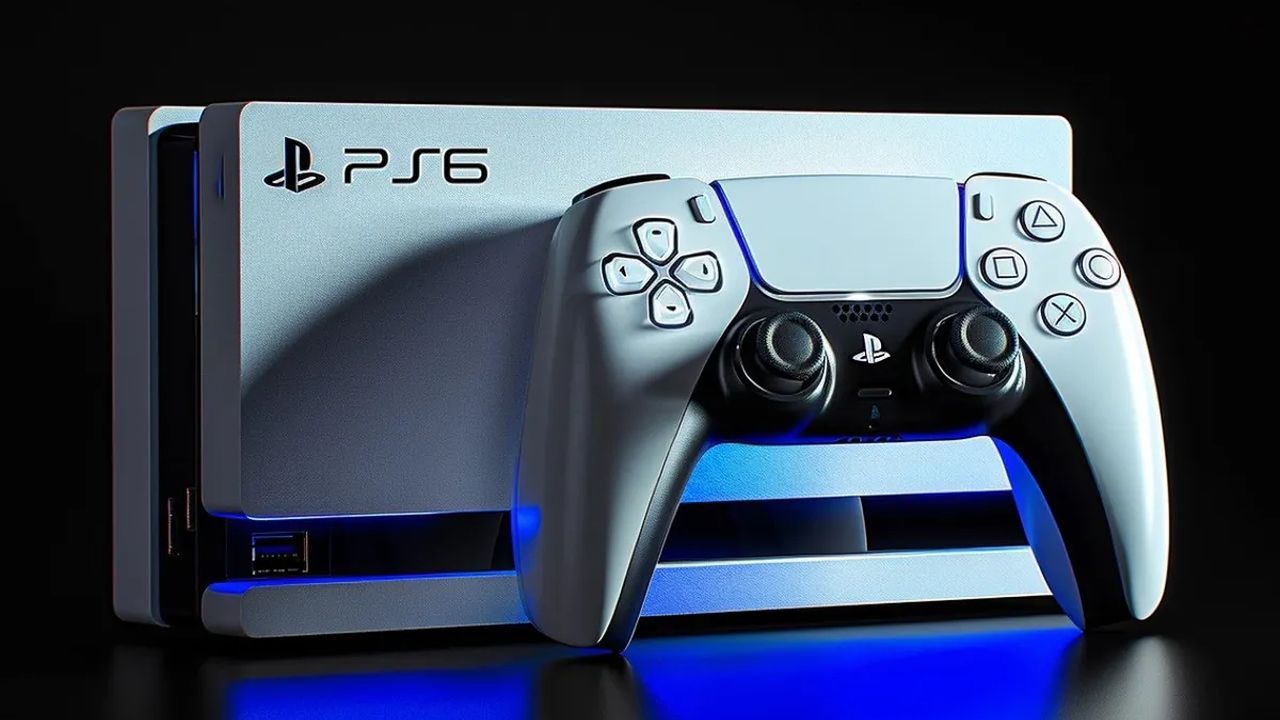
The much-cited claim that the PlayStation 6 could deliver ten times the ray tracing performance of the base PlayStation 5 sounds dramatic, but that does not translate into a tenfold increase in frame rates. According to KeplerL2, AMD’s documents are being widely misread, and the real in-game uplift is likely to be closer to three times that of the base PS5.
According to known leaker and insider KeplerL2, many of the current interpretations of the PlayStation 6‘s supposed ray tracing capabilities are simply getting ahead of themselves. The main issue is that some readers are treating a quoted 10x RT performance gain as if it automatically means 10x the FPS in real games, which is not how rendering workloads actually scale.
“I’ve explained this before but MLID (Moore’s Law is Dead) is misinterpreting AMD docs,” the leaker wrote on the NeoGAF forums. “He thinks if a slide says ‘Orion 10x RT perf vs Oberon’ it means you can look at PS5 running a game at 30 FPS, multiply that by 10x and compare with 5090 doing let’s say 200 FPS and conclude PS6 > 5090.”
To expand on that point, KeplerL2 used official Ubisoft data from Assassin’s Creed Shadows to illustrate how individual ray tracing-related tasks might scale between the base PlayStation 5 and a projected PlayStation 6.
| Task | PS5 Frame Time | PS6 Frame Time (Projected) |
|---|---|---|
| Screen Space Tracing | 0.54 ms | 0.18 ms |
| World Space Tracing | 1.38 ms | 0.14 ms |
| Lighting | 1.17 ms | 0.39 ms |
| Denoising | 1.91 ms | 0.64 ms |
| Total RT Tasks | 5.00 ms | 1.35 ms |
While there is no complete performance breakdown for every other part of the frame, the leaker notes that the base PS5 delivers a stable 30 FPS in the game’s RT mode, implying that roughly 25 ms are spent elsewhere. On PlayStation 6, that portion would land at around 8.33 ms. Ignoring the frame rate cap, that would put the total frametime at around 30 ms on PS5, or roughly 33.33 average FPS, and 9.68 ms on PS6, or about 103.3 average FPS. In practical terms, that makes the real frame rate uplift roughly 3.10x, not 10x.
KeplerL2 also stressed that the gap could become larger in games built around heavier ray tracing or path tracing workloads, but even then it would still fall well short of a tenfold increase in actual frame rates. The reason is straightforward: raster and compute tasks still account for a major portion of total frametime, so RT gains alone cannot scale the whole frame in a linear way.
Since the system has not been officially unveiled, this analysis should still be treated as an early estimate rather than a definitive preview of next-generation Sony hardware. Even so, the projected jump remains notable. Whether that alone will be enough to push current PlayStation 5 owners toward an upgrade is another question entirely, especially with gaming hardware continuing to get more expensive.
Source: Wccftech















Leave a Reply