
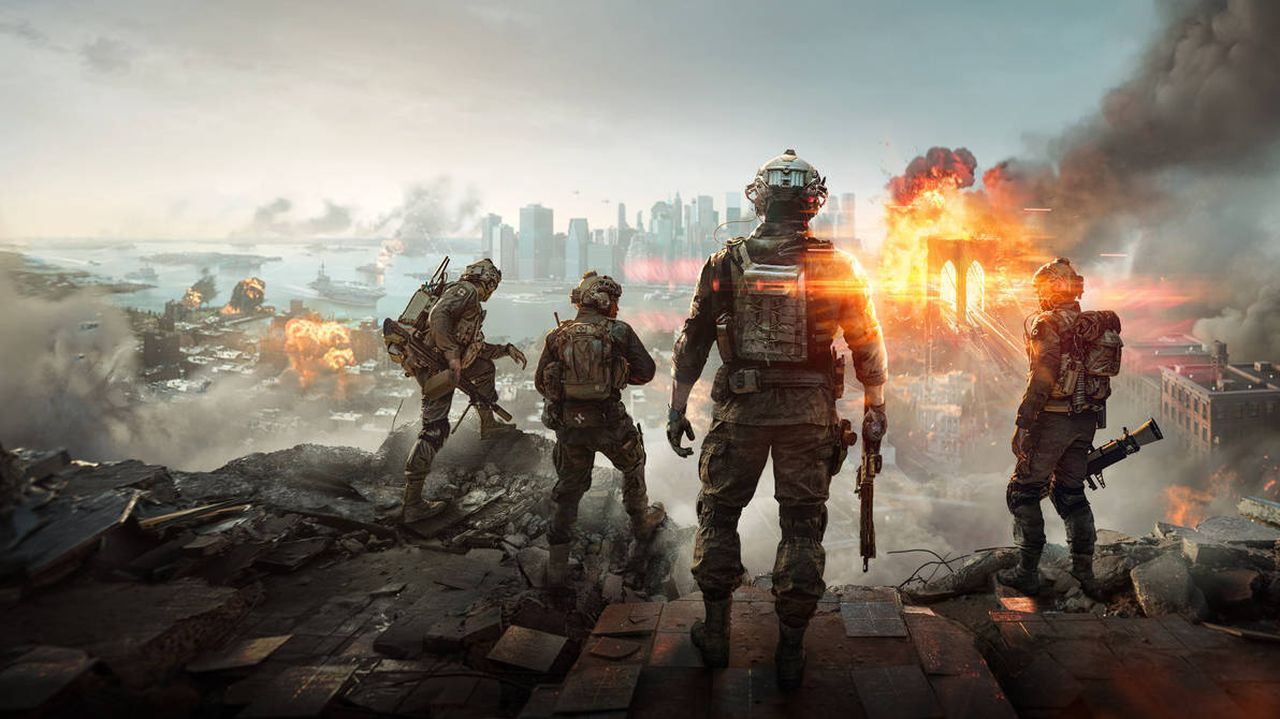
EA‘s monetization strategy around Battlefield 6 has moved past aggressive and into genuinely strange territory: players can now pre-order the Season 3 Battle Pass without knowing exactly what it contains. Ahead of its May 12 launch, the publisher is pushing early purchases with incentives, while the community is still waiting for the maps it was promised.
There is no real way to deny that Battlefield 6 had a massive launch. When it arrived seven months ago, it reached nearly 750,000 concurrent players on Steam, making it the best-selling shooter of 2025. Since then, however, the momentum has collapsed sharply: the game has lost more than 80% of its players, and the community is still waiting for the maps EA previously promised. Yet with every passing season, the publisher seems to find another way to stretch the game’s monetization model, and Season 3 may be its most brazen step yet.
Welcome to the age of pre-ordering a Battle Pass before anyone has actually shown you what is inside it. According to PC Gamer, players who log into Battlefield 6 right now are greeted with a notification inviting them to pre-purchase the Season 3 Battle Pass before it begins on May 12. The standard pass costs 1,100 Battlefield Coins, equivalent to €9.99, while BF Pro, the premium version, can only be bought with real money for €24.99. Naturally, the pitch does not come empty-handed: EA is offering several incentives to push players toward paying early. Those who pre-order the Season 3 Battle Pass immediately receive the Verdant weapon pack for the L110, a green version of the submachine gun with attachments. At the launch of the season, they also receive two instant level skips, while players who choose the early BF Pro option get an additional pack for the P18 pistol, two extra level skips, bonus XP at the start of the season, and the usual 25 level skips included with the premium plan.
Meanwhile, Battlefield is also looking beyond games and toward cinemas, with an Oscar-winning pair already involved in bringing a film based on the EA franchise to life. That alone shows how strongly the publisher still sees the series as a broader entertainment brand rather than just a current multiplayer shooter. The problem is that, while the brand is expanding on paper, the actual game is dealing with a very different reality: missing content, falling activity, and an increasingly heavy-handed payment structure. The strangest part is that this move has still managed to surprise the community. Pre-ordering a Battle Pass means paying upfront for content that has not even been properly shown yet. The incentives are designed precisely to soften that gap: players get some instant bonuses now, then receive the rest when the actual content launches on May 12. For anyone disappointed by this, there may at least be some consolation in the next season, which could reportedly bring back two familiar maps: Golmud Railroad and Grand Bazaar.
The Season 3 Battle Pass pre-order screen for Battlefield 6 currently presents two main options: the standard pass for 1,100 BF Coins, and the BF Pro package for €24.99. The difference is not just the price, but also the amount of immediate bonuses, level skips, and early-season advantages attached to the more expensive version. That kind of structure is not new in games-as-a-service, but selling it before fully revealing the actual contents pushes the model into another territory. This is not an isolated case. Other live-service games have already experimented with similar formulas to extract more money from their communities. In 2024, for example, Apex Legends triggered a major backlash when it announced a Battle Pass revamp that would split each season into two halves and introduce a more aggressive direct-payment model. The community protested for weeks, and Respawn eventually reversed course, restoring the option to buy the premium pass with 950 Apex Coins.
Blizzard also learned the hard way what happens when a publisher crosses a line. When Overwatch 2 confirmed in 2022 that its new heroes would be unlocked through the free Battle Pass track, the community responded with thousands of complaints. In a hero shooter, access to characters is not a minor cosmetic perk; it is a core part of the game. That makes it difficult to justify placing new heroes inside a system that prevents thousands of players from trying them on day one. Similar frustration has also surrounded The Sims 4, where EA angered players by announcing a new feature that many felt contradicted the company’s own rules. The response even produced a bitter “Rest in peace” mood among parts of the community, showing how quickly patience turns into mockery and anger when a publisher appears too openly focused on the wallet.
Then there is Call of Duty. Activision added BlackCell to its usual Battle Pass structure, a €29.99 premium bundle that cannot be purchased with in-game points and locks extra rewards behind an additional paywall every season. The community reaction was harsh: many players called the system anti-consumer and criticized the fact that some items were being reserved for another layer of payment in a game that already sells a Battle Pass and separate cosmetics. Activision had effectively turned the Call of Duty Battle Pass into a ladder with too many toll booths. Activision acknowledged the problem and listened to the complaints, but it did not introduce major changes, leaving the BlackCell structure largely intact. Battlefield 6, then, did not invent corporate greed in games-as-a-service, but it may be the first major example of a publisher asking players to pre-order a Battle Pass without revealing its contents beforehand. If this formula works and does not face strong resistance, it is not hard to imagine other games, including Fortnite, eventually adopting it as well.
Source: 3DJuegos













Leave a Reply