
The studio behind the game dug deep into the engine’s capabilities, and we saw that in a presentation as well.
During the State of Unreal presentation, Kate Rayner, technical director at The Coalition, outlined the studio’s technical goals for Gears of War: E-Day. The team reportedly rebuilt everything from scratch in order to achieve the desired authenticity in depicting a city thrown into chaos by the Locust horde’s devastating surprise attack against humanity. That may explain why development took so long, since its previous game, Gears 5, was released in September 2019.
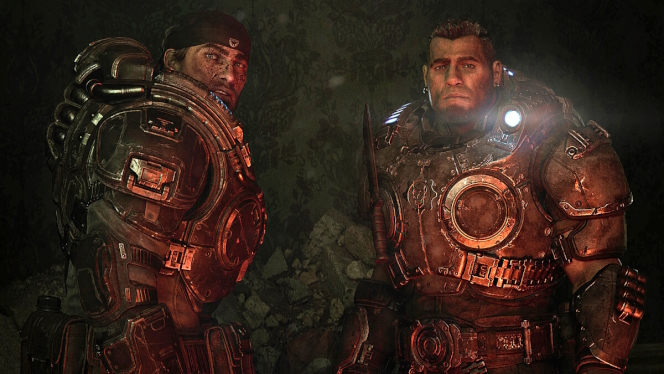
From a visual standpoint, given such a dark event in the Gears universe, The Coalition returned to a dark, raw visual style where light and shadow play a significant role. Thanks to Unreal Engine 5, the studio was able to take the visuals to a new level. Rayner showed a scene from the Pay ’n Save supermarket in downtown Kalona, the city where the protagonists, Marcus Fenix and Dom Santiago, are when the attack occurs. In previous games, such a space would have shown at most three shadow casters, but The Coalition is using the MegaLights feature introduced late last year with Unreal Engine 5.7 to add hundreds of light sources, each casting shadows at 60 FPS on Xbox Series X.
The store’s TV display walls contain animated area light sources whose lighting effects are driven by the video itself and rendered entirely on the GPU. Each TV casts eerie and unsettling dynamic shadows across the scene with soft penumbrae. All of these freezers contain multiple area lights to simulate the realistic lighting effect of a grocery store’s frozen-food section. Rayner then enabled the debug view, highlighting the hundreds of lights in the scene, from the tiny lights on Marcus’s armor to the large spotlights on the ceiling. Rayner added that without MegaLights, it would have been impossible to create a similar effect on current-gen hardware.
The environments of Gears of War: E-Day were created with the destructible elements of Geometry Collection; these dynamic objects correctly cast and receive light, so destruction remains visually authentic in the way we would expect in the real world. During combat, bullets create dynamic fracture points in glass, and when it shatters, all pieces collide with the environment using hardware ray-traced collisions accompanied by physically accurate translucent reflections. Rayner also revealed that Gears of War: E-Day is the first game in the series to render dynamic shadows on every single muzzle flash. Across the entire city of Kalona, players will encounter tens of thousands of shadow-casting light sources.
According to the developer, achieving E-Day with this level of visual fidelity was not easy, but hardware ray-traced Lumen made iteration much faster than with the previous precomputed lighting. With MegaLights, lighting artists are no longer limited by the number of real-time shadow casters, so they can freely light the game with complexity similar to the real world. Rayner emphasized that Nanite’s micropolygon rendering increases the geometric detail of the game’s assets by a factor of 100.
Gears of War: E-Day will be released on October 6 for Xbox Series and PC. It will also be available through Xbox Game Pass.
Source: WCCFTech














Leave a Reply