
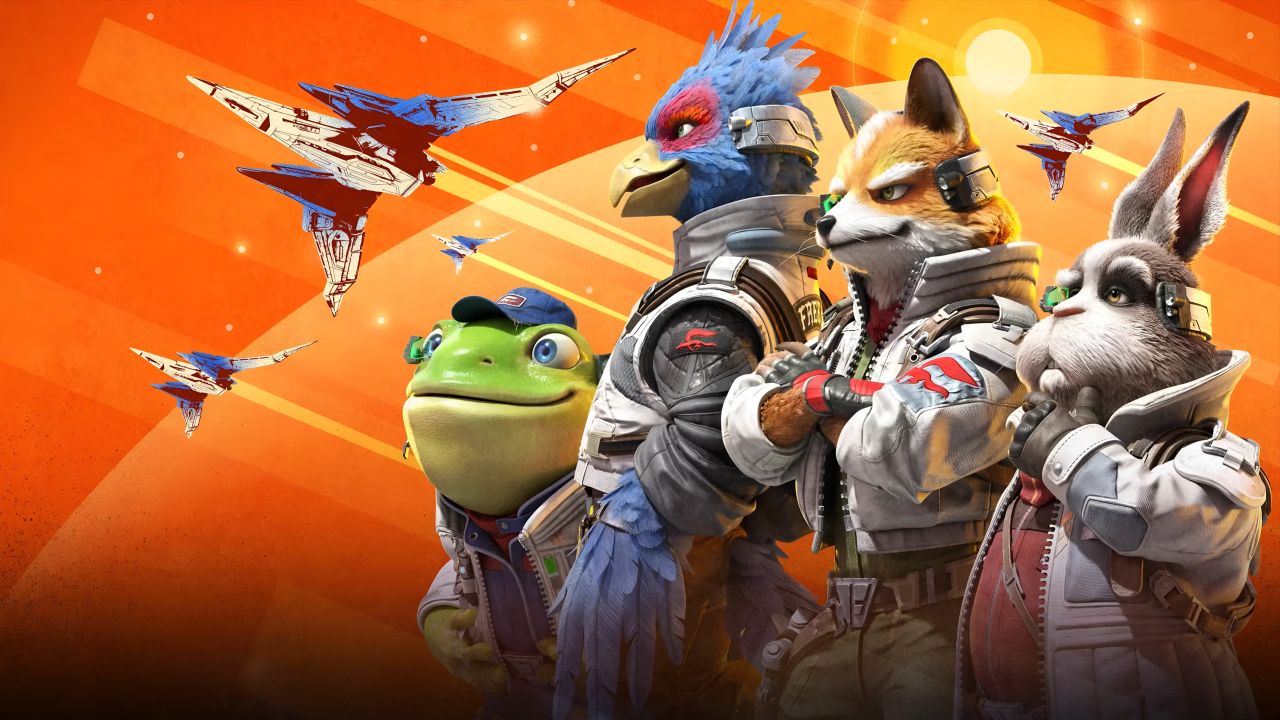
REVIEW – Nintendo has spent three decades proving that Fox McCloud’s greatest mission is still 1997’s Star Fox 64, and this time it finally looks the way it always did in our heads. The Switch 2 version of Star Fox is a beautiful, tightly designed, joyfully replayable remake with enough smart additions to prove it understands exactly why the original worked. The only problem is that while this fox flies brilliantly again, Nintendo has once more polished the old mission instead of finally giving him a new one.
Few game series have a harder time escaping their own past than Star Fox. The franchise began as a technical marvel powered by the Super FX chip in 1993, while 1997’s Star Fox 64 showed how an arcade space shooter could be fast, funny, quotable, and endlessly replayable at the same time. Since then, there has been the strange Zelda-like detour of Star Fox Adventures, the identity crisis of Assault, the stylus-driven strategy of Command, and finally the double-screen experiment of Star Fox Zero, whose controls probably caused more players to crash into their own furniture than Andross ever managed.
Now there is a Switch 2 remake simply called Star Fox, which is, on paper, already the second remake of that legendary Nintendo 64 game. At first, that can sound spectacularly lazy, and part of it is: Nintendo still refuses to genuinely move Fox, Falco, Slippy, and Peppy forward. But the finished game is assembled with such confidence, care, and visual flair that after roughly five minutes, you are once again ready to tell Peppy that yes, you know how to do a barrel roll, old man, please stop reminding everyone.
Velan Studios has not rewritten Star Fox 64. It has found the rhythm inside it that never disappeared over three decades. The stages remain short, densely choreographed bursts of action where you must decide within seconds whether the next gold ring, enemy squadron, or secret route matters most. The Arwing controls instantly feel right, barrel rolls are smooth, homing shots are satisfying, and landing a final missile on a boss just before disaster still provides the same rush as realising, as a kid, that the game is not cheating. It is simply faster than you are.

The Fox Flies the Same Route, but We Finally See Why
The visuals are the remake’s most powerful weapon. It is not merely that old polygons have been replaced with detailed models, lighting, and modern textures, because any publisher can achieve that with enough money and an expensive marketing phrase. This new Star Fox understands the mood of its locations. Aquas feels claustrophobic and alien beneath the waves, Solar’s lava flows create a proper sense of danger, and the sunlight breaking through Sector X’s ship graveyard is so beautiful that you almost feel guilty before blowing up half the screen a moment later.
The character models may divide players at first. Fox, Falco, and the rest are not simply the clean old Nintendo 64 figures with more polygons, but more textured, puppet-like, almost tangible versions of themselves. Falco initially looks like he is about to start a fight in an intergalactic country club, while Fox appears to have escaped from an expensive stop-motion production, but the designs gain character after a few missions. The new cutscenes help enormously, because they no longer exist only to display the name of the next planet. They finally give the team some personality between missions.
Falco remains Falco, which means he is the teammate whose favourite hobby is asking for help, getting annoyed when it arrives late, and then claiming he could have handled everything alone anyway. It is irritating, but in the exact way it needs to be irritating, because something would be missing from Lylat without him. The voice work is less consistent. The new recordings are clean and professional, but the old strangely delivered lines have been burned so deeply into the minds of returning players that it is difficult not to miss their specific, awkward energy.
The music, by contrast, is exceptional. The old themes receive the kind of re-orchestration every major remake deserves: familiar, emotional, and never reduced to a dusty MIDI file in a more expensive jacket. Choral additions make boss encounters feel huge, serious scenes carry real weight, and the finale has enough emotional force to silence even the players who spent the entire game restarting Corneria because their ideal score did not happen.

Nostalgia Works Best When It Calls You Back Into the Cockpit
Star Fox 64 was always short, but that never meant it lacked content. Different routes, hidden requirements, medals, and score chasing already encouraged repeat play in 1997. The remake wisely avoids inflating that structure into a twenty-hour map-based service game. Instead, it makes the route requirements much clearer and gives players smart reasons to return to familiar levels.
Challenge Mode is one of the strongest additions. You can jump straight back into Macbeth with specific goals, enemy requirements, trickier routes, or timed objectives, and the result makes the stage work like an old Tony Hawk’s Pro Skater checklist inside a space shooter. The missions are short, so there is no empty downtime, while the objectives vary enough to avoid feeling like mindless box-ticking. One run fits neatly into a short break, then suddenly you are on your third attempt because two targets are still unfinished.
The Holoviewer is more than a fan encyclopedia hidden in the menus. It contains unlockable entries about allies, enemies, planets, and other details, finally adding some flesh and blood to a universe that the series has spent decades merely hinting at. Bill Grey, for example, used to have roughly as much narrative weight as the fact that he was once Fox’s friend. Now he gets actual background, and you race through the text as though Nintendo accidentally handed you classified Lylat documents.
The new intermission scenes also do more for the team than several earlier entries in the series combined. This does not suddenly become a deep, layered science-fiction drama, and no one tries to reinvent Andross through a three-hour family trauma plot, but the group dynamic finally gets room to breathe. Different routes also offer variations, which means a second or third playthrough has value beyond chasing a higher score, even if nobody should expect branching so radical that Fox McCloud suddenly moves into a role-playing game.
Lylat Looks Beautiful, but It Is Time for New Coordinates
The multiplayer offering is pleasantly more substantial than the kind of compulsory extra feature usually attached to a remake. There is local co-op, where one player pilots while the other handles shooting and targeting, and it is exactly as chaotic as couch-based Star Fox should be. GameShare also fits the game well, because not everyone needs a separate copy for a group to tackle a few missions together, which is an especially sensible solution for such a short, energetic game.
The online Battle Mode is no longer just a brief laser-filled shouting match. Its 4v4 battles take inspiration from familiar shooter modes, including territory control and capture-the-flag-style objectives, while Arwing movement, terrain, and targeting provide their own distinctive flavour. The selection is not endless, and the mode would benefit from more maps and a stronger long-term progression system, but it works very well as a reason not to immediately send the box back to the space hangar after finishing the campaign.
The face-tracked GameChat avatars enter Nintendo’s uniquely strange sense of humour. Leon the chameleon, or other characters, moves their digital mouth when players yell into the camera about who shot their own teammate again. It is completely unnecessary, slightly ridiculous, and exactly because of that, charming. It makes you want to press the Switch 2 C button about as much as a healthy person genuinely wants to begin a video call during a family lunch, but when it works, it is genuinely funny.
For all of its new modes, challenges, cutscenes, and encyclopedia entries, though, Star Fox ultimately returns to the same place where it began. This is the definitive, beautiful, smart, and highly entertaining version of Star Fox 64, but it is not the bold new Star Fox that the franchise has needed for years. Nintendo has once again proved that it understands why we loved Fox McCloud. It still has not dared to tell us what he should do next.
And honestly, it remains difficult to be angry about that. When the refreshed score starts, Arwing lasers cast shadows across the hull of a giant carrier, and enemies keep talking confidently right up until they explode, Star Fox does exactly what it does best. It places an overgrown child inside a spacecraft, gives them a few lasers, and convinces them that the next barrel roll might save the entire galaxy.
-Gergely Herpai “BadSector”-
Pros:
+ Spectacular, wonderfully responsive, and still irresistible arcade action.
+ Challenge Mode, the Holoviewer, and new cutscenes expand the original intelligently.
+ Music, multiplayer modes, and GameShare add real replay value.
Cons:
– For all of its strengths, it still tells the story of Star Fox 64 again.
– The campaign is short, while online modes need more maps and progression options.
– The new voice work is not always stronger than the old, permanently memorable lines.
Developer: Velan Studios
Publisher: Nintendo
Genre: on-rails action shooter
Release date: June 25, 2026, Nintendo Switch 2
Star Fox
Gameplay - 8.6
Graphics - 8.8
Story - 7.2
Music/audio - 8.4
Ambience - 8.5
8.3
EXCELLENT
Star Fox is the fullest, prettiest, and most entertaining version of Star Fox 64, modernising exactly enough to make its classic missions feel fresh again. Its short campaign is balanced by excellent stages, alternate routes, Challenge Mode, an archive of lore, and surprisingly strong multiplayer options. Fox McCloud has finally received a worthy comeback, now Nintendo only needs to write him a genuinely new mission.




![The Wolf Among Us Remastered: Bigby Goes Noir! [VIDEO]](https://thegeek.games/wp-content/uploads/2026/08/theGeek-08-wolf-among-us-remastered-1280x720-1-302x180.jpg)

![Greak 2: Alliance of the Storms: A Hand-Drawn Metroidvania Set in Synoraz [VIDEO]](https://thegeek.games/wp-content/uploads/2026/08/theGeek-02-greak-2-1280x720-1-302x180.jpg)
![Graveyard Keeper II: TinyBuild Joins the September Rush [VIDEO]](https://thegeek.games/wp-content/uploads/2026/08/theGeek-01-graveyard-keeper-ii-1280x720-1-302x180.jpg)



Leave a Reply