When a game’s development goes this badly because of the near-idiotic direction set by executives in suits, things are clearly not in a good place.
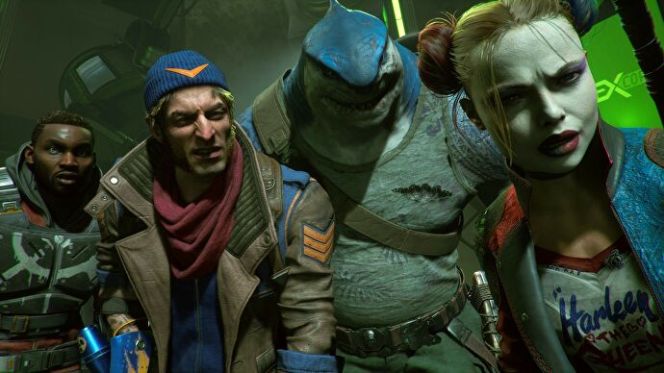
Suicide Squad: Kill the Justice League can be described in one word: meh. Parts of it were entertaining, though it quickly lost its charm, we could not connect with the characters or their uneven humor, and its worst quality was undoubtedly how desperately it wanted us to keep playing.
It was painfully obvious that the game had been pushed by a group of executives with the single aim of making it replayable and extremely profitable. Unsurprisingly, Rocksteady developers later confirmed this after the dust settled following release, and it emerged that the half-finished game had cost Warner $200 million.
Axel Rydby and Johnny Armstrong, two developers who worked on Suicide Squad, told this story again in a recent Bloomberg interview, and the development process truly sounds like hell. Repeated delays increased costs and the pressure to make the game profitable.
“When we first started on it, there was definitely a feeling, arrogance is not the right word, but a kind of confidence. We were coming off hit after hit. Of course we would be able to do it.
It was a major culture shift. We put in all these hours, but it did not feel like things were getting tangibly better. Everyone felt like they were running just to stand still. I felt like all my energy was draining away.
I said that I could not do this again. I did not know if I was done with the industry, but I was done. I could feel myself falling apart.” Armstrong said.
“That was when I started feeling like I was not making games anymore. I was just following a spreadsheet, some elusive marketing-analysis spreadsheet that nobody could clearly explain.
I felt like this was not the games industry I wanted to work in. Six months is not enough time to make any kind of fundamental change. It is only enough to fix as many bugs as possible and see whether a few minor feature tweaks can be squeezed in here and there.
I think that, as an industry, we are severely losing our way. It used to be about passion projects that you loved and hoped other people would love too. When they did, it was an incredible feeling. That became less and less common. Instead, the motto became: let us hope it sells. Let us hope it makes money.” Rydby explained.
The stress was made worse by the ridiculous deadlines given to developers. At the same time, they were expected to fix everything within that period and answer questions such as how many players a feature could reach, or how a design could be turned into something people would play repeatedly.
Those questions came from management. The unrealistic expectations, along with the pressure to create an endless money machine disguised as a live-service game, became too great a burden.
Armstrong and Rydby eventually left Rocksteady and joined forces to create Secret of Circadia, a deckbuilding RPG. Its Kickstarter campaign recently launched with a goal of raising $11,404 for the game’s development.
The worst part of the whole situation, however, is that the executives probably have not learned from their mistakes. And they will not, unless the games-industry crash of 1983 happens again.
Source: PC Gamer, Bloomberg, Kickstarter