
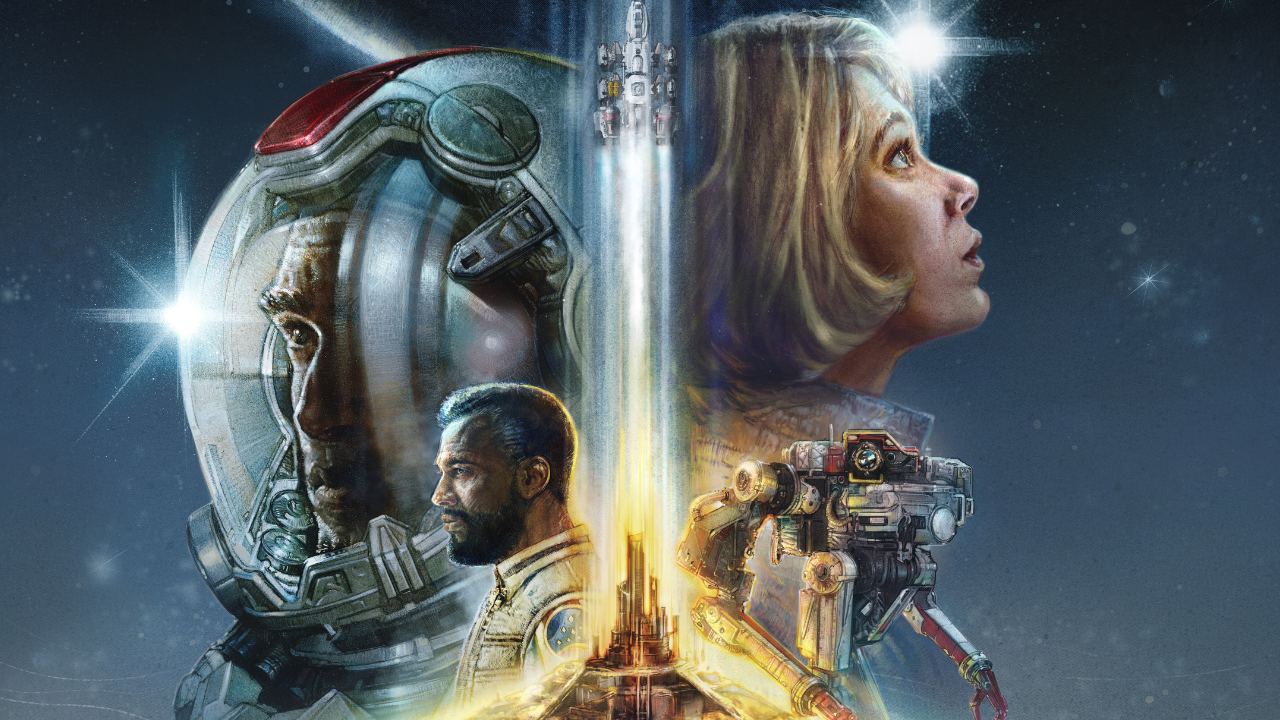
Internal shake-ups and fragmented development kept Starfield from truly coming together, according to a Skyrim lead designer. Bethesda’s space RPG remains controversial not for what it is, but for what it could have been. Now, a studio veteran has laid out why this RPG doesn’t measure up to Fallout 4 or Skyrim.
Starfield still sparks debate, and not because people can’t decide whether it’s good or bad, but because it feels like a game that could have been so much more. Bethesda’s space RPG split players right down the middle: a large number of users genuinely enjoyed it, yet several elements ended up souring the experience. And while rumors keep swirling about Bethesda working on Starfield 2.0 and an upcoming expansion, one veteran has now explained why this RPG never hits the heights of Fallout 4 or Skyrim.
Starfield Was A Victim Of Bureaucracy
Kurt Kuhlmann, former lead co-designer on Skyrim, spoke to PC Gamer and pointed to what he considers the space RPG’s core issue, boiling it down to a blunt verdict: “it never quite gelled as a game.” In his view, it could have shipped in September 2023 – the opposite of what many players argue, since plenty believe Starfield should have been delayed. Kuhlmann left Bethesda in 2023, meaning he was involved through most of the project’s development.
Kuhlmann also described how Bethesda’s internal workflow changed over the years. During The Elder Scrolls V: Skyrim, lead creatives were deeply embedded in the process, working hands-on with quest designers. But as the company expanded, the structure grew increasingly complicated: different department heads were spread across multiple studios, and the number of producers ballooned. The result was less direct decision-making, which in turn caused communication problems.
To solve a problem or push through a decision, approval was needed from multiple people across different studios – and often the answers didn’t even align, forcing Todd Howard to step in. That kind of bureaucratic pipeline, Kuhlmann argues, is the price you pay when you’re running massive development teams. And according to him, that working model impacted Starfield at the most fundamental level, affecting both the final result and the game’s pacing, leaving players with the sense that key pillars of the experience had never truly been locked down.
A Skyrim veteran points out Starfield’s biggest problem: “It never really came together as a game.”
“I don’t know if they were wrong and I was right, but I didn’t like it; maybe when you have so many people, your job can no longer be just creating content if you’re also managing the scope of the project. There were people who would talk to the leaders in one studio and get one answer, and people who would talk to the bosses in another team and maybe get a different answer.” The belief is that Starfield became a casualty of Bethesda’s ambition, and that building this space RPG was 50% “completely new.”
Creating a new IP is inherently risky, because you’re moving far away from the foundations of your previous games. The space setting, space combat, procedurally generated planets, and several other major components were built from scratch. That, in turn, meant hiring a large wave of new developers. “How do you manage a team that size and get everyone on the same page? We don’t have institutional knowledge of how to integrate all of that into the missions,” Kuhlmann said.
In other words, Starfield was shaped by communication issues and layers of red tape. When it came to mission creation, Kuhlmann notes that designers often added elements only to see them changed later in development. “I think that made the game feel less cohesive, because there were a lot of pieces that, when we started and for a long time afterward, were up in the air, being remade, or constantly changing.”
Beyond that, Starfield also had to contend with the shadow of Fallout 76, a launch that went about as badly as possible. “We couldn’t repeat that. We can’t launch a game with the problems Fallout 76 had at launch, and that was one of the reasons Starfield had much more development time.” Even so, Kuhlmann considers it a solid game – just nowhere near Bethesda’s best. “We tried to take a huge leap into a new genre with all these new systems and mechanics.”
“I don’t think you should expect that, by entering the space combat genre, you’re going to be better or as good. It wasn’t embarrassing. Some things were done outstandingly.” Overall, Starfield failed to become widely loved due to a mix of internal factors: a growing bureaucracy that diluted decision-making and created persistent communication issues; a lack of experience in tackling a new IP and building brand-new systems from scratch; and ambition so aggressive that major pillars had to be repeatedly reworked during development. Maybe in a few months we’ll see a Starfield 2.0 along with a PS5 release and a new expansion – and that would be the kind of redemption story Bethesda could use.














Leave a Reply