
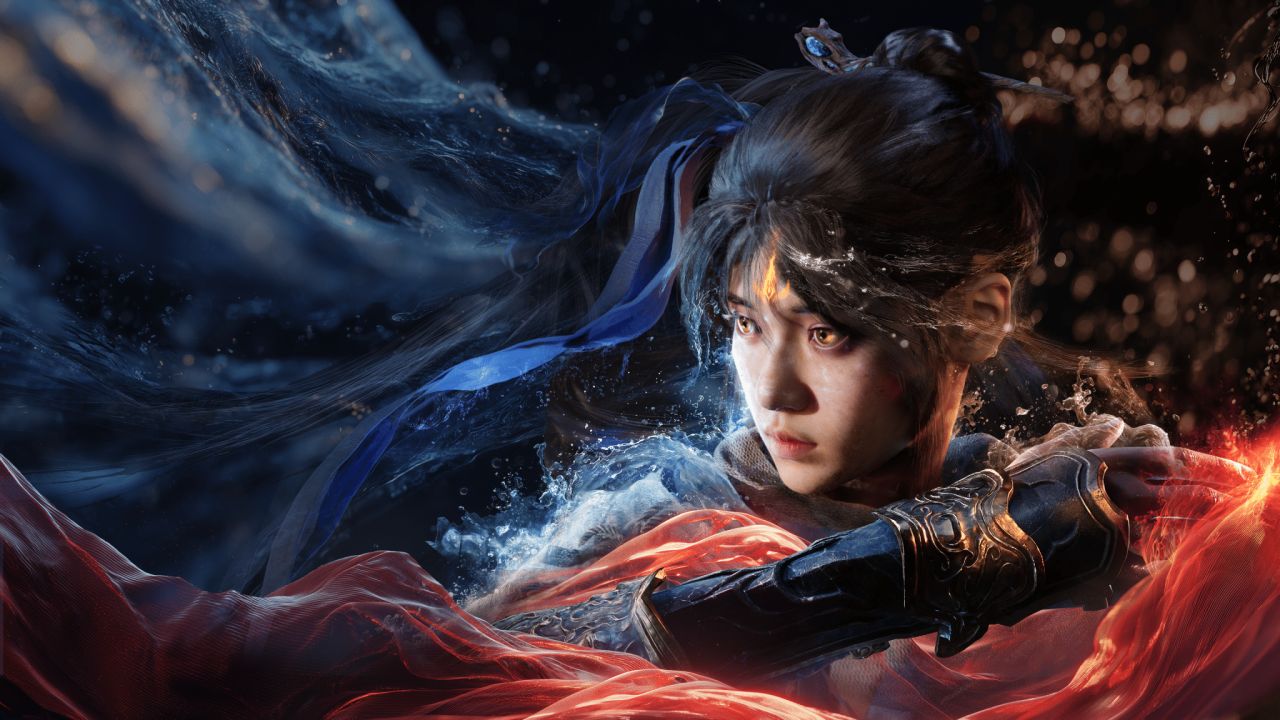
PREVIEW – GeniGods: Nezha is positioning itself as a Chinese mythology-infused action game with unmistakable God of War vibes. The goal is clearly to follow in Black Myth: Wukong‘s footsteps and land an industry-sized breakthrough of its own. China’s game scene keeps signaling it could deliver some of the next few years’ biggest global surprises – and GeniGods: Nezha wants to be part of that conversation.
After the success stories of Black Myth: Wukong and Where Winds Meet, and with likely contenders like Phantom Blade Zero looming on the horizon, it’s hard to argue that China’s video game industry is becoming a serious force worldwide. And this isn’t a brand-new phenomenon, either. China has long been home to well-regarded teams with deep histories – studios that are only now truly breaking into the international spotlight.
A good example is Genigod Lab, a studio that has spent more than 20 years on technology development and maintains offices in Hong Kong, Suzhou, Bellevue, and Beijing. The name might not ring a bell at first, but they co-developed the My Hero Academia mobile game with Tencent, with Sony serving as publisher – a major hit built on a license at the height of its popularity. That’s also just one title among more than 70 projects they’ve shipped, and their next would-be leap forward is GeniGods: Nezha.
The project’s technical and creative direction is led by co-founders Erdi Yao and Young Lui. The hook for GeniGods: Nezha is easy to like, and it fits neatly into today’s action-game wave: a Chinese mythology take on the God of War formula, where you control a deity tied to the birth of humanity. In other words, it’s a video game spin on a Chinese creation story – largely uncharted territory for games so far, and a space with a lot of potential.
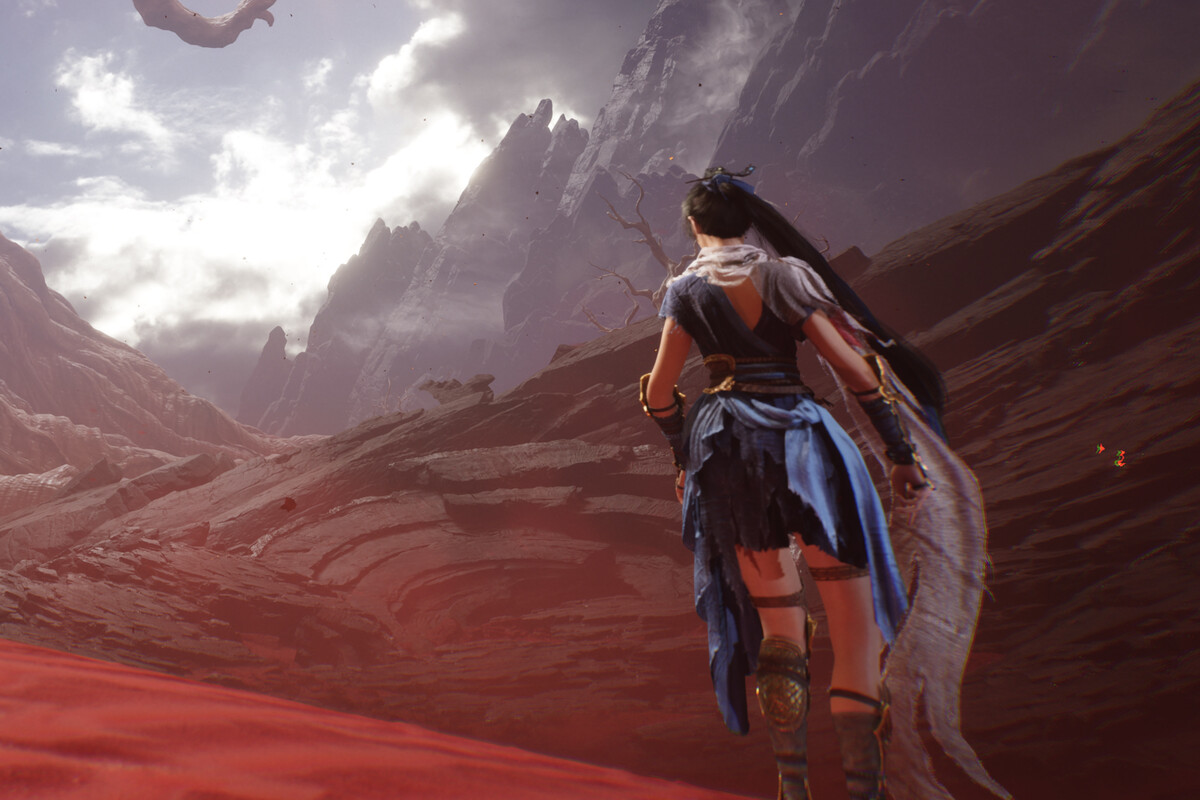
When the boss gets tired, that’s when the real work starts
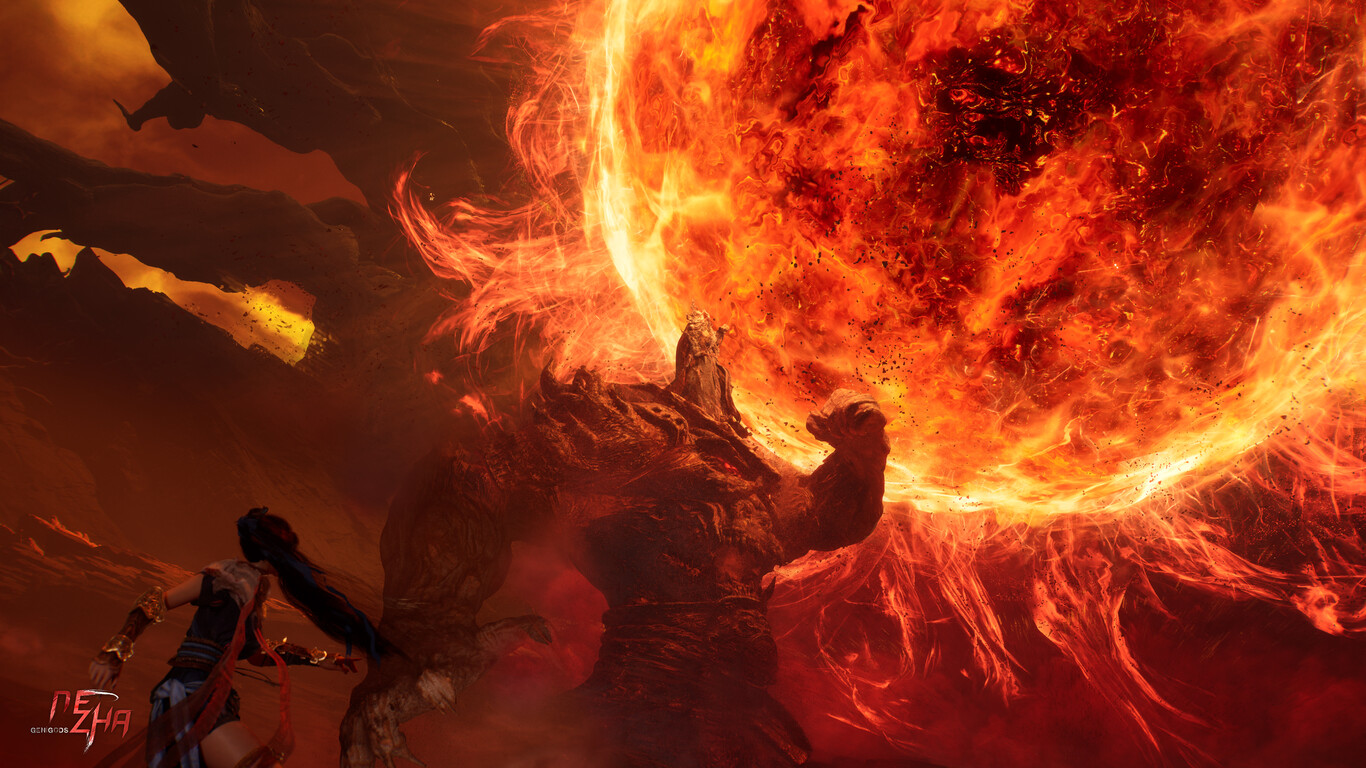
What we’ve seen of the game so far revolves around a boss fight. The protagonist, Nezha, has a goddess-like look and uses bracers and leg guards to deflect incoming attacks. The pace is clearly high, and perfect dodges and blocks are not optional flair – they’re the point. The enemy’s stamina bar drains when you successfully deflect strikes, but also when you keep a steady rhythm of punches and kicks. There are also some intriguing elemental interactions in the mix. When the boss hurls sand whirlwinds at Nezha, she answers with a whirlwind of her own, generated with a fan.
The developers describe GeniGods: Nezha as a blend of Stellar Blade and Devil May Cry, with God of War 3 as the primary north star.
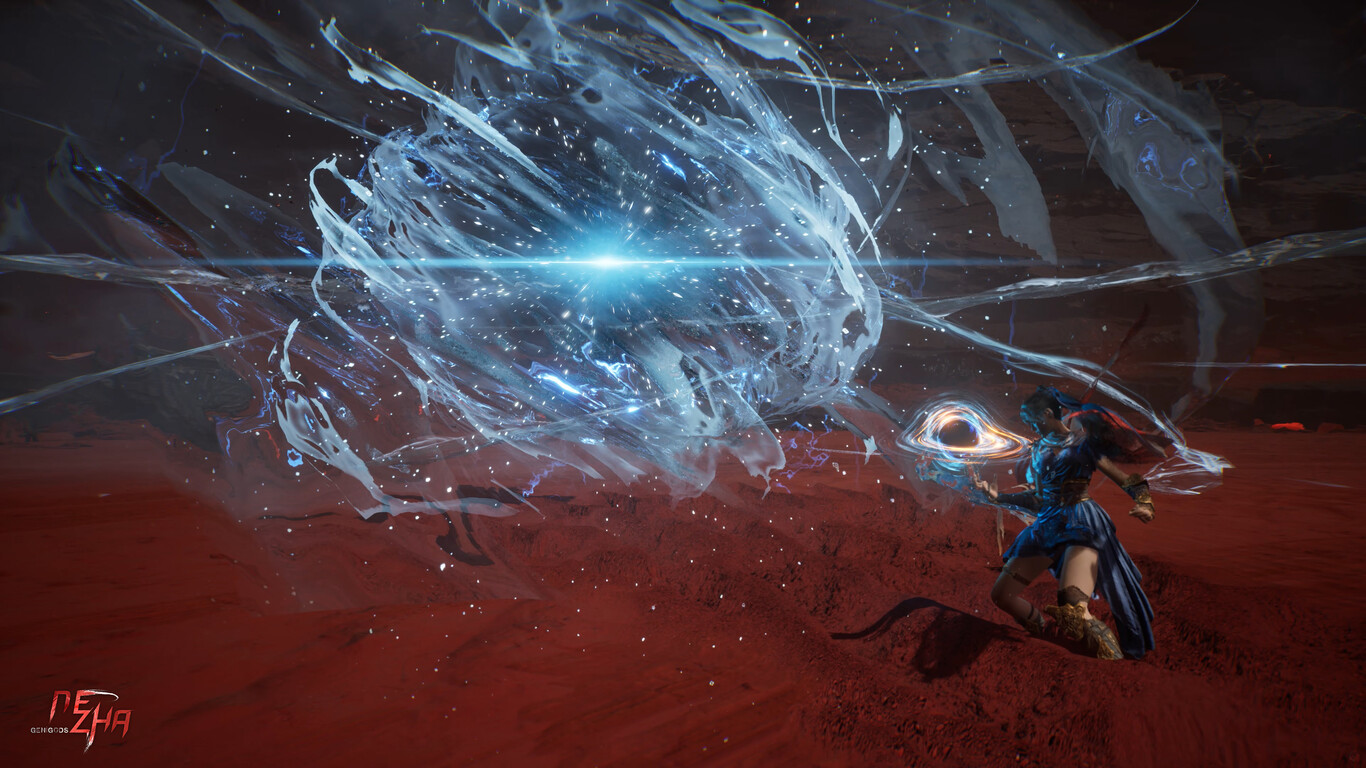
Once Nezha breaks the boss’s defense gauge, she snaps into an aerial combo chain and takes the fight into the sky with a suite of water magic: watery arms, pressure waves, teleportation, orbs. Wind techniques and a fire seal also show up along the way. The sequence ends when the boss shifts form, swelling into a massive creature. If you need a quick comparison, the movement speed calls back to Devil May Cry, while the defensive precision leans more toward Sekiro.
The team also maps the game onto a genre chart with a four-axis diagram that places well-known hack-and-slash and soulslike action series side by side, including Nioh, Code Vein, Wukong, and Devil May Cry. GeniGods: Nezha lands somewhere between Stellar Blade and Devil May Cry, and it sits strikingly close to God of War 3, which appears to be the studio’s key reference point. On the opposite end is Elden Ring, representing a stronger emphasis on adventure and RPG systems, while GeniGods: Nezha is positioned as a fast, action-forward experience.
A creation story of porcelain, gods, and elements
The story adapts a specific slice of Chinese mythology for GeniGods: Nezha. You control the Spiritual Pearl, the first spark of life created by the goddess Nüwa. That spark is formed from the essence of earth, water, and fire. Over the course of the adventure, you witness that porcelain-like spark transform into a human being and, ultimately, into Nezha – the deity it is destined to become. Along the way, you’ll also encounter various heroes drawn from Chinese folklore.
Nezha’s importance is underscored by the fact that, like Wukong, he is one of China’s defining heroic myths. Sometimes portrayed as a man, sometimes as a woman, Nezha remains a widely known and respected figure. Genigod Lab is fully aware of how large Chinese games loom today, and the studio measures itself against Black Myth: Wukong and Phantom Blade Zero. They’ve looked at themes and sales expectations as well, and they’re projecting GeniGods: Nezha at more than 10 million units.
The backbone of GeniGods: Nezha is its focus on final-boss encounters, a structure that strongly echoes Black Myth: Wukong. The studio describes boss-centric gameplay as the core pillar, which naturally puts it close to Wukong‘s overall approach. They call the system an Aerial Soaring Combat System, built for options both on the ground and in the air, and they say it draws inspiration from classic fighting game mechanics.
Relics, forms, and an AI that hits back
There’s also a Relic-Fusion Form system that plays with items in an interesting way. It supports multiple combinations – for example, if you have a mystical bow and slot it into Nezha’s four-armed form, it grants a specific weapon. The setup is modular, so it can expand and shift depending on which combat form you equip. The plan includes three weapon types, spanning traditional martial arts gear and a special God of Destruction form. Digging deeper into combat, another standout feature is that final bosses will use a dynamic AI decision-making system that analyzes your tactics in real time and adjusts to counter them.
The adventure’s structure is also spelled out clearly: 10 explorable areas (largely linear by design), adventure and RPG elements, 60 enemy types (alongside gigantic beasts and other heroes), up to three endings, and a main story estimated at around 25 hours. Mobility is a big part of the pitch, too, with Nezha built for highly vertical movement through big jumps and gliding. There’s also a parkour-style obstacle system reminiscent of Assassin’s Creed, plus flight mechanics. According to the developers, the goal is a mobility kit that lets Nezha fight and climb enormous creatures. They want to depict a majestic, colossal world from Nezha’s perspective – a heroine meant to embody the fluidity of water. The game is being built in Unreal Engine 5, enabling a day-night cycle and realistic weather.
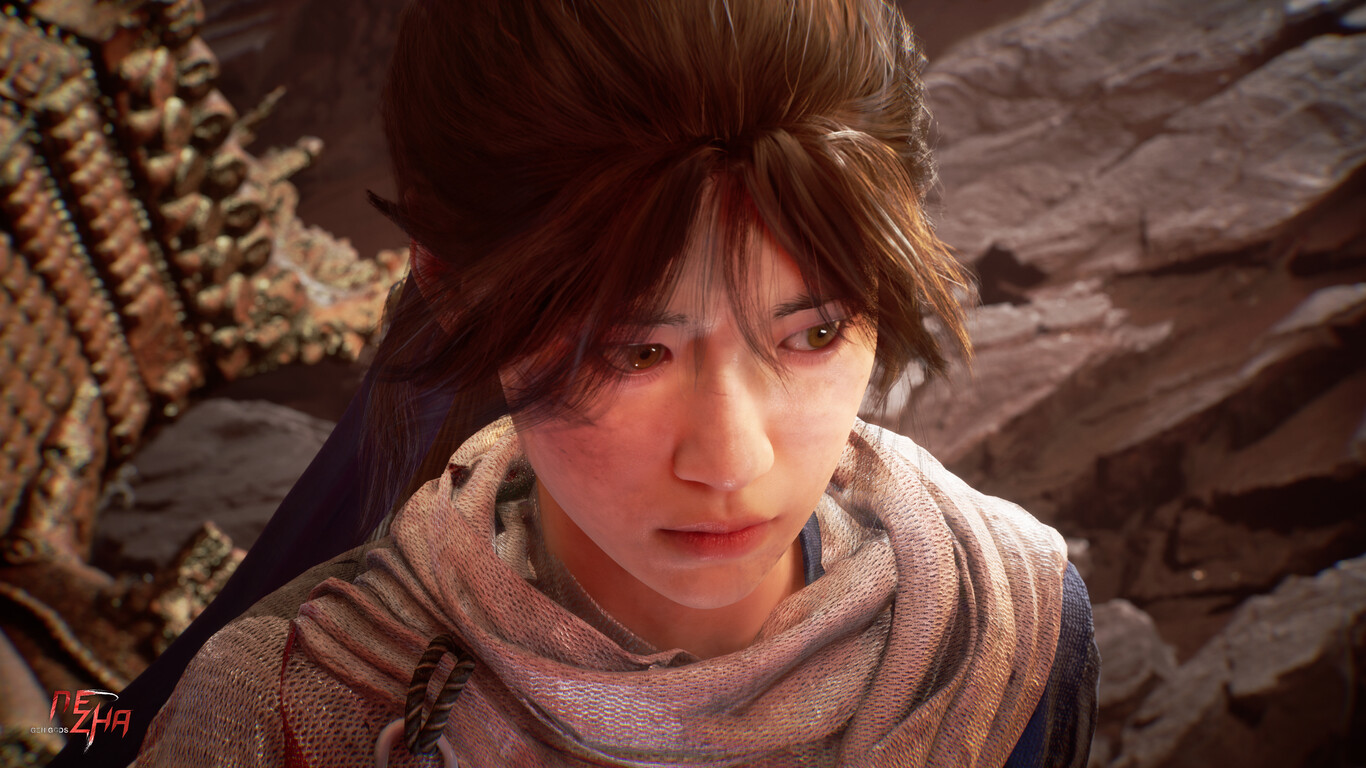
Fluidmystic – when water isn’t a metaphor, it’s a weapon
Bruce Lee’s famous “Be water” idea fits the project for a reason: water’s symbolism and physical qualities are fundamental to Nezha. The game calls this combat element Fluidmystic, and pressing R1 turns Nezha into something akin to a T-1000 – in the developers’ words – letting her attack, dodge, and move with the flowing feel they’re aiming for. Unreal Engine 5 also supports features like the day-night cycle and realistic weather, and the target is a high level of environmental destruction. Trees and rocks can split dynamically under Nezha’s sword strikes, leaf currents can ride the wind that guides the protagonist, and even buildings are intended to be vulnerable to damage.
GeniGods: Nezha is currently slated for a 2028 release on PS5 and PC. Additional platforms are being considered, but those are the only confirmed targets for now. The ambition is obvious, and in recent years we’ve already seen projects like this ultimately live up to massive promises. Beyond the scale, what stands out is the emphasis on Chinese philosophy and mythology – and the attempt to translate those ethereal concepts into tangible mechanics within GeniGods: Nezha.
The studio argues that so many games of this type are emerging from China right now because the market has been stuck in Japanese and Western culture for a long time, endlessly remixing the same old concepts, stories, and ideas. In their view, that’s why these titles are resonating worldwide: they bring fresh air to the industry through new characters, narratives, and sensibilities. They also say they want to ship three GeniGods games over the next ten years to dig deeper into what they’re building. What do you think about this new wave – are you looking forward to any of it, or is there another Chinese project you’re more excited about?
-Herpai Gergely „BadSector”-









Leave a Reply