
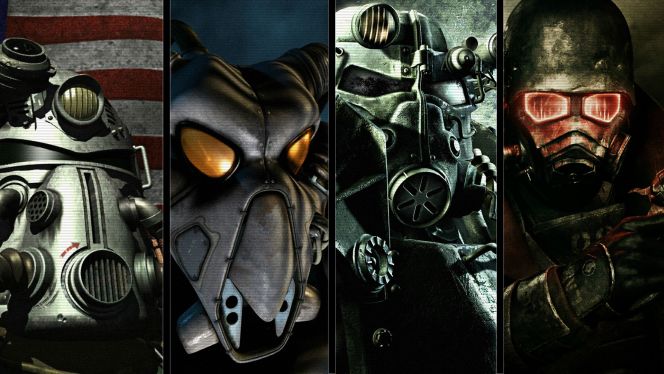
In an interview, Tim Cain, co-creator of Fallout, talked about how unusually the post-apocalyptic IP came to life.
In the mid-1990s, Interplay Entertainment acquired the Dungeons & Dragons license and released Baldur’s Gate, Planescape: Torment, and Icewind Dale. The team working on a small post-apocalyptic RPG – which would eventually become Fallout – largely remained in the shadow of those projects, and that ultimately proved to be for the best. Why did this group exist in the first place? Because Cain lured them in with a pizza party.
Tim Cain recounted the oral history of Fallout in an interview with Game Informer. His day job was programming game installers, but in his spare time he built a sprite engine. He wasn’t allowed to recruit people from existing projects to work on it, though. With fantasy RPGs everywhere at Interplay and across the industry at the time, the decision was made to go sci-fi instead. Early on, the idea was to make a sequel to Wasteland, which Interplay had developed but Electronic Arts had published – but Cain plays down how much Wasteland actually influenced Fallout.
“So what I did was I booked a conference room for 6 p.m., when everyone was getting ready to go home, and I sent emails saying I’d be in the conference room with pizza if you wanted to come talk about games we could make with this sprite-based isometric engine. I really thought tons of people were going to show up, but only about eight people came. I didn’t realize it at the time, but I was self-selecting for go-getters, and Leonard Boyarsky – Fallout‘s art director – was one of those who came. Wasteland, which Interplay had made earlier but didn’t own the rights to, didn’t play a huge role in that. People talk about how influential it is. Some people on the team really liked Wasteland, and everyone looked at it, but we wanted to do our own thing,” said Cain.
Brian Fargo was very fond of Wasteland; he directed it before becoming the executive producer of Fallout. “When we started any project at Interplay, we would write a vision document. It asked, ‘What are the tenets of this product?’ I remember there was a lot of back-and-forth. What were the aspects of Wasteland? It started off as a Wasteland sequel, but then we had to pivot because Electronic Arts said, ‘No, not going to happen.’ We were hopeful for a while, but that pivot ended up being wonderful. We ended up with Fallout, which obviously turned out well,” Fargo said.
Sometimes a small idea can lead to something big.
Source: PCGamer, Game Informer










Leave a Reply