
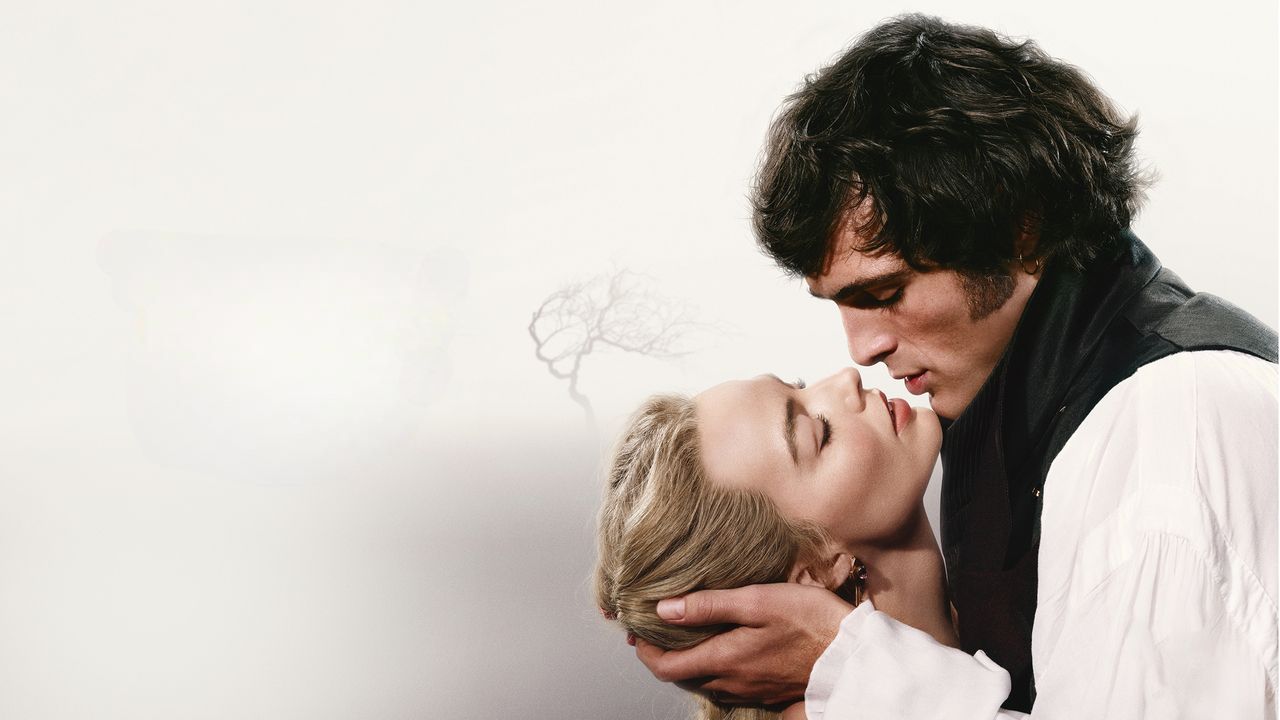
MOVIE REVIEW – The 2025 take on Wuthering Heights is a perfectly serviceable romantic drama that too often moves like it’s riding the brakes on purpose. Scenes keep stretching past the point of tension, so emotional peaks don’t land, they dissipate. What keeps it afloat is the score and the imagery, which flare up often enough to make the slow stretches feel less like dead air.
This adaptation has an awkward contradiction baked into it: it promises storm-weather passion, yet it plays with a measured calm that can slide into straight-up sedation. The issue isn’t that the genre framework fails, it’s that the direction keeps lingering on its own prettiest moments instead of pushing the story forward when it’s ready to snap. Several sequences hang around an extra beat or three as if they exist to let the music bloom and the lighting settle, and the tension doesn’t tighten, it slackens. You don’t just notice the runtime, you feel it, minute by minute.
Still, when the film commits to atmosphere, it can be genuinely affecting. The music does more than decorate: it adds weight, nudges emotion into the frame, and occasionally shoulders a scene when the pacing or the writing starts to drift. In its best passages, the movie finds that melancholy, romantic current audiences expect from this material. The problem is frequency: the highs are too spaced out, and the valleys are long enough that the film starts asking for patience it hasn’t earned.

Beautiful frames, strong flashes
The cinematography is the film’s steadiest asset, and at times its strongest argument for existence. Certain compositions and lighting choices are so deliberate they could stand on their own as images, carrying a quiet, painterly authority. The camera is at its best when it stops trying to announce itself and simply lets space, faces and mood do the work. That’s when Wuthering Heights feels properly big-screen, even as the narrative momentum is busy slipping away.
And the visuals aren’t merely decorative: they have the potential to sharpen the inner drama, if the pacing didn’t keep pulling the rug out from under them. There are quieter stretches that add little on a structural level, yet linger in memory because the imagery compensates for what the scene isn’t doing dramatically. That kind of aesthetic discipline is rare in glossy romance, and it’s present here. It just can’t always save a film that leans on beauty when storytelling should be carrying the load.

Performances: a lead who arrives late, and a partner who stays curiously muted
Jacob Elordi’s male lead starts out frustratingly flat, not in a controlled, internal way, but in a way that suggests there isn’t much going on beneath the surface. He looks right for the part and has the physical presence, yet the character’s volatility doesn’t register, so the silences don’t feel dangerous, they feel empty. The film’s final stretch does bring him into focus, with moments where grief and anger finally show up in the eyes and the body language. But it takes so long to get there that the early inertia has already done damage, and the movie has asked for a lot of goodwill along the way.
Margot Robbie, meanwhile, delivers something polished and carefully calibrated, but the performance rarely turns sharp. The line readings and gestures often sit in the same emotional lane, and the heat the story needs gets replaced by a kind of elegant posing. She isn’t bad, but she’s strangely forgettable in a narrative built on the idea that you can’t shake the memory of someone. The chemistry, too, lands as uneven: on paper the pairing works, on screen they too often feel like they’re occupying the same shot rather than colliding.
Humor that buys oxygen – and pacing that demands too much
One of the nicer surprises is the film’s occasional, understated humor. It’s not a gag machine, more a handful of small beats and observations that cut through the monotony and let the audience breathe. Those moments matter because the baseline rhythm is so patient, so prolonged, it risks turning the film into a beautiful, exhausting procession. The humor pulls it back toward human scale, even if it doesn’t appear often enough to rebalance the whole.
The core issue is that the slowness doesn’t feel like deliberate lyricism, it feels like dramatic complacency. The movie seems to believe “mood” is a substitute for propulsion, and it keeps choosing the most comfortable route through material that should feel like it’s clawing at the viewer. You can sense the lack of a fresher angle: it plays the familiar arc, neatly and safely, while attention quietly starts wandering. The direction is competent, but it rarely takes the sharper, riskier options, and the result isn’t epic, it’s simply dull for long stretches.
In the end, this is a solidly assembled romantic film with a strong visual identity and a score that frequently does heavy lifting, but it lingers in the wrong places and too often coasts. It’s a respectable adaptation with flashes of real beauty and craft, yet too few genuine surprises and too many padded passages to stand out among the story’s many iterations. If you’re here for atmosphere and melancholy, you’ll find scenes worth staying for. If you want urgency, bite and an emotional punch that doesn’t arrive late, this storm can feel like an extended calm.
-Anikó Angyal –
Wuthering Heights
Direction - 6.6
Actors - 6.4
Story - 6
Visuals/Music/Sounds/ - 7.4
Ambience - 6.1
6.5
FAIR
The 2025 Wuthering Heights looks and sounds terrific, but it’s padded to the point of dullness, with scenes that overstay until the drama deflates. Jacob Elordi finally finds the character late, while Margot Robbie stays oddly muted, leaving the central heat more posed than felt. It’s a competent, moody one-and-done - worth a ticket for craft, not for urgency.











Leave a Reply