
TECH NEWS – At GDC 2026, Jensen Huang‘s company shared news about DLSS 4.5, RTX, and much more.
As every year, Nvidia attended the Game Developers Conference to update players and developers on the latest in video game graphics and technological accessibility. 2026 comes particularly loaded with news, headlined by new games compatible with path tracing, improvements to DLSS 4.5, and even a technical demo of The Witcher 4 showcasing the latest advances in RTX Mega Geometry. All the details can be found below.

Path Tracing and RTX Mega Geometry
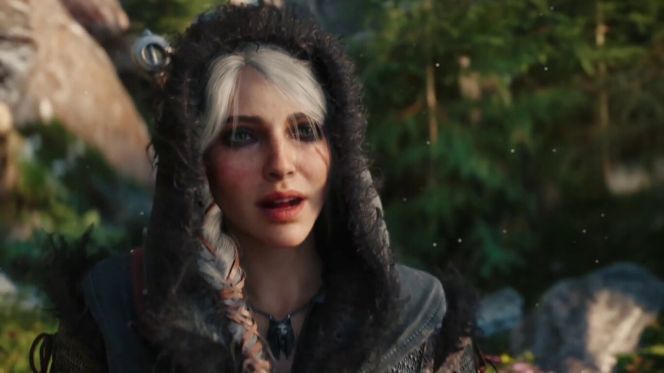
During GDC 2026, Nvidia announced several upcoming games that will be compatible with its latest advances. On the list are 007 First Light, which will feature path tracing to handle lights, shadows, and reflections, and Control: Resonant, which will also use RTX Mega Geometry – that is, millions of triangles compressed in cache to boost FPS and reduce video memory consumption – alongside a brief technical demo of The Witcher 4 to illustrate this technology.
Author’s note: The Witcher 4 technical demo was shown during a digital press event. We have requested a recording from Nvidia to share in the article.
Before getting too excited, it should be noted that the green company labeled the sequence as “not representative of playable material,” which may mean that the demo took place in a test environment or that it is set to undergo numerous modifications before the final version arrives. In any case, it should be seen only for what it is: a practical example of the type of technology that will govern the graphics of the anticipated CD Projekt action RPG, similar to what we have already seen on other occasions.
The Witcher 4 will therefore make use of (at least) a new system, currently under construction, that combines the benefits of RTX Mega Geometry with Opacity Micromaps (OMM) to manage foliage. The result demonstrates the quality we expect from ray tracing with performance up to current standards. According to Nvidia, rendering vegetation has been a difficult problem for video game developers to tackle, and far more complex than the textures or models of any other element of a scene; but this new system allows us to render “millions of trees with realistic shadows and models even at long distances.”
The Witcher 4 still has no release date and is not expected to land on current-generation platforms before 2027. What we do know is that the Poles have opted to drop their traditional REDengine in favor of Unreal Engine 5, which will also power other upcoming games from the same studio. A sense of how it will look can be gleaned from the technical demo shown in June 2025.

Dynamic Frame Generation Arrives
Nvidia brings news for its DLSS 4.5 technology’s Dynamic Multi-Frame Generation feature, which many PC gaming enthusiasts have had on their radar for some months. Specifically, the green brand plans to release its latest scaling optimizations on March 31 for all users of RTX 50 series cards.
For those who were not up to date, DLSS 4.5 introduced a second-generation transformer architecture at the start of 2026, bringing with it certain image stability improvements, ghosting reduction, and edge smoothing. The multi-frame generation, which had been pending at that point, had planned to introduce up to five additional AI-generated frames between one native frame and the next; though the interesting part of that premise would not so much be the number of frames as the qualifier of “dynamic.”
In practical terms, this means that Nvidia‘s AI will measure the difference between frames rendered locally on your hardware and the target frames (e.g. your monitor’s refresh rate), dynamically adjusting the artificial frame multiplier on the fly to get as close as possible to the desired frequencies. This makes it easier to game on 240/360 Hz monitors, while at the same time reducing the latency effect inherent to frame multiplication by making the most of the frames directly enabled by your graphics card.
If the idea of your games automatically generating frames when scenes are more demanding and reducing the volume of artificially generated frames in lighter situations appeals to you, all you need to do is head to the Nvidia PC application to activate the improvements taking effect on March 31 in more than 200 games.
As a reminder, you can manually choose between the L and M transformer models, though it is easier to go to graphics, global settings, and select the recommended settings under the DLSS override parameter. When the day arrives, you will be able to switch the frame generation mode to “dynamic” and let the driver do its magic.
GeForce Now for Players and Developers
Nvidia has announced a series of improvements to its popular cloud gaming service, GeForce Now, on the occasion of GDC 2026. On the user side, Jensen Huang‘s team plans to improve the application interface with new linkable platforms and a tagging system that should make it easier to find new games, as well as extra performance on certain virtual reality devices; though perhaps even more interesting is the news that developers will be able to work on their games from the cloud.
In the coming months – it is not yet clear exactly when – we will see the possibility of linking our Gaijin accounts (announced a few months ago) and GOG accounts (new) for automatic login to games on these platforms and immediate access to their catalogs; while the individual game pages on GeForce Now will mark not only the platforms on which they can be found but also the subscription services in which they appear, such as Ubisoft+ Premium or Game Pass.
The also previously announced support for Meta Quest and Apple Vision Pro on GeForce Now, which is of course also compatible with 2D games, will improve with an extra smoothness of 90 FPS and reduced latency. The green team also took the opportunity to confirm that games such as Crimson Desert, Control: Resonant, Active Matter, and Samson will be coming to the GFN catalog.
On the developer side, as mentioned, the ability to organize tests (internal, external, or press) directly within the cloud ecosystem is being added. This is useful for studios that began hiring employees from distant cities or countries during the COVID era, or that do not have access to high-end PCs; and even for large studios wishing to organize internal or external tests with players and/or journalists. The application can even record gameplay footage, users’ facial expressions via webcam, or button presses; and availability can be set directly from within the same software.
The benefit of this is that developers will have more avenues to study what works and what does not in their games, and to test them across a wider variety of hardware in order to optimize them for the greatest number of systems possible.
Remastering Classics with RTX Remix
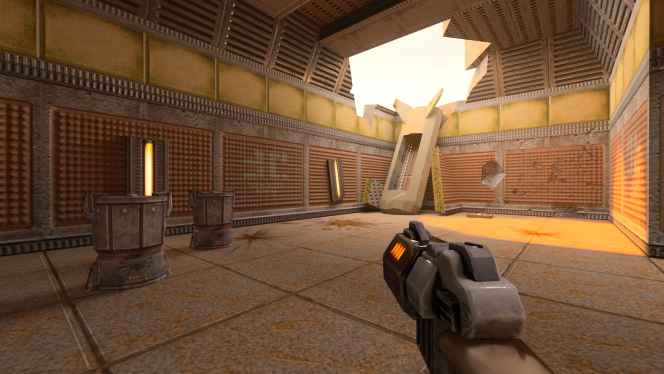
Nvidia also had something in store for the modding community in the form of news about RTX Remix, the label the green team uses to refer to its technology dedicated to fan-made remasters of classic games.
The team dedicated to this assures us that they have been listening to fan ideas and demands over the past few weeks, and as a byproduct of this, we now have (among other things) debuting tools such as visual effects for particles, gravitational effects, and similar features – all with the ability to interact with one another.
If you are interested in seeing how this project is progressing, you might want to take a look at the Quake 3 Arena RTX Remix mod, which has been available on ModDB for a few days. The demo is standalone software that can be downloaded from the link above, though you will need to own the game for the final version.
Source: 3djuegos















Leave a Reply