
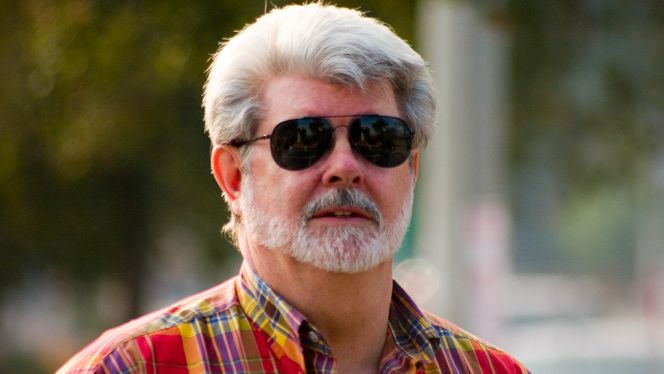
MOVIE NEWS – The Star Wars prequels feature lightsaber duels that are faster, more acrobatic, and far more energetic than the fights in the Original Trilogy. According to George Lucas, that was not a continuity problem, but a deliberate storytelling choice: in the prequels, audiences were finally seeing the Jedi Order in its prime.
The Star Wars prequels have aged surprisingly well since they first arrived more than twenty years ago. Whenever Star Wars: Episode I – The Phantom Menace or Star Wars: Episode III – Revenge of the Sith comes back into view, the lightsaber duels remain among their most impressive elements, still rivaling modern sword choreography in film. Compared with the Original Trilogy, however, those fights have always felt much more energetic. The duels in Star Wars: Episode IV – A New Hope, The Empire Strikes Back, and Return of the Jedi are slower, heavier, and less acrobatic. For younger viewers, that difference could almost seem like a plot hole, as if Obi-Wan Kenobi had simply grown rusty with his lightsaber during his years of exile on Tatooine.
It does not come as a surprise that George Lucas had his own reasons for the difference between the lightsaber duels of the prequels and the originals. Stunt coordinator Nick Gillard was, of course, brought in to design ambitious action sequences that went far beyond anything attempted in the Original Trilogy. But Lucas also had his own philosophy as the creator of the Star Wars universe, and the fights were meant to express more than just technical improvement. In the DVD special features of Star Wars: Episode I – The Phantom Menace, he explained the creative process this way: “I was looking for a kind of sword fighting that was reminiscent of what was in the movies that we’d already done, but a more energized version of it, because we’d actually never seen real Jedis at work. We’d only seen old men and crippled half-droid, half-men and young boys that had learned from these people. So, to see the Jedi fighting in the prime of the Jedi, I wanted it to be a much more energetic and faster version of what we’d been doing.”
George Lucas’ Lightsaber Explanation Tells A Deeper Story
It is easy to criticize the prequels for plenty of reasons, but Lucas’ rationale for their elevated lightsaber duels makes complete sense. By reframing how the prequels approached action scenes, he added a meaningful layer of storytelling to his six-film saga. In the Original Trilogy, the Jedi Order is extinct, and its surviving members have exiled themselves across the galaxy. Obi-Wan no longer has the physicality of his younger years, something he essentially acknowledges in A New Hope when he tells Luke, “I’m getting too old for this sort of thing.” Darth Vader’s lightsaber skills are not what they used to be either after his defeat on Mustafar in Revenge of the Sith. Luke, meanwhile, has no clear living example of what a fully trained Jedi should look like in combat, so his approach to fighting a Sith Lord is naturally rougher and more restrained than what we see from the Jedi in the prequels.
In the Prequel Trilogy, by contrast, the Jedi are at the height of their power in the galaxy, and the films’ intense lightsaber duels reflect that reality. The Phantom Menace has its low points, but when Darth Maul faces Qui-Gon Jinn and Obi-Wan Kenobi, Lucas finally shows what the Jedi Order looked like as an active, disciplined, combat-ready institution. That sequence is not just an exciting duel; it is also an answer to a long-standing fan question about what the Jedi were like before their fall. Duel of the Fates works so well because it is not only a memorable John Williams theme attached to a superb action scene, but a clear display of the gap between the Jedi before the collapse and the broken survivors of the Original Trilogy.
The Jedi of the prequels are not withdrawn monks like Obi-Wan in A New Hope or Yoda in The Empire Strikes Back. They are knights who trained extensively for the day the Sith might return. That is why they move faster, strike cleaner, and fight with far more precision and aggression than the characters in the Original Trilogy. Lucas was not contradicting the earlier movies; he was giving them historical context by showing how far the galaxy had fallen by the time Luke Skywalker was left trying to rebuild whatever remained of the Jedi tradition.
The Prequel Trilogy’s lightsaber duels may feel jarring when placed beside the slower, weightier fights of the Original Trilogy, but George Lucas’ canon explanation proves they were never just about spectacle. Even through Nick Gillard’s choreography, Lucas was still world-building and telling a story that went beyond the action. The speed of the blades, the movement of the bodies, and the structure of the duels all point to the same idea: in the prequels, we are watching a fully functioning Jedi Order, while in the originals, we are seeing only its shattered remains.
Source: MovieWeb





Leave a Reply