
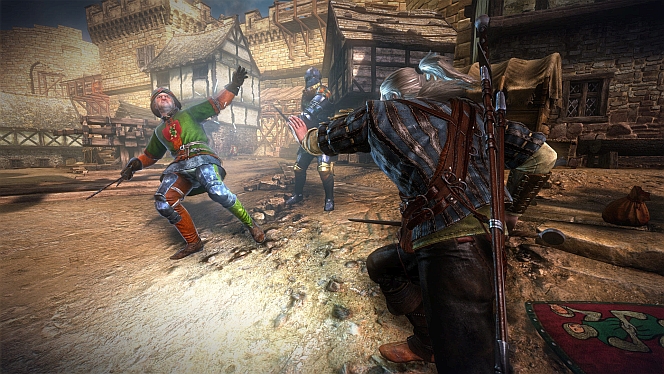
The Witcher 2: Assassins of Kings is now 15 years old, and CD Projekt developers have marked the anniversary not only with new promotional artwork, but also with personal reflections on the RPG’s legacy. For Paweł Sasko, Marcin Momot, and Philipp Weber, the second The Witcher was not just a sequel, but a creative turning point for the studio.
The Witcher is now one of the most successful and acclaimed franchises in the video game industry, but the series began from a much rougher place. The first game, which will celebrate its 20th anniversary in 2027, was long seen as a classic “Eurojank” project: ambitious, atmospheric, but technically and production-wise far from flawless. Its sequel, The Witcher 2: Assassins of Kings, was also not the kind of immediate multiplatform AAA launch that would now be expected from a new The Witcher game. Even so, the second installment became the moment when CD Projekt made it clear that it was no longer just making a cult Polish RPG, but building a role-playing series with serious international weight.
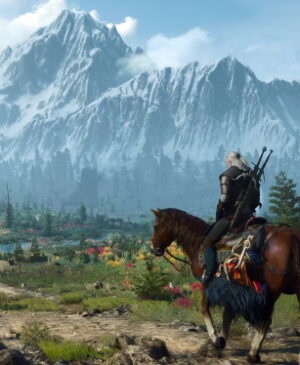
The anniversary was not marked with a massive campaign, but with a more restrained and meaningful social media celebration. CD Projekt shared new artwork featuring Geralt in the background and Letho of Gulet, the witcher from the School of the Viper known as the Kingslayer, in the foreground. That image became a natural starting point for revisiting one of the trilogy’s densest and most politically tangled stories, where choices, factions, assassinations, and personal loyalties collided far more sharply than in a conventional fantasy adventure.
Every story has a beginning and an end, but it’s the middle where the plot really thickens. 👑
15 years ago today, we stepped into the heart of Geralt’s trilogy with The Witcher 2: Assassins of Kings — a tale of shifting alliances, hidden motives, and decisions that carried… pic.twitter.com/kFSDstZf1e
— The Witcher (@thewitcher) May 17, 2026
CD Projekt Members Celebrate the 15th Anniversary of The Witcher 2
Several well-known CD Projekt developers responded to the X post, including Paweł Sasko, the current associate director of Cyberpunk 2 and former quest designer on The Witcher 3: Wild Hunt. Sasko acknowledged that he did not work directly on The Witcher 2, since he joined the studio a year later, but said it was precisely this game that inspired him to become part of CD Projekt. He dedicated his message to Letho, describing him as an antagonist who is not simply a villain: a character with his own code of honor, his own logic, and a lasting impact on how Sasko thought about narrative design.
That influence later carried into The Witcher 3: Wild Hunt. Sasko recalled wanting to bring Letho back in the third game as a direct consequence of the player’s decisions in the second installment. If Geralt spared Letho’s life at the end of The Witcher 2, the character could later appear during the Battle of Kaer Morhen and even fight alongside Geralt. It remains one of the clearer examples of CD Projekt treating player choice not as a menu gimmick, but as something that could echo years and even entire games later.
Other CD Projekt members also joined the anniversary conversation. Marcin Momot, the studio’s community relations director, wrote that The Witcher 2 is especially important to him because it was the first game he worked on at CD Projekt, where he served as head of communications during its launch. Philipp Weber, narrative director of The Witcher 4, added an even more personal reflection, saying it “was the last game I was able to enjoy as a fan before everything changed forever.” Weber’s path says a lot about the game’s community impact: he first made his name as a The Witcher 2 modder, then joined CD Projekt and later worked as a quest designer on the final installment of the trilogy.
Beyond the emotional resonance for developers and players, the anniversary also underlined how important The Witcher 2: Assassins of Kings was commercially and historically. It did not achieve the global cultural reach of The Witcher 3: Wild Hunt, but it played a major role in solidifying the series’ international reputation and in changing how CD Projekt was perceived: not merely as an ambitious Eastern European studio, but as a serious RPG developer. Even today, the game stands as one of the most significant titles in European game development, with reports placing its lifetime sales at more than 15 million copies. The Witcher 2 was therefore not just a middle chapter in Geralt’s story, but one of the key reasons The Witcher 3 could later become the phenomenon it did.



![Moon Studios Has Postponed the Release of No Rest for the Wicked! [VIDEO]](https://thegeek.games/wp-content/uploads/2024/04/thegeek-no-rest-for-the-wicked-2024-302x180.jpg)

Leave a Reply