
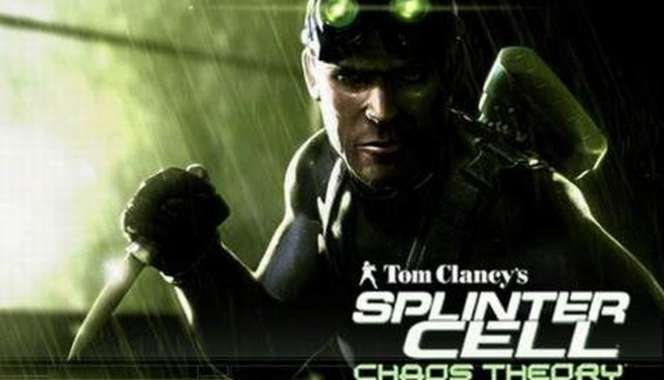
He believes that modern lighting engines make stealth games more difficult to understand.
We love good games set in the shadows, but that’s not the norm in virtual worlds anymore. Even within the niche genre of stealth games, most modern titles rely more on line of sight than lighting. We always thought this was because it’s easier for players to understand, especially since most games that include stealth aren’t exclusively stealth games.
However, according to Clint Hocking, the director of Splinter Cell: Chaos Theory, this may also be due to the nature of virtual shadows. In an interview with FRVR, Hocking explained that the shift from hard-edged, pre-rendered, and dynamic lighting to softer shadows and ray-traced lighting models may have affected players’ ability to gauge their own stealth capabilities.
“I actually think one of the difficulties with modern stealth games is that the rendering has become so sophisticated that lighting is much more realistic. In those old-school stealth games, the lighting is clean, readable, and understandable to the player because of their baked lighting. But once you get into diffuse lighting, ambient occlusion, and all that comes with it, it becomes difficult to discern where the light is, where the shadows are, where it’s safe, and where it’s dangerous. I think there would be a learning curve if we wanted to use these modern lighting techniques for a pure stealth experience. People who make that game need to do some deep thinking,” Hocking said.
This level of detail makes scenes feel more authentic but makes the gameplay environment of stealth games much harder to navigate than in the days of Splinter Cell: Chaos Theory and the Thief series. We understand why this added complexity would make creating light-based stealth games more difficult. However, it’s also important to note that no one has really tried this yet. As we’ve mentioned, stealth is generally part of a broader gaming experience these days, rather than forming the core of a game. These stealth mechanics are usually simple, allowing players to easily switch between stealth and open action.
We’d love to see a modern stealth game built entirely on shadow mechanics and creaky floors. Some recent stealth games have leaned toward different kinds of experimentation, though. Thief VR: Legacy of Shadow aimed to make the leap to true 3D, with mixed results. This week also saw the release of Thick as Thieves, a simplified game that looks promising as a cooperative stealth game.







![The System Requirements for Fable Are In! [VIDEO]](https://thegeek.games/wp-content/uploads/2026/08/vnews-05-fable-1280x720-1-302x180.png)







Leave a Reply