
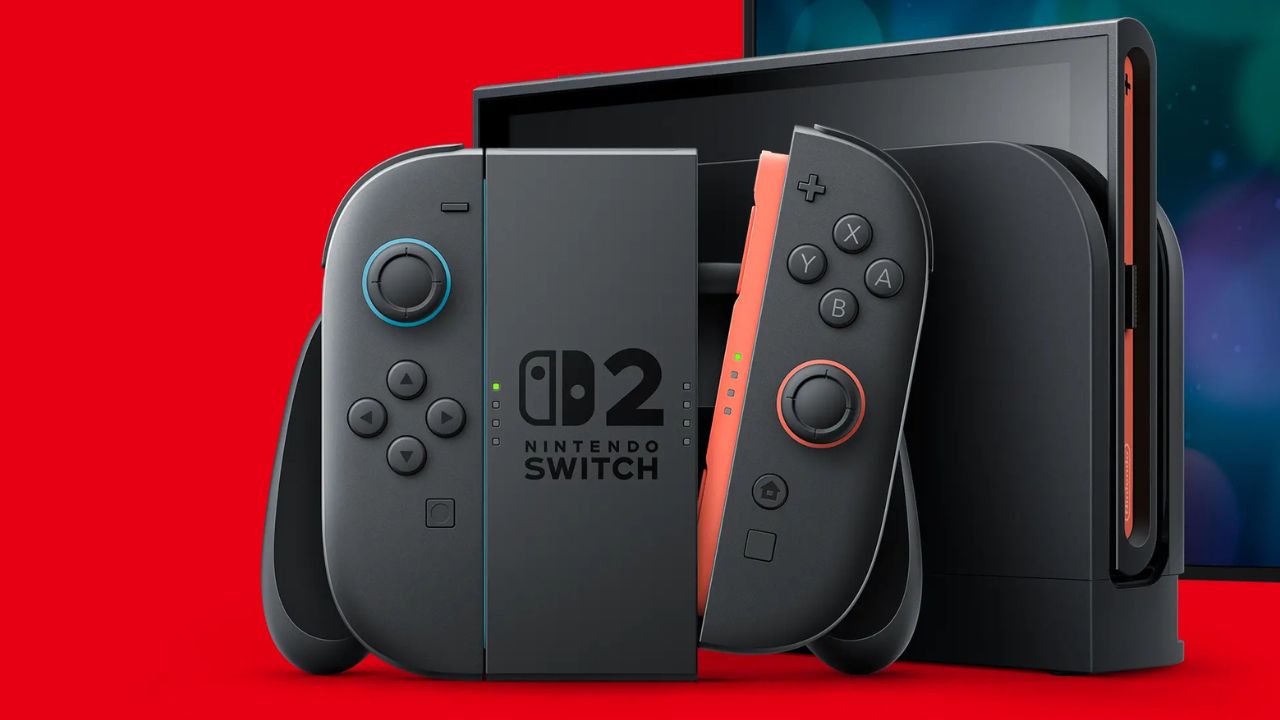
Digital Foundry believes the Nintendo Switch 2 hardware may be far more viable in the long run than it first appears. According to its technical analysis, the console could remain competitive into the early 2030s, even as the PS6 and Project Helix, the next-generation Xbox, enter the market.
Nintendo’s history has always been defined by a strategy very different from that of its rivals. Its consoles have typically launched with visibly weaker hardware than competing systems, and the company has rarely tried to compete directly, head-to-head, with PlayStation or Xbox. In the case of the original Switch, that gap became especially painful as the generation went on, particularly when support from third-party studios was notably weak.
Now, however, Nintendo is in a very different position. The Switch 2 has only been on the market for a year, and if it receives a lifecycle similar to that of its predecessor, the current console could remain relevant until 2033. That would mean the Nintendo Switch 2 would have to coexist on the market with the PlayStation 6 and Project Helix, Microsoft’s next-generation Xbox. The question is therefore obvious: can Nintendo’s machine really keep up?
Digital Foundry Thinks The Nintendo Switch 2 Has More Headroom Than Expected
In the latest DF Direct, Digital Foundry sounded notably optimistic on that question and backed up its position with technical arguments. The experts argued that, in some respects, the console is “technologically more advanced than a PS5”, at least when looking at certain features of its GPU architecture. The system supports full mesh shading, which allows more efficient geometry handling and can display more detail at a lower performance cost.
The console also offers real hardware-accelerated ray tracing, enabling more realistic lighting, shadows and reflections without forcing developers to rely purely on software solutions. It supports asynchronous compute as well, meaning the GPU can handle multiple tasks in parallel, while machine learning and NVIDIA’s DLSS technology use artificial intelligence to reconstruct the image and deliver a higher apparent resolution at a lower performance cost.
Digital Foundry also points out that the original Switch was not only behind contemporary consoles in raw power, but also architecturally outdated at launch. It lacked features such as asynchronous compute, which the PS4 already supported. By contrast, the Switch 2 now speaks the same technical language as modern platforms, and that could make ports significantly easier over the next several years.
If a PS5 game targets 1080p and 60 frames per second as its average presentation, Digital Foundry believes Nintendo’s console could aim for 30 fps versions without major compromises. That does not mean the Switch 2 suddenly belongs in the same performance class as the larger home consoles, but it does mean that modern GPU features and DLSS could give developers far more room to maneuver than they had with the original Switch.
The picture is not entirely spotless, however. Digital Foundry also acknowledges that as the decade progresses, and as the PlayStation 6 and Project Helix become fully established on the market, developers may gradually move their engines toward lighting workflows built entirely around ray tracing. That would mean ports could become less frequent, or less ambitious visually, than their versions on more powerful systems.
According to Digital Foundry, however, this should not necessarily become a fatal problem for Nintendo. The company has historically not built its success purely on third-party AAA ports, but on its own games and exclusives. Reports indicate that roughly half of every dollar spent on the eShop has gone toward first-party or exclusive games, which says a great deal about why the Nintendo ecosystem operates under different rules from the worlds of PlayStation and Xbox.
The Switch 2 will therefore almost certainly show its technical limits over the coming years, especially once next-generation consoles are fully setting the industry’s direction. But if Nintendo keeps releasing major exclusives regularly, and if the console’s modern hardware features truly make porting easier, the system may not collapse under the shadow of the PS6 and Project Helix. Digital Foundry’s answer, in short, is yes: the Switch 2 could make it into the 2030s, just not by competing in the same raw-power league as the bigger machines.
Source: 3DJuegos, Digital Foundry, NVIDIA




![The System Requirements for Fable Are In! [VIDEO]](https://thegeek.games/wp-content/uploads/2026/08/vnews-05-fable-1280x720-1-302x180.png)





![The System Requirements for Fable Are In! [VIDEO]](https://thegeek.games/wp-content/uploads/2026/08/vnews-05-fable-1280x720-1-300x365.png)