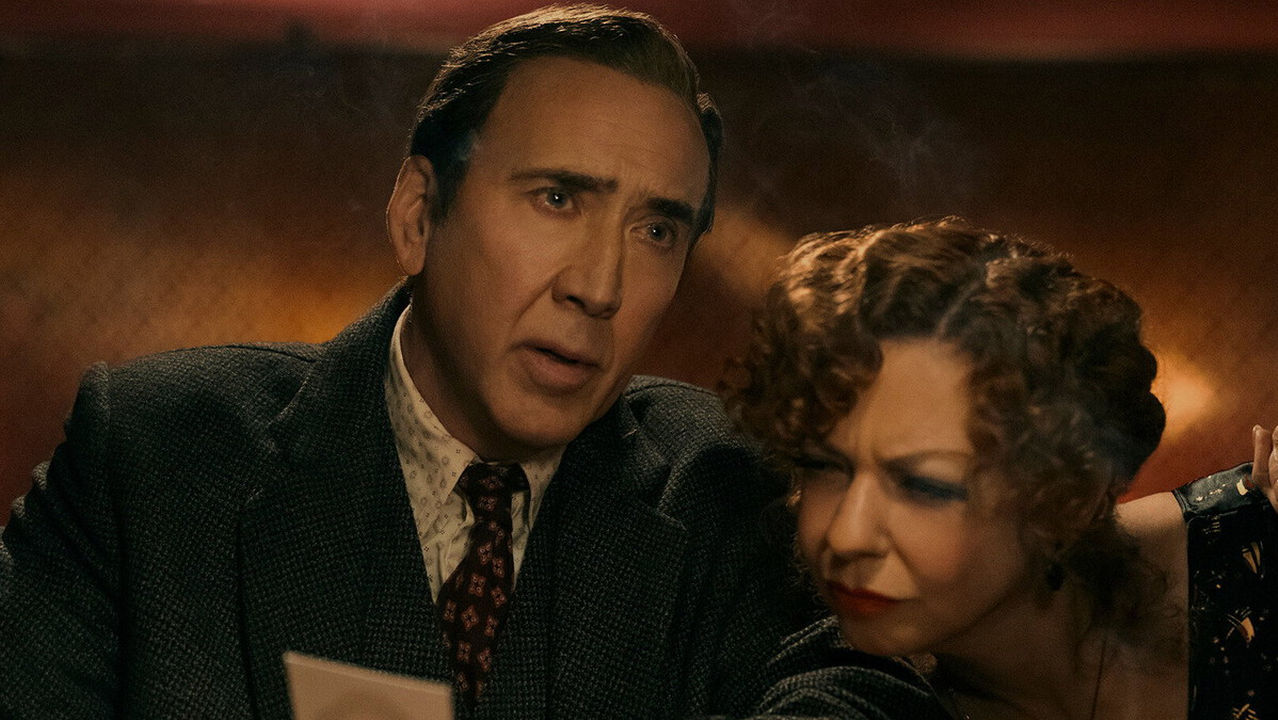
MOVIE NEWS – Prime Video has decided not to bring Spider-Noir back for a second season despite 11 Emmy nominations, a 92% Rotten Tomatoes critics score and billions of minutes watched. Nicolas Cage, however, sounds considerably less upset than many fans: as far as he is concerned, a single season is “perfect” because the team completed the strange, dangerous and pop-art-infused Spider-Man story it set out to make.
On paper, the cancellation is difficult to reconcile with the show’s public-facing achievements. Spider-Noir premiered all eight episodes on MGM+’s linear channel on May 25 before expanding to Prime Video several days later, where viewers could choose between full-color and black-and-white presentations. Then, on September 4, Deadline reported that Amazon MGM Studios had decided not to order another season. The timing made the decision look even stranger because Cage’s first television leading role was heading into Emmy season with 11 nominations attached to it.
Fans therefore had plenty of reasons to take the news harder than Cage did. This was not an obscure Marvel spin-off that vanished without attracting viewers or critics: Rotten Tomatoes recorded a 92% critics score and 90% audience score, while its 11 Emmy nominations made it Prime Video’s most-nominated series of the year. Nielsen also measured 2.6 billion minutes viewed during the show’s first six weeks. None of those figures suggests indifference, but the numbers apparently were not enough to justify continuing an expensive production built around such an elaborate visual concept.
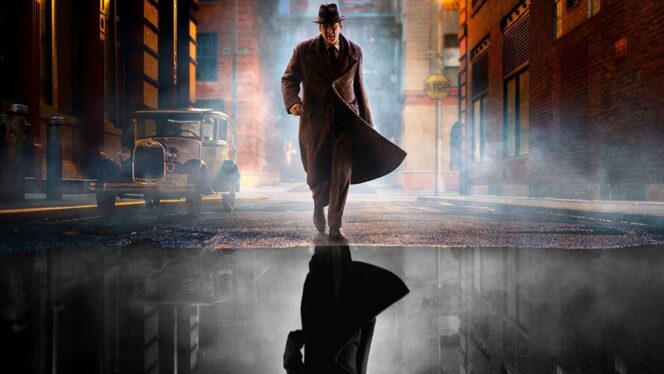
Eleven Emmy Nominations, 92% Critical Approval, and Still Canceled
The central problem appears to be that success on one metric no longer guarantees survival in the streaming business. Variety and Deadline pointed out that Spider-Noir did not maintain a place in Prime Video’s daily Top 10 as consistently as several of the service’s stronger recent performers. A figure such as 2.6 billion viewing minutes sounds substantial in isolation, but streaming platforms judge those numbers against production costs, subscriber impact, retention and whatever internal targets were established before release. A show can therefore look healthy from the outside and still fall short of whatever threshold executives were using behind closed doors.
Neither Sony nor Amazon has publicly offered a detailed explanation for the cancellation, but the industry reporting points toward a familiar equation: high costs paired with viewership that was respectable rather than extraordinary. Spider-Noir was conceived with an unusually ambitious presentation, with separate color and black-and-white versions giving viewers two visual approaches to the same story. Artistically, that helped establish the show’s identity. Financially, every additional layer of craftsmanship comes with a price, and streaming has repeatedly demonstrated that prestige does not carry much weight when the financial model fails to satisfy the people approving the next season.
Cage’s response is therefore striking precisely because it contains almost none of the frustration many viewers expected. He did not publicly campaign for a rescue, complain that the story had been cut short or criticize Prime Video for the decision. Instead, he described one season as “perfect,” arguing that the team had already told the story it wanted to tell with this dangerous, innovative, pop-art take on Spider-Man. His comments are also consistent with what he said during promotion in May, when he told Variety that regardless of what happened afterward, the creators had achieved their original goal and produced something that could stand on its own.
It helps that the finale largely completes Joe’s journey rather than ending on an enormous unresolved cliffhanger. A few loose threads remain, and another season could obviously have expanded them, but viewers are not being left halfway through the central story. For Cage, who had never taken the lead role in a television series despite roughly four decades in film, that apparently makes Spider-Noir feel less like a prematurely aborted franchise and more like a complete eight-part experiment. He entered television, played an extraordinarily unusual version of a superhero, finished the arc and walked away without turning the cancellation into a public grievance.
That does not make the anger from fans irrational. A series with overwhelmingly positive reviews, strong audience scores, major awards recognition and billions of minutes watched hardly fits the traditional picture of a failure, especially when much weaker shows routinely receive additional seasons. Spider-Noir instead illustrates how difficult it has become to predict a streaming show’s future from any publicly available metric. Critical praise, nominations and even apparently large viewership can all become secondary if executives believe the production cost and long-term business value do not line up.

Sony Has Spent Years Trying to Bring Spider-Man’s World to TV, and So Far It Keeps Ending in Cancellations
The broader Sony-Amazon relationship makes the situation even more revealing. Spider-Noir was the second series ordered under the agreement between Amazon MGM Studios and Sony Pictures Television to develop shows around Marvel characters controlled by Sony, but it was the first one that actually reached viewers. The previous project, Silk, was ultimately abandoned before it could properly get off the ground.
Silk had endured a troubled development process before being scrapped, with reports suggesting that the disastrous theatrical performance of Madame Web may have contributed to the decision. That leaves the Sony-Amazon television experiment with an awkward record so far: one project died before reaching production, while the other made it to air, drew strong reviews and major awards attention, then was canceled after a single season anyway. It is hardly the foundation anyone would have imagined for a sprawling new television universe based around Sony’s corner of Marvel.
The partnership itself is still alive, however. Several unannounced projects remain in development, and Deadline reports that one of them may already be nearing a formal green light. The distribution model is expected to remain familiar, with an MGM+ linear premiere followed by availability on Prime Video. Sony and Amazon clearly have not abandoned the effort to find a Marvel series that can survive beyond its initial run, even if their first two attempts have ended in very different versions of the same result.
Oddly enough, Cage’s attitude may ultimately provide Spider-Noir with the cleanest possible epitaph. The team made something eccentric, risky and visually distinctive, finished the story it wanted to tell and then stopped. In a streaming landscape filled with shows that spend entire seasons setting up future installments only to disappear after an unresolved cliffhanger, there is something refreshing about a series that can still function as a complete piece even after cancellation. Cage apparently sees no tragedy in that outcome: they made their strange Spider-Man show, completed it on their own terms and moved on.
Source: 3DJuegos