
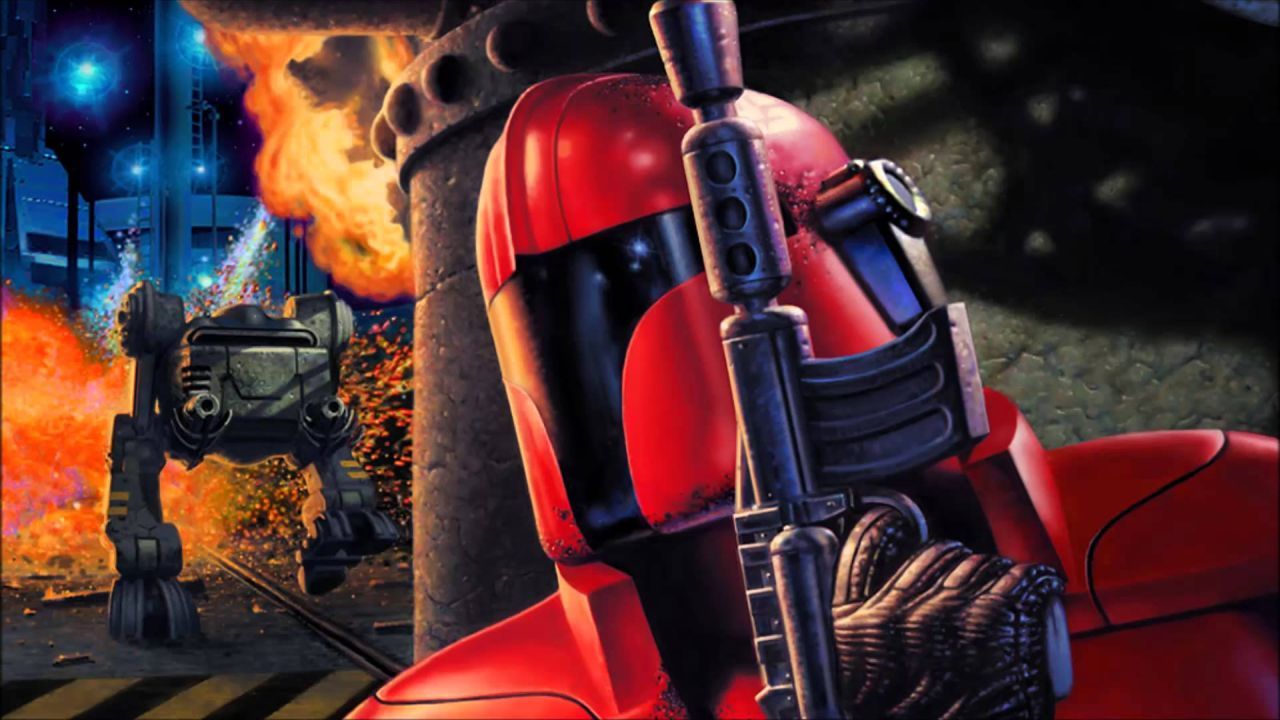
RETRO – This time we’re warping back to 1995, thirty years ago, right in the thick of the PC gaming golden age. Processors were starting to flex real muscle, RAM was no longer a sacred cow, and the CD-ROM had stopped being just the domain of multimedia encyclopedias. Development teams were unleashing their creativity and dropping experiences that felt like nothing anyone had ever played before. Among the gems of this era came Crusader: No Remorse, an isometric action bloodbath for MS-DOS that burned itself permanently into the genetic code of ‘90s gaming.
Crusader: No Remorse was developed by Loose Cannon Productions, an internal team at Origin Systems, with Tony Zurovec at the helm. Zurovec didn’t just direct – he practically pumped the lifeblood into this digital slaughterhouse. Built on a heavily modified version of the Ultima VIII: Pagan engine, the tech was pushed so far that it exploded onto the PC scene as a legitimate technical marvel.
640×480 – The Resolution That Made PCs Cry
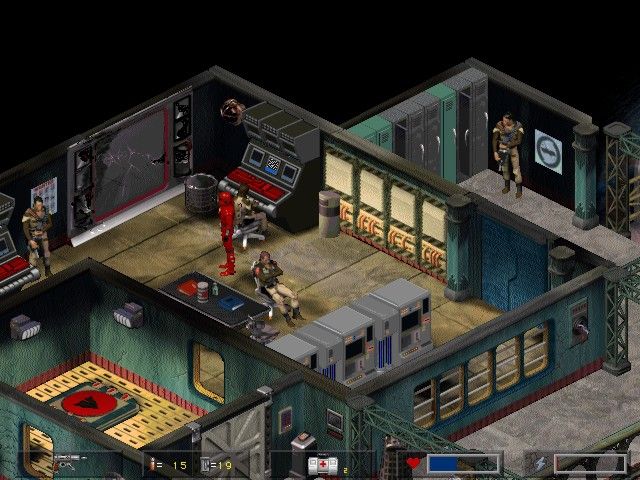
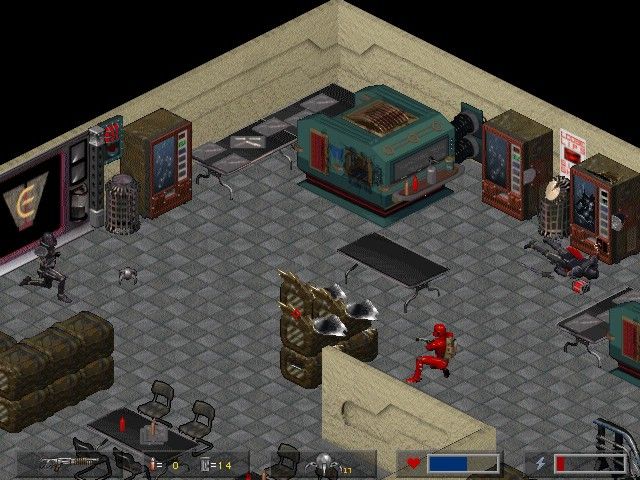
At launch, Crusader made a bold call: 640×480 resolution with 256 colors – practically science fiction at the time. With that many pixels, you suddenly had explosions, shadows, and environments that felt alive. But there was a catch. In Retro Gamer issue 116, Zurovec himself admitted they had to drop level scrolling altogether, because no PC on the planet could handle it while keeping the visuals intact.
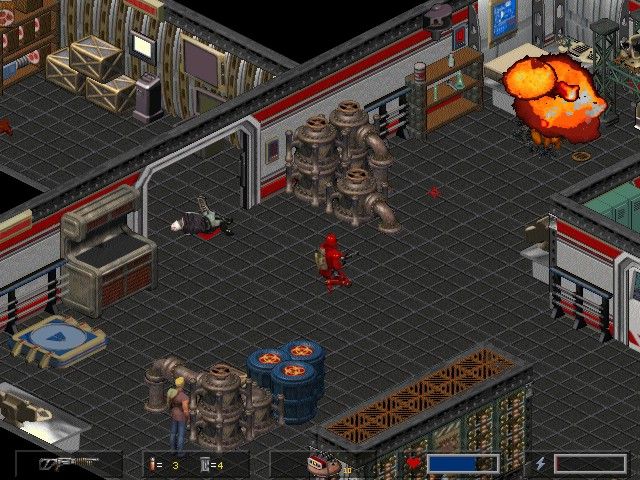
A forgivable compromise, especially when you look at the PS1 and Saturn ports. Sure, those versions had scrolling, but they also had washed-out visuals, blurry textures, aliasing everywhere, and none of the crisp spectacle that the PC original delivered. On top of the eye candy, Crusader also offered unprecedented interactivity: crates, barrels, generators – all destructible. You could even knock clutter off desks. It wasn’t full physics simulation, but back then it might as well have been magic.
Dystopia Deluxe Edition
As with many Origin titles, it wasn’t just about blowing stuff up – the story and world-building packed a punch too. The game takes place in the 22nd century, where civilization has collapsed under the three-headed dragon of corruption, economic disaster, and political chaos. From the rubble rose the World Economic Consortium (WEC), promising to unify humanity and resources. At least, that’s the official PR spin.
Beneath the shiny façade, it stank. The noble goals of the Consortium had long been buried under greed, politics, and corporate power. The gap between rich and poor had grown into a chasm, and the underclass was left to rot in a system that had abandoned them.
At the top sat Nathaniel Draygan, a Machiavellian mastermind running the show with ruthless precision, crushing anyone daring to oppose him. Standing against this oppression was the Resistance – a ragtag band of outcasts determined to bring the WEC down and restore some balance to the world.
The player steps into the boots of “the Captain,” a former Silencer – the WEC’s elite supersoldiers, human war drones armed with lightning reflexes and deadly weapon training. The game kicks off with a short intro: three Silencers wiping out a rebel base. When they refuse to execute civilian sympathizers, the Consortium orders their deaths. A nearby Vetron robot attempts to carry it out, but the Captain survives and takes the machine out with a well-placed grenade.
Unable to return to his old life, the Captain joins forces with the rebels hiding in the Echo sector, swears revenge, and begins systematically blowing the WEC to hell.
Sabotage x16
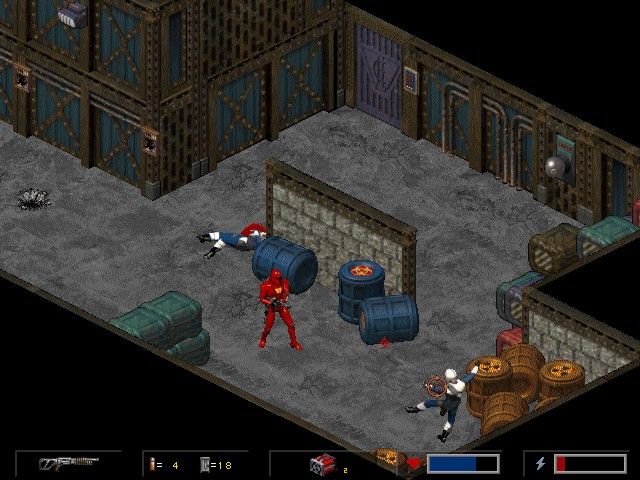
Across 16 increasingly tough missions, players guide the Captain in striking political and economic targets. The game offers four difficulty levels, and on the hardest, enemies spawn with randomized weapons – not just pistols, but assault rifles and, sometimes, rocket launchers. Only for the most hardened Crusader veterans!
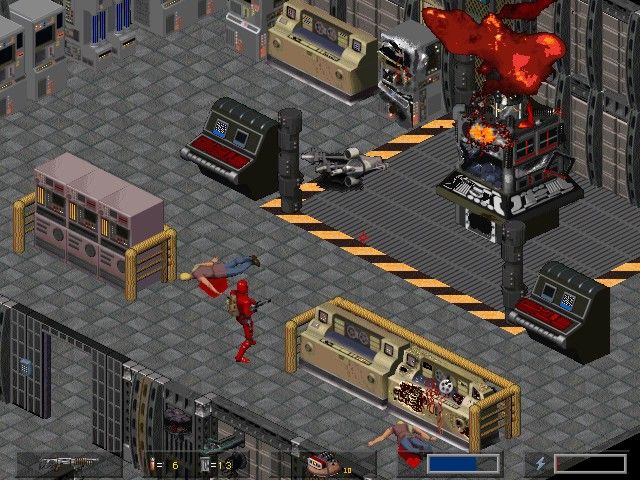
Each mission starts with a teleport drop, and of course the target is always far away. Between you and the goal? Entire squads of guards, soldiers, and robots, all itching to test their weapons on you. Controls revolve around the keyboard: arrows to move and turn, with combos for strafing, crouching, rolling – survival requires mastering every move.
The spacebar first draws your weapon, and the second tap fires it. Manual aiming is possible, but the game’s semi-automatic targeting system helps by locking on to threats in your line of sight. Accuracy depends on weapon type, distance, and how steady your nerves are under fire.
Roll, Blast, Repeat!
Gunplay wasn’t revolutionary in the modern sense, but it was insanely fun. Dodging into a roll, popping up, and blasting an enemy into a smoking heap never got old. And the WEC didn’t just rely on soldiers – machines came for you too.
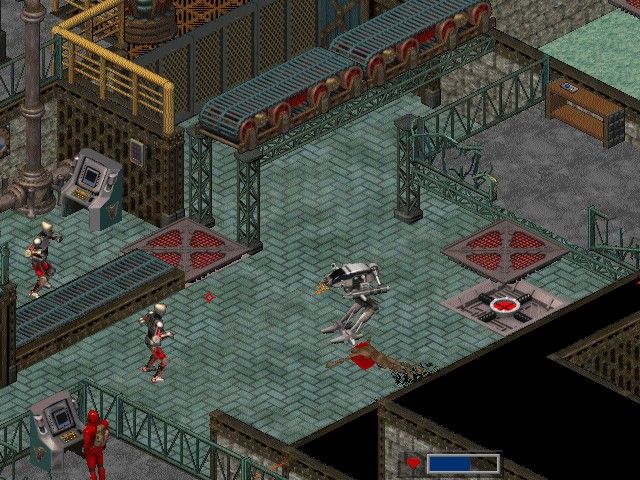
On the very first mission you meet the Thermatron, a walking death-snake with machine guns that even Silencers fear. Later come the Vetron units – armored rocket-spewing nightmares. The twist? With some clever hacking of hidden security terminals, you can seize control of them and rain missiles on your enemies yourself.
Every facility bristled with automated defenses: turrets, cameras, sensors. Get caught in their sights, alarms blared, and reinforcements poured in. Either shut the alarms down quickly or get ready for an extended bloodbath.
Touch That and Boom!
Pressure-sensitive floors, hidden traps, and surprise turrets kept you on your toes, especially in later levels. Objectives were always locked behind security codes – found on corpses, ripped from terminals, or bypassed with good old C4. Subtle? Not at all. Effective? Absolutely.
Civilians often populated levels too: engineers, office workers, unlucky bystanders. Sparing them was optional – the game didn’t punish you for killing them, and sometimes they carried credits worth looting. Ethical? No. Practical? Sometimes, yes.
Freedom Fight or Pixel Massacre?
Looking back, you can’t help but wonder: were we really fighting for the people? Each mission left a trail of civilian corpses. The rebel leadership didn’t seem to care – they were more interested in hanging out at the bar than holding tribunals.
The revolution here felt less like liberation and more like wholesale carnage – but my god, was it entertaining. Explosions, chaos, rebellion – the game wasn’t interested in morality. And the arsenal matched the tone: everything from radiation weapons to meat-grinders of destruction was up for grabs.
The most memorable? The UV-9, which stripped flesh from bone with ultraviolet radiation while victims screamed in agony. Disgusting, brutal, brilliant. Add in medkits, explosive spider-bots, and other gadgets, and the chaos was complete.
Weasel the Arms Dealer and FMV Land
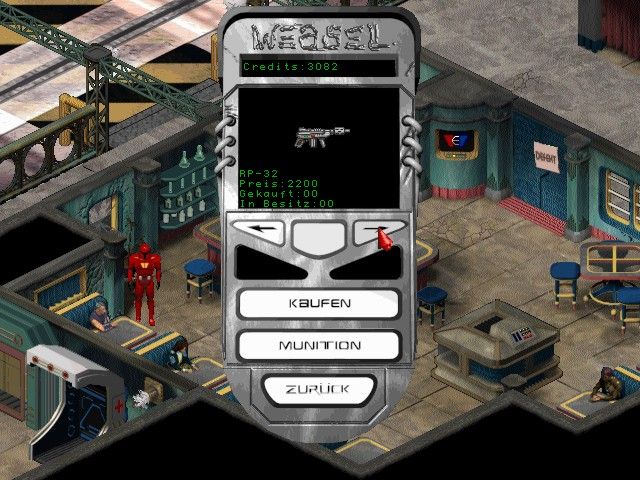
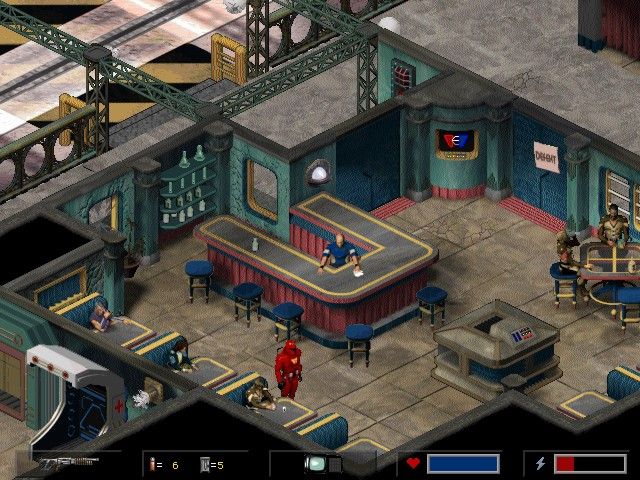
Gear could be bought at the rebel base from Weasel, the black market kingpin with a grin. Spend your credits, get your toys, and back into the grinder you went.
After every mission, you teleported back to HQ, where you could rest, chat, or take in the live-action cutscenes. FMVs in the mid-‘90s were usually laughable, but Crusader’s acting was surprisingly solid. Not Wing Commander-level star power, but definitely respectable.
Pumping Modules into Your Ears
The soundtrack deserves its own shrine. Industrial and techno bangers courtesy of Straylight Productions powered the carnage. And instead of relying on MIDI or FM synth, the team used the Asylum Music System – a MOD-based audio engine that packed both samples and sequencing data, ensuring everyone got the same killer sound regardless of sound card.
Composer Andrew Sega explained that this trick meant consistent, high-quality playback on every PC. It was a clever move few others followed, but it gave Crusader a sonic edge that still holds up.
Every Explosion a Sweet Memory
It’s easy to see why Crusader: No Remorse is remembered so fondly. It captures a moment in time when PCs suddenly grew teeth and developers let their imaginations run wild. The controls might feel clunky today, but the visuals and sound still hit hard.
The important part? Crusader is still an absolute blast to play. Blowing stuff up never gets old, especially when there’s so much to destroy. No Remorse remains a stylish, hardcore action game that’s absolutely worth revisiting. Highly recommended.
– Gergely Herpai “BadSector” –











Leave a Reply