

REVIEW – Monster Hunter Stories clicks for me as a JRPG because it doesn’t water down the main series’ hunting DNA – it just translates it into a human rhythm: turns, choices, and monster partners you actually invest in. Monster Hunter Stories 3: Twisted Reflection pushes that formula further with bigger zones, higher stakes, more moving parts, and a story that’s no longer trying to sell itself on “cute monsters” alone. We tested the game on PlayStation 5 Pro.
Twisted Reflection holds onto what makes the Stories branch easy to love: the exploration – egg hunting – party building loop, turn-based battles, and those hunter-flavored rules inherited from the mainline games. At the same time, it introduces new systems, leans into a more mature tone, and pulls fresh monsters into the mix – creatures from Monster Hunter World, Monster Hunter Rise, and Monster Hunter Wilds can join the Monstie lineup.

Crystallization, Borderlines, and an Egg That Cracks at the Worst Time
The setup starts two centuries earlier, during the War of Rupture. Wyverians and humans went to war, and the world paid for it by being split in half: the Wyverians rule the Northern Meridian, humans hold the Southern Meridian, and a pact forbids either side from crossing. Down south, humans went on to build the kingdoms of Azuria and Vermeil.
Then Azuria gets hit with something that makes politics look like a hobby: Crystallization, a bizarre phenomenon that turns land – and even living creatures – into glassy crystal. Someone has to figure out what’s happening before the region becomes a frozen display case. Your protagonist (male or female, as series tradition demands) is Azuria’s prince/princess and the captain of the Rangers. As a child, you witnessed twin Rathalos hatch from an ovoquartz (a crystal-frozen egg), an event treated as an omen of worldwide ruin – and “fixable,” according to legend, only by sacrificing one of the creatures.
You refuse the sacrifice and raise the surviving Rathalos instead, making it your primary Monstie. The real conflict ignites when Vermeil sends a delegation asking permission to cross the meridian into forbidden territory. The first answer is no, but they insist they must reach a specific location or Vermeil will fall into desolation – and if they have to, they’ll force the issue through war. That’s where Eleanor, Vermeil’s princess, steps in as a guarantor to keep everything from detonating immediately.
Meanwhile, the surrounding areas start throwing out red flags: invasive monsters appear where they don’t belong, species are pushed toward collapse, and people go missing. The tone is unquestionably heavier than in previous entries, but the Monster Hunter spine is still there: when the ecosystem breaks, someone has to put it back together – except now politics is riding on your back the whole way.

Semi-Open Zones, Plenty of Bases, and the “Just One More Egg” Trap
Structurally, it’s classic turn-based RPG: exploration, Monstie raising, combat. Character creation is simple but gets the job done – more “quick launch” than endless face-sculpting. The world is broken into big zones, each with its own habitat, resources, wildlife, and activities. Every map has a base – castle, village, or camp – where you run party management: forge, merchants, kitchen, stables. Main and side quests are picked up here too, and the rewards feed directly back into progression instead of feeling like filler.
The day/night cycle isn’t just cosmetic. It affects monster behavior, when rarer creatures show up, and when tougher threats start roaming. Compared to earlier entries, you gain traversal-focused Monsties earlier – flying, swimming, climbing – which turns exploration into route planning instead of plain jogging. Swapping Monsties happens through a fast radial menu that keeps the pace moving.
Watchtowers are scattered across the maps, letting you scan terrain and spot side activities. Monster Lairs (egg caves) are back, but they’re easier to navigate now and less maze-like than before. Eggs hatch at the stables, and there are three rarity tiers (common, rare, super rare) that influence gene quality. The new twist is repopulating areas with specific monsters – an ecosystem “reset” mechanic that directly affects what abilities and genes the eggs you find can inherit.

Rock-Paper-Scissors That Actually Punches Back
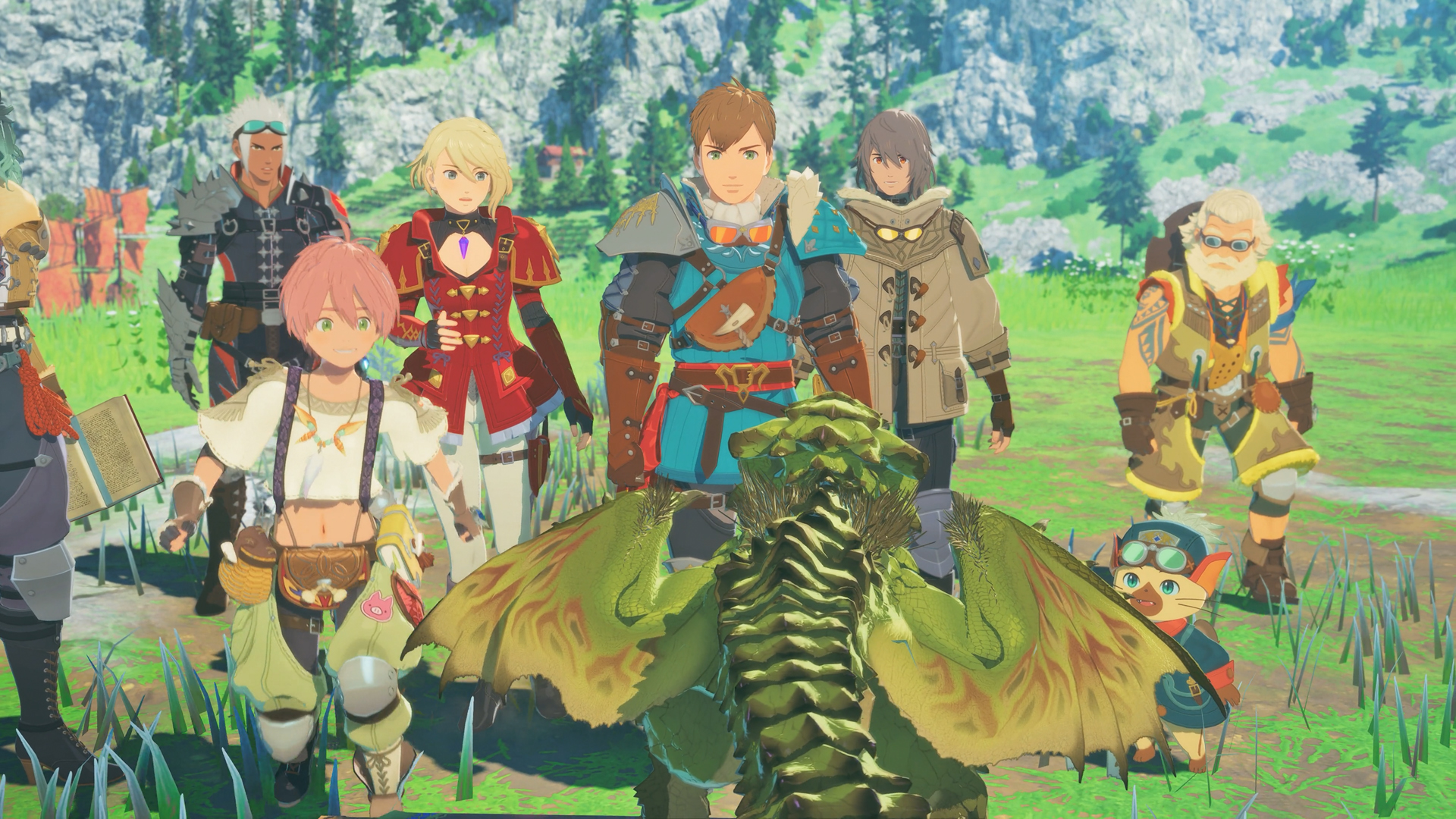
Battles put four units on the field: you, an ally, and both of your Monsties. You can’t directly control allies, but each one plays a clear role – offense, healing, buffs, status effects. Once the system clicks, fights are flashy and genuinely fun, and filling the bond gauge lets you mount your Monstie for the big shared attacks.
The foundation is still the series’ rock-paper-scissors triangle: Power beats Technical, Technical beats Speed/Agile, Speed/Agile beats Power. That rhythm drives the whole combat loop, but the game asks you to read enemy patterns more often than before – and it’s not always easy to call what type an opponent will throw next.
New layers help keep it interesting. Character skills now run on a stamina gauge that fuels special moves and recharges gradually through attacking or taking hits. Double Attacks return too: if your Rider and Monstie choose the same attack type, they strike together. Enemies also have an Indomitable Soul gauge – break it down and you can trigger stagger/fatigue/knockdown states, setting up a synchronized party strike where everyone hits at once.
Outlevel an enemy and you’ll sometimes get an “instant finish” option to end smaller fights quickly. And if you catch certain foes before a full engagement, you can erase them right at the door. It’s less “easy mode” and more the game respecting your time.
Monster Parts, Better Gear, and a New Generation of Monsties
A Monster Hunter game needs a forge, and this one delivers: hunt, carve, craft, repeat. You can focus attacks on specific body parts (head, wings, torso, legs), and breaking a part down to zero earns that component at the end of the fight. Weapon damage types remain familiar – slashing, blunt, piercing – each better against different targets. Weapon identity carries over too: great swords lean into raw damage, long swords work through a spirit-driven rhythm, bows spread status effects. It’s satisfying to see mainline weapon personality translated into a turn-based system instead of flattened into stats.
The roster expands with monsters from newer eras, widening the pool of recruitable Monsties. You’ll see names like Plesioth, Nerscylla, Chatacabara, Gypceros, and Paolumu, among others. More importantly, some monsters can show up with elements and abilities that diverge from what they’re “supposed” to have – a fire-leaning threat might carry lightning tricks, a water-based monster might pick up wind-like options. That pushes team-building into more interesting directions.
This ties into invasive monsters: creatures that don’t belong in a given region, hit harder than normal enemies, and can counterattack aggressively. Area repopulation adds a new strategy layer – if you commit to it, you can build monster partners that aren’t just strong, but deliberately tuned to your playstyle.
Bright Colors, Real Weight
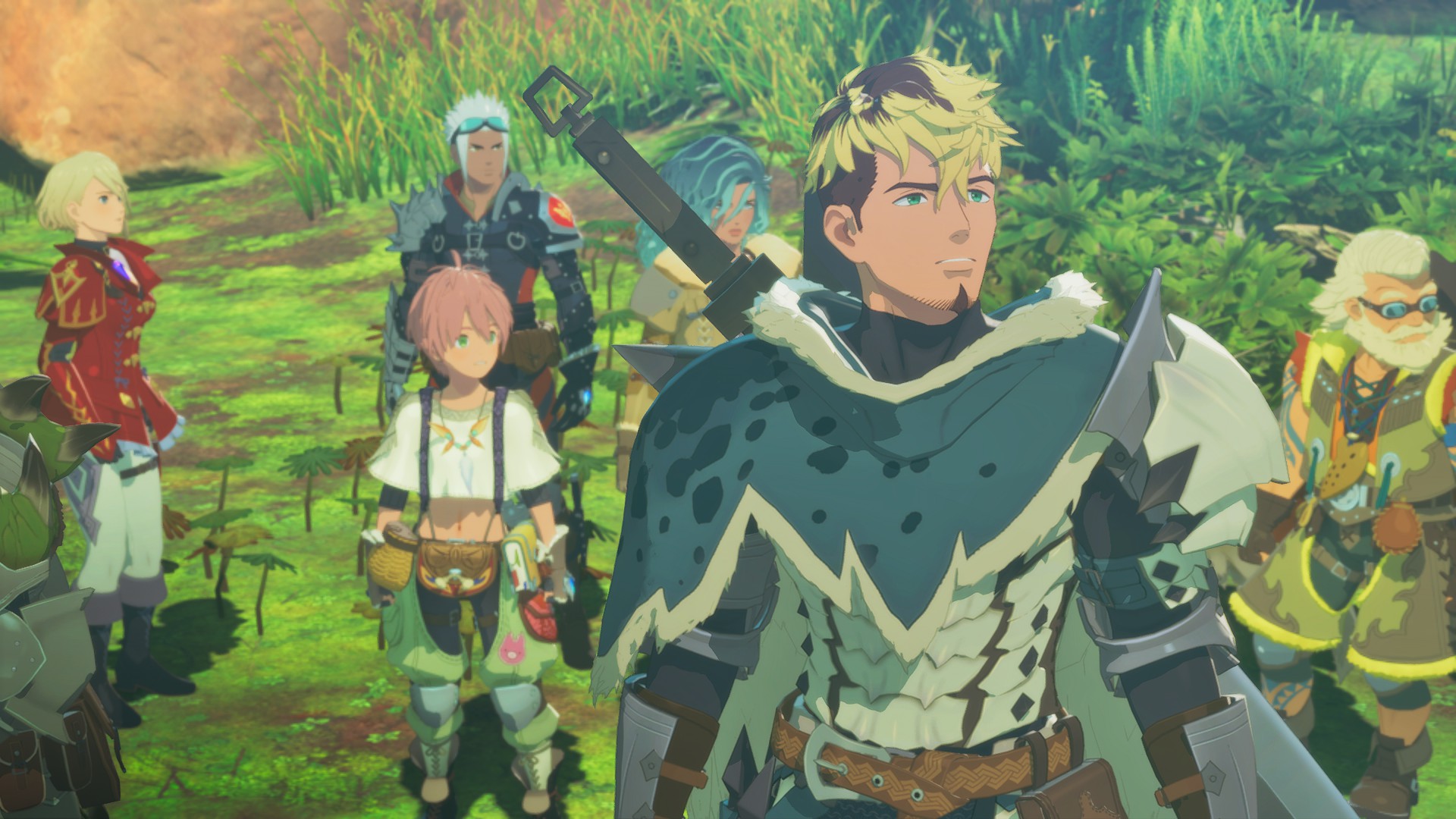
Visually, the game sticks to the colorful, cel-shaded style that defines Stories, and it still fits. Characters look more detailed, clothing and accessories show more care, and larger environments feel more grounded than in earlier entries. The downside is consistency: some surfaces look noticeably simpler up close, and in wide-open areas, distant detail can pop in late.
There are three visual presets (Graphics, Performance, Balanced). On PS5 Pro, Balanced felt like the most sensible middle ground: sharp enough to keep the image together without turning motion into sludge. Performance is for players chasing smoothness, Graphics is for players chasing screenshots – with the usual tradeoffs.
Higher Stakes, Bigger Game, and It’s Finally Not a Free Win
Twisted Reflection feels like the natural next step for the sub-series: a more mature story with political pressure, and an ecosystem crisis that isn’t just wallpaper. Gameplay expands the foundation with larger zones, richer exploration, new inheritance and habitat systems, and a mainline monster selection that genuinely boosts variety. Combat is also tougher – it doesn’t play like you’re always the safe side of the matchup.
It’s not flawless. Enemy reads can drift into guesswork, and the visuals aren’t perfectly even everywhere. It’s also clearly built as a single-player-first JRPG, which won’t satisfy anyone looking for a more social hook. Still, the core loop holds: this is the most ambitious Stories yet, and if turn-based hunting works for you, it’s dangerously easy to get stuck in it.
-Herpai Gergely “BadSector”-
Pros:
+ A more mature, politically driven story with a steady pace and likeable characters
+ Rich exploration: ability-based traversal, egg hunting, habitat restoration, and plenty of side content
+ Flashy, deeper turn-based combat with new systems that finally pushes back
Cons:
– Enemy pattern reading can lean too hard into guesswork
– Visual inconsistency: occasional late-loading distant detail and simpler surfaces
– Single-player focus and late-game choices that won’t land for everyone
Publisher: Capcom
Developer: Capcom
Genre: JRPG, Turn-Based Role-Playing Game
Release Date: March 13, 2026
Monster Hunter Stories 3: Twisted Reflection
Gameplay - 7.8
Graphics - 8.6
Story - 7.8
Music/Audio - 8.6
Ambiance - 8.5
8.3
EXCELLENT
Monster Hunter Stories 3: Twisted Reflection aims higher than its predecessors, wrapping Monstie raising in a more mature political conflict and a crystal-driven ecosystem crisis. Exploration is deeper thanks to traversal Monsties, egg hunting, and habitat systems, while combat is flashier and tougher, with new gauges and team attacks that reward smart play. It’s not perfectly consistent visually and sometimes asks you to guess too much, but overall it’s the most ambitious Stories entry yet.





![The Alighieri Circle: Dante’s Bloodline: A Divine Drama Amid September’s Flood of Games [VIDEO]](https://thegeek.games/wp-content/uploads/2026/08/theGeek-Alighieri-Circle-1280x720-1-302x180.jpg)
![Clive Barker’s Hellraiser: Revival Is Already in the Works for the Nintendo Switch 2! [VIDEO]](https://thegeek.games/wp-content/uploads/2026/08/theGeek-Hellraiser-Revival-1280x720-1-302x180.jpg)
![Head to the Pondverse in The James Pond Legacy: The Pond Is Not Enough [VIDEO]](https://thegeek.games/wp-content/uploads/2026/08/theGeek-James-Pond-Legacy-1280x720-1-302x180.jpg)


Leave a Reply