REVIEW – At first glance, Marathon looks exactly like the kind of game Bungie desperately needed right now: a flashy, confident, visually striking sci-fi shooter that is not trying to squeeze one last lap out of Destiny‘s fading shadow, but finally wants to make noise under its own name. During the first few hours, it is easy enough to believe in that promise. The guns sound great, movement feels tight, the visual design is distinctive, and the whole thing gives off a cold, sterile, yet deliberately eye-catching sci-fi atmosphere. Then, as the hours go by, it becomes increasingly obvious that Marathon is better at presenting itself than it is at truly holding together over the long haul. It is not a bad game, but it is also not the major event it initially seems to be.
The basic setup is familiar: you go in, grab what you can, then try to make it out alive before other players or roaming enemies tear you apart. Marathon is not trying to reinvent the extraction shooter, and in itself that would not be a problem. Not every game has to stage a revolution. Sometimes it is enough to take familiar elements and assemble them especially well. Early on, Bungie gives exactly that impression. The shooting feels good, the sound design is strong, the maps seem properly layered at first, and the whole game carries that kind of confident craftsmanship that not every studio in this genre can still put on display.
The problem is that after a few hours you start to see where the whole thing begins to creak. Marathon does not leave you wanting more because it is badly built, but because it too often settles for being merely competent where it really should have been memorable. It knows how to shoot, it knows how to look, it knows how to create atmosphere, but when it comes to character, systemic depth, or simply well-considered player-friendly design, it becomes much less convincing. It is like a band whose opening riff blows the plaster off the wall, only for the chorus to reveal that it is recycling the same three notes over and over while the light show keeps working overtime.

It looks impressive, but it feels much less polished once you start living in it
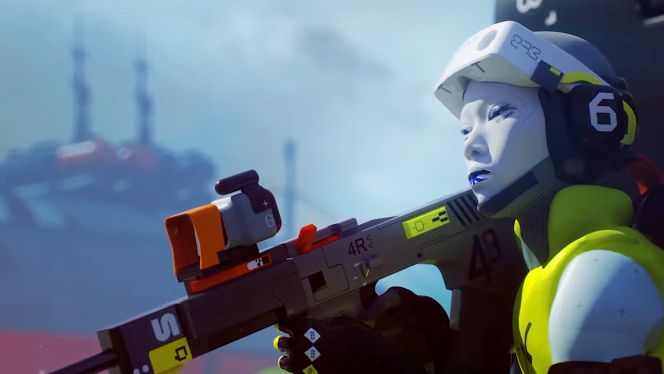
There is not much room to argue that Marathon‘s visual style is one of its strongest assets. The art direction is distinctive enough that two screenshots are enough for you to recognize it later. The loud colors, the glaring white architecture, the sterile spaces, and the sleek sci-fi elegance combine into a presentation that feels cold, striking, and surprisingly cohesive at the same time. That matters, because many games of this type either collapse into grey mush or strain so hard to look different that they end up looking tasteless. Marathon, at least at first, knows exactly how to make an impression.
On top of that, there are the cinematics, the faction aesthetics, the megacorporate dressing, and the kind of audiovisual polish that immediately reminds you Bungie has not forgotten how to sell a science-fiction setting. The weapons have weight, the sound design bites, the spatial audio works nicely, and the whole game clatters around you like an expensive machine trying very hard to convince you every part is exactly where it should be. It is easy to buy into that the first time. And the second time as well. By the third, though, you start noticing that beneath that confident exterior, several things feel only half thought through.
Because for all its style, Marathon is far better at manufacturing atmosphere than it is at building systems that are comfortable and logical to use. The menus alone are a test of patience. They want to look high-tech, but often function like an overdesigned customer-service portal. Even basic features require detours, navigation is unnecessarily clumsy, and the whole interface gives off that irritating sense that somebody thought it looked incredibly clever without really checking what it is like to actually play with it.

Fast deaths, very little room to respond, a lot of irritation
One of the biggest issues is the tempo and the brutality of death. Marathon operates with a very fast time to kill, which sounds like a way to heighten tension on paper, but in practice it simplifies too many encounters to the point where a large portion of firefights stop feeling like tense duels and start feeling like quick executions. Very often, the winner is simply the player who spotted the other first, and in an extraction shooter where death can take your entire loadout with it, that feels less tense than frustrating. The problem is not that the game punishes you. The problem is that it too often leaves you with no real chance to respond.
In that environment, the AI enemies are not just background decoration either. They track you, they aim, they are dangerous, and on paper that could have produced a really compelling PvPvE dynamic. The trouble is that when the map wants you dead, the players want you dead, and death arrives almost instantly, what you get is not tense survival but constant nervousness. There are too few moments where you have room to breathe, read a situation, or simply play. Marathon pushes itself too often into an aggressive rhythm where every encounter becomes a frantic exchange instead of something memorable.
That hurts all the more because one of the genre’s greatest strengths should be the unexpected, tense, or sometimes outright absurd situations it can generate. An extraction shooter is at its best when it is not just about shooting and looting, but about stories forming during the match. Forced alliances, panicked escapes, botched ambushes, sudden rescues, last-second extractions. Marathon, however, too often reduces all of that to who saw whom first and who pulled the trigger first. Over time, that creates a much thinner experience than the world and style of the game initially promise.
The shooting is good, but the game has too little identity of its own
And yet the core gunplay really does work. Bungie can still do things here that many studios can only watch from a distance with envy. The shots have weight, the weapons are satisfying to use, the audio feedback is strong, and movement is tight enough that for a while you can keep playing purely for the mechanical pleasure of it. The maps are not bad either: layered enough, twisty enough, and their closed sections, narrow routes, more open spaces, and hidden corners genuinely create the feeling that there is something worth learning over time.
But sooner or later the same question comes back: all right, but why would I stay? Because Marathon regularly flashes hints that it could have been a better game than the one actually in your hands, yet somehow always slips back into the category of competent but not irresistible. This kind of extraction formula no longer gets by on its own. Loot, extraction, the usual risk-reward loop – none of that automatically becomes addictive unless there is a real sense of identity behind it, a stronger mechanical hook, or a social dynamic that gives matches a life of their own. And that is exactly where Marathon comes up short.
Even on the world-building side, the impression is more that Bungie wants to unfold something gradually over multiple seasons, while the actual moment-to-moment experience still is not compelling enough to make you especially care yet. Tau Ceti IV, a lost colony, megacorporations, runners wired into synthetic shells – all of that sounds good on paper, and the background material does suggest that a great deal of work went into building the setting. The trouble is that when part of your time is spent wrestling with storage limitations and another part cursing the menus, less of that universe reaches you than should. It is hard to get deeply invested in the science-fiction backdrop while you are still trying to understand why a basic function requires three unnecessary detours.

Its strength should be team play, yet that is where it often falls apart
Team play is not really the area where Marathon produces anything especially memorable either. Playing with strangers is often more of a patience exercise than real cooperation. Everyone rushes after their own objectives, tries to tick off what they need, and when trouble arrives the whole group is liable to collapse like a badly assembled folding chair. The ping system does not help enough, its priorities often feel odd, and team composition sometimes comes across as if matchmaking itself has shrugged and decided you can all sort it out somehow.
That is especially frustrating because one of the most important strengths of an extraction shooter ought to be the human situations it produces. Distrust, forced cooperation, sudden acts of heroism, cowardly retreats, betrayals, rescues, desperate last runs. Marathon, however, too often strips all that back to pure reflex and blunt aggression. Because of the fast deaths, constant danger, and the game’s permanently anxious baseline rhythm, something important is missing from the online experience: real player-to-player dynamics. What remains is mostly constant alertness and a trigger finger permanently bent and ready. In some games that is a virtue. Here, it narrows the experience instead.
That is what makes Marathon such a strange contradiction in the end. You can clearly see the professional skill, the budget, the visual taste, the Bungie FPS experience, and at the same time you can equally clearly see that something still does not come together properly. It is not collapsing, it is not embarrassing, it is not a disaster. It simply never builds itself into the kind of whole that makes you say yes, this was truly worth it. It is more like an expensive dish served in a fancy restaurant that looks gorgeous on the plate, only for you to realize after a few bites that the garnish is more interesting than the main course.
It looks good, it shoots well, but it is missing that real extra spark
Marathon, then, is not a failure, and certainly not a bad game. There is too much know-how in it, too much craft and professional competence for that. It simply cannot shape that strong raw material into the memorable whole its looks, its name, and its first few hours promise. There is good shooting here, strong atmosphere, striking art direction, and competent map design, but all of it keeps being dragged back down by awkward menus, questionable design decisions, overly fast deaths, and an online environment with too little breathing room and too much irritated reflex.
If you are deeply invested in the genre and are already happy that Bungie has made a technically strong, visually striking, fundamentally competent extraction shooter, then Marathon can absolutely give you many hours. But if you are hoping this will be the game that reminds you why Bungie once managed to get entire generations hooked on sci-fi shooters, you may well end up saying something much flatter: all right, this is decent enough, but where is that extra something? Marathon gets through the distance. It is just that too rarely does it feel like the journey was really worth taking.
-Gergely Herpai “BadSector”-
Pros:
+ Striking, instantly recognizable visual style and very strong audiovisual execution
+ Bungie’s gunplay is still precise, tight, and enjoyable
+ The map layouts and sci-fi foundations leave plenty of room for future potential
Cons:
– The menus and interface are unnecessarily cumbersome and often genuinely awkward to use
– The very fast time to kill makes too many encounters frustratingly short
– Team play and long-term motivation are not strong enough to make it truly absorbing
Developer: Bungie
Publisher: Sony Interactive Entertainment
Genre: extraction shooter, sci-fi FPS
Platforms: PC, PlayStation 5, Xbox Series X|S
Marathon
Gameplay - 7.2
Graphics - 8.9
Story - 6.4
Visuals/Music - 6.6
Ambience - 5.6
6.9
FAIR
Marathon clearly delivers the level of Bungie craftsmanship you would expect in terms of visuals, atmosphere, and the basics of shooting, but too many questionable decisions weaken the long-term experience. The overly aggressive pace, the awkward interface, the balance built around very fast deaths, and the weaker team dynamics keep this from becoming the kind of game that hooks you for a hundred hours without resistance. Strong foundations, impressive packaging, less convincing substance - Marathon is good, just not quite as good as it wants to look.







![[TGA 2025] Diablo IV: Lord of Hatred: A Character Class Returns! [VIDEO]](https://thegeek.games/wp-content/uploads/2025/12/theGeek-diablo-4-expansion-2-lord-of-hatred-paladin-skovos-horadric-cube-302x180.jpg)