
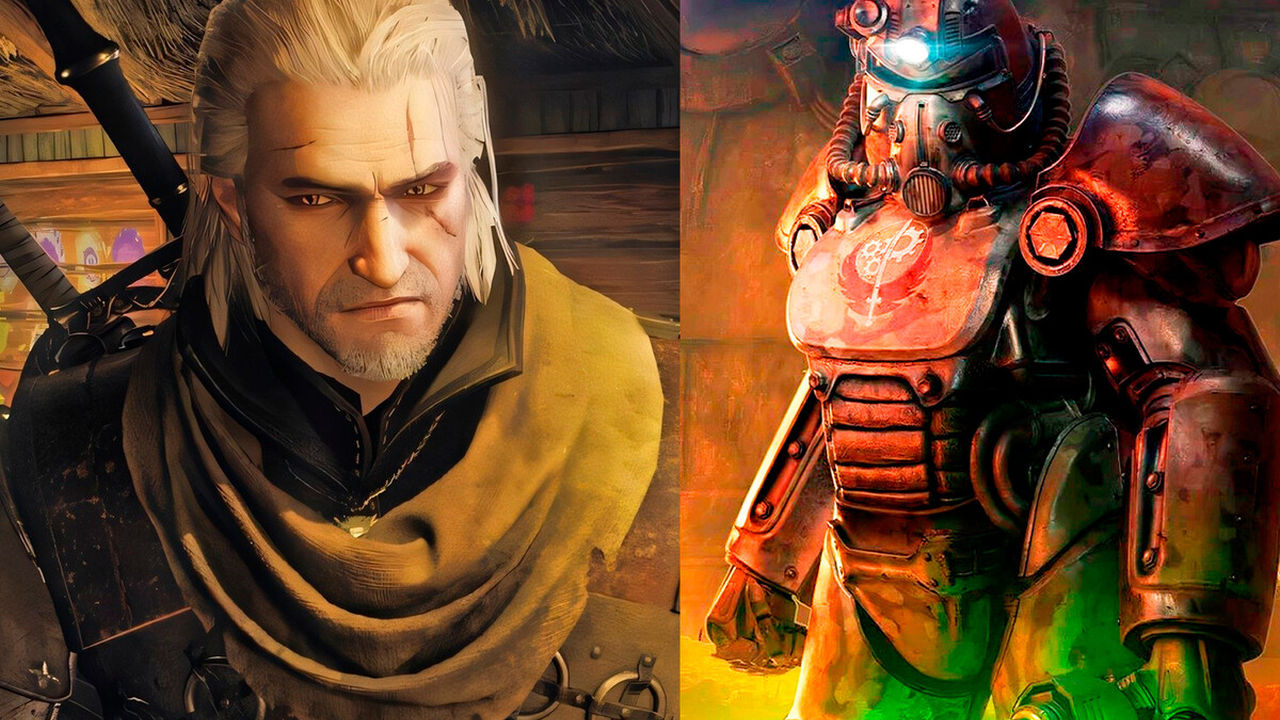
Fallout creator Tim Cain has returned to one of the design ideas he has been consistently pushing for years: a good role-playing game should never try to drag the player through a single imagined order of events. In his latest video, Cain laid out eight recommendations for developers working on nonlinear RPGs, and the first one was easily the sharpest. According to him, studios need to stop assuming that players will go here first, talk to this person first, and move through the world in the exact sequence the designers originally pictured. :contentReference[oaicite:5]{index=5}
Cain explained the point with a simple example. If there is a guard standing outside a city gate, a designer should not build the whole flow around the assumption that every player will walk up to that guard, talk to him, listen politely, and only then continue forward. In a nonlinear RPG, the player may ignore him, flank him, kill him, or enter the city from a completely different angle. If the game cannot survive that, then the design is already too brittle. For Cain, good level design in this kind of RPG begins with accepting that players will not follow instructions just because the designer silently hoped they would. :contentReference[oaicite:6]{index=6}
The Witcher 3 Became Great by Accounting for the Player Who Wanders Off
This is exactly where The Witcher 3: Wild Hunt enters the conversation, because it remains one of the strongest examples of how to apply that philosophy in practice. CD Projekt RED built the game’s quests and broader story logic with enough flexibility that the structure does not collapse just because the player refuses to move in the preferred order. Old player reports and community examples still show that if someone reaches Skellige unusually early or tackles the major regions in a different sequence, the game often responds with altered dialogue and adjusted character reactions rather than falling apart. :contentReference[oaicite:7]{index=7}
That is not just technical competence. It is a deliberate writing and quest-design choice. The Witcher 3 works so well not simply because its world is large, but because the world does not break when the player moves through it differently than expected. This is the point where Cain’s principle and CD Projekt RED’s execution line up perfectly. A strong RPG does not ask how it can force the player into the correct route. It asks how the story can remain coherent and reactive even when the player ignores the neat order the studio had in mind. :contentReference[oaicite:8]{index=8}
A Great RPG Is Not Defined by Size, but by How Well It Survives Freedom
That is why Cain’s point matters more than just another veteran designer handing down advice. What he is really saying is that nonlinearity is not decoration. It is an obligation. If a studio promises freedom, it has to be ready for players to actually use it. The Witcher 3 became more than just another content-heavy open world because it did not merely allow detours – it meaningfully reacted to them. That is a major reason it still stands as one of the genre’s clearest reference points nearly a decade later. :contentReference[oaicite:9]{index=9}
Source: GamesRadar+












Leave a Reply