
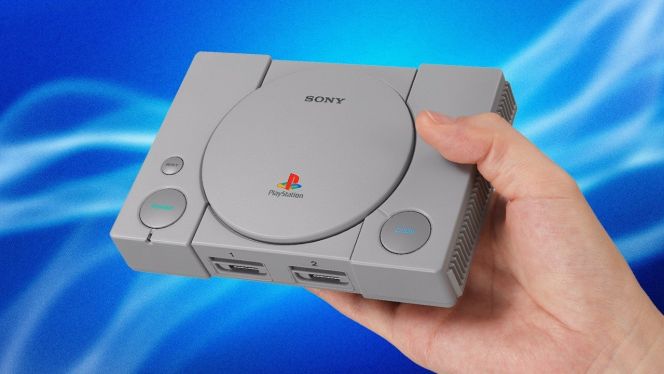
And yes, by PlayStation we mean the original 1994 PS1, not any later generation!
We simply could not resist the charm of this hardware project, which brings the original PlayStation 1 up to date. HDMI output, USB power, wireless controllers – all of it is packed into this cool blue shell inspired by the original dev kits. The video below, created by The Retro Future, shows the teardown of a very worn-looking SCPH-5502 PAL-region PlayStation, revealing old modifications left behind by a previous owner – a bit like uncovering fossil-rich layers in sedimentary rock.
Those old hardware mods added NTSC compatibility and the ability to play burned discs, but the video’s creator decides instead to start from something close to a blank slate. After sending the original PlayStation shell off for a well-deserved spa day, the modder begins by stripping all the old modifications from the PCB, then introduces the catalyst of the whole video: the PicoStation ZeroWire. It turns out hardware modding has evolved a bit over the past few decades. ZeroWire lets modders boot games from an SD card on a PlayStation because it includes a Raspberry Pi Pico, and it greatly simplifies the soldering process so that all the contact points on both PCBs work correctly. It is a genuinely elegant little device, and far better than folding the motherboard in half like a book.
Despite the name, though, it still does require soldering together one contact and one wire – maybe OneWire would have been the better name. After that, the modder lifts a few selected contacts from the motherboard on the CD-ROM controller chip so the PicoStation can take over. The HDMI mod requires a ribbon cable whose nearly 50 contact points must be soldered directly to the original video chip inside the PlayStation. The alternative would be an external adapter connected through the original component cables to convert the console’s 480p output into 1080p. But who wants to add even more cables to a retro hardware project if there is a cleaner way?
Adding wireless controller support to this 32-year-old console involves disassembling the original controller ports, installing another custom PCB, and doing a whole lot more soldering. Even so, the result means you can play PS1 games using a PlayStation 5 DualSense controller. After all of that, the final upgrade is a new power supply that allows the entire system to run through USB-C.
Source: PCGamer







![The System Requirements for Fable Are In! [VIDEO]](https://thegeek.games/wp-content/uploads/2026/08/vnews-05-fable-1280x720-1-302x180.png)







Leave a Reply