
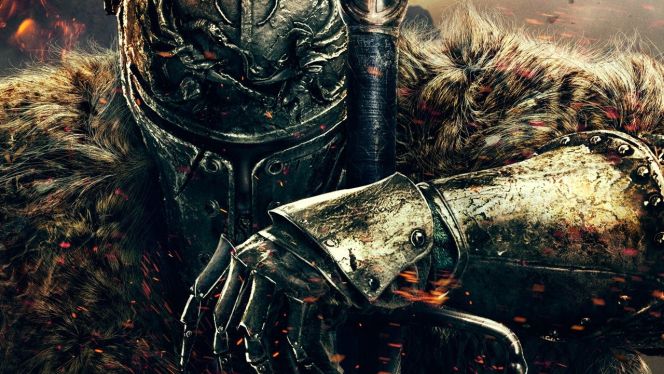
No FromSoftware game exists without cut content, but to be fair, that is true of almost every major production at this scale.
Whether you consider Dark Souls 2 the worst or the best Souls game FromSoftware ever made, one thing is difficult to dispute: it went through the most chaotic development cycle in the series. The project was rebooted midway through production, leading to a full reworking of the story and helping explain many of the odd level-design quirks scattered across its surreal, fragmented world. One byproduct of that reboot was a mountain of cut content, ranging from small items to entire level sections and even gigantic crab bosses. One of the biggest lost areas was a massive sewer network that was ultimately replaced by The Gutter, the similarly subterranean zone linking The Grave of Saints and Black Gulch.
While various cut Dark Souls 2 areas had already been uncovered in the past, this sewer section remained hidden until now. Doneda has now reconstructed the cut map and uploaded a video exploring it in detail. In most FromSoftware games, playable areas are defined through the MapStudioBinary, or MSB, file format. Modders are able to manipulate those files with specialized tools, which is how Doneda managed to uncover the sewer system. As expected, the recovered area is incomplete, with no enemies and many of the smaller details you would normally expect from a FromSoftware map missing, but it is partially textured, largely connected, and absolutely enormous.
Most of the video is simply Doneda walking through the zone, and it still takes nearly an hour even without a single enemy standing in his way. Part of the area has an almost temple-like structure, with Doneda wandering beneath huge vaulted ceilings and dome-topped towers. At the same time, just like in the final version of The Gutter, the influence of Dark Souls‘ Blighttown is impossible to miss: the map’s central section contains a cramped, ramshackle slum, while giant structures loom beyond it in the distance. A few individual locations stand out in particular. One of them, which Doneda calls perhaps the best part of the cut map, is a tavern tucked away in the Blighttown-like section. It is notable not only because it is one of the most complete areas in the entire map, but because it is refreshing to see a place clearly built for leisure in a series otherwise dominated by graves, torture chambers, and poison swamps.
Another location, one that feels much more traditionally Souls-like, initially looks like a boss arena. After passing through a placeholder fog gate, Doneda enters a chamber lined with two massive statues and centered around a raised platform surrounded by objects that at first glance resemble swords. According to Doneda, they are more likely extinguished candles. That immediately raises the question of whether this really was meant to be a boss arena, because those objects would make combat awkward. It may instead have been intended as a meeting point for an important character. Beyond showing what Dark Souls 2‘s version of The Gutter might once have been, the video also offers a fascinating window into the game’s design process. Near the very beginning of the tour, Doneda finds a pathway that is not connected to the rest of the area and points out that the designers probably had not yet decided how the player was supposed to proceed from that point.
In a way, it supports an old comment from Miyazaki Hidetaka, who suggested that Dark Souls 2 helped push the series forward by carrying ideas that the team developed during that difficult project. It is entirely possible that later masterpieces from the studio, such as Sekiro: Shadows Die Twice and Elden Ring, would not have taken the shape they did without that messy and painful period of experimentation first.
Source: PC Gamer












Leave a Reply