
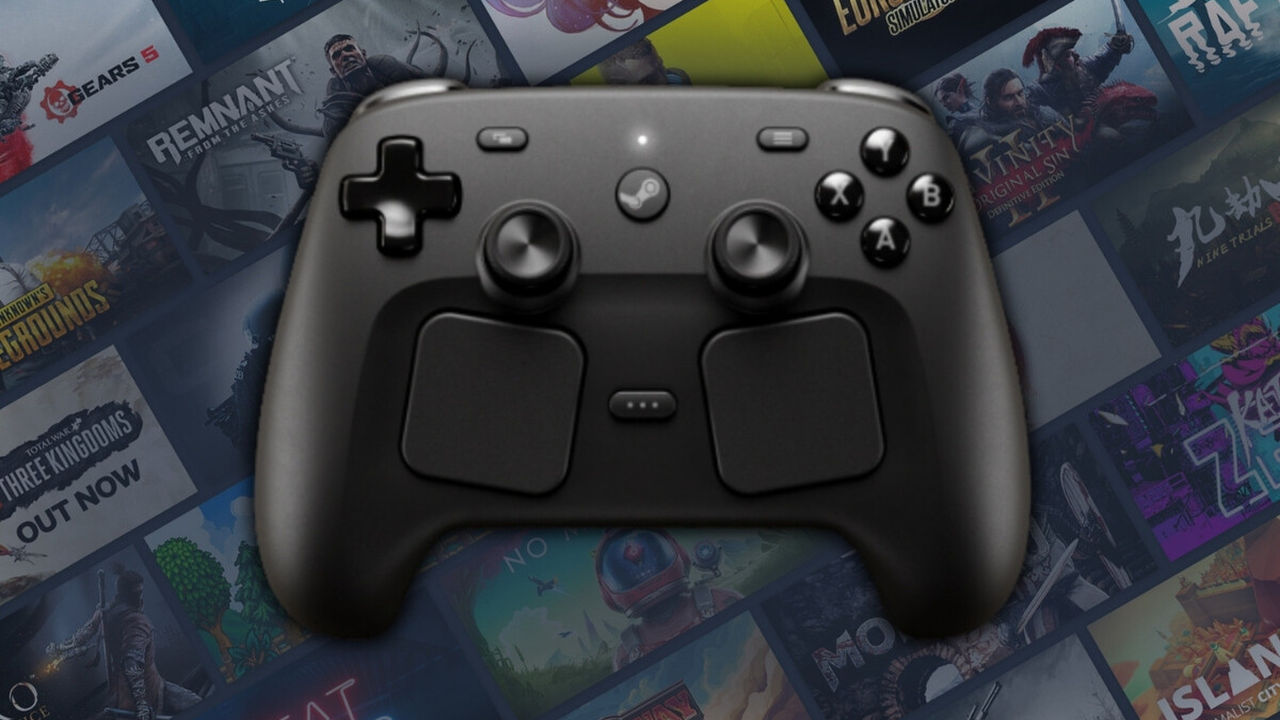
TECH NEWS – Valve has been quietly setting the stage for its return to the controller market for months, and now it looks like an accidental leak has blown the cover off the whole plan. A review video that appeared too early and then disappeared just as fast seems to have revealed not only a long list of details about the new Steam Controller, but also its price. It will not be cheap, but if the leaked information is accurate, Valve has at least chosen to focus on one area where modern controllers repeatedly fall apart: stick drift.
Current reports suggest the controller will cost $99 in the United States, which would make it roughly twice as expensive as the original 2015 Steam Controller. The leaked review reportedly argued that this will not be a mass-market device and probably will not appeal to everyone, but Valve is clearly not trying to position it as a basic budget gamepad either. The company has already publicly said that its new hardware lineup, including the Steam Controller, is still planned for 2026, which makes the growing pile of leaks feel much more credible.
Based on the leaked details and Valve’s own product messaging, the new model keeps the most distinctive idea from the original controller: the dual trackpads, which are still there for mouse-like precision and Steam-specific input flexibility. What changes the picture is the addition of symmetrical thumbsticks using TMR technology. That may be the most important upgrade of all, because it is specifically tied to long-term reliability and the promise of little to no drift. Add HD rumble, grip-enabled gyro controls, rear inputs, and broad Steam Input support, and Valve no longer looks like it is merely reviving an old experiment. It looks like it is trying to turn that experiment into a serious premium controller.
It Will Not Be for Everyone, but It Looks Increasingly Like a Controller Built First and Foremost for the Steam Ecosystem
The leaked impressions suggest that this new Steam Controller is aimed squarely at people who live inside Valve’s ecosystem, whether through Steam Deck, SteamOS, or the company’s next wave of hardware. The feature set helps explain the price, but the device still appears to come with trade-offs. According to the leak, there is no 3.5 mm audio jack, the battery is not especially easy to replace, and the rougher plastic shell may feel a little slippery for players with dry hands.
The same review also noted that the controller does not offer interchangeable sticks or adjustable triggers, which means some enthusiast-grade features still remain the territory of more expensive competitive pads like the Xbox Elite or DualSense Edge. In exchange, however, Valve is leaning hard on the parts that make this controller distinctly its own: multiple haptic motors, six-axis gyro, capacitive sensing, and simultaneous support for up to four controllers. The reported battery life stretches past 35 hours in normal use, although that number may dip when paired with other upcoming Valve hardware.
The most interesting part of all this may be the sense that Valve has finally understood why the first Steam Controller failed. The original was inventive, but also too strange, too compromised, and too difficult for many players to adapt to. This time the design seems far less interested in rejecting the familiar shape of a modern controller and far more interested in building Valve’s unique ideas on top of it. If the leaks hold up, this may be the first time Valve has a controller that feels not just unusual, but genuinely competitive.
Source: 3DJuegos

![The Nintendo Switch 2 Keeps Pace with the Xbox Series S Even in the Case of the Oblivion Remaster! [VIDEO]](https://thegeek.games/wp-content/uploads/2026/08/oblivion-remastered-switch2-1280x720-1-302x180.jpg)


![Marvel’s Wolverine Is Getting a Limited-Edition Console, Cover, and DualSense Controller! [VIDEO]](https://thegeek.games/wp-content/uploads/2026/08/wolverine-ps5-bundle-1280x720-1-302x180.jpg)
![Phantom Blade Zero: From Pre-Orders to State of Play [VIDEO]](https://thegeek.games/wp-content/uploads/2026/08/phantom-blade-zero-1280x720-2-302x180.jpg)




![The Nintendo Switch 2 Keeps Pace with the Xbox Series S Even in the Case of the Oblivion Remaster! [VIDEO]](https://thegeek.games/wp-content/uploads/2026/08/oblivion-remastered-switch2-1280x720-1-300x365.jpg)


![Marvel’s Wolverine Is Getting a Limited-Edition Console, Cover, and DualSense Controller! [VIDEO]](https://thegeek.games/wp-content/uploads/2026/08/wolverine-ps5-bundle-1280x720-1-300x365.jpg)
Leave a Reply