
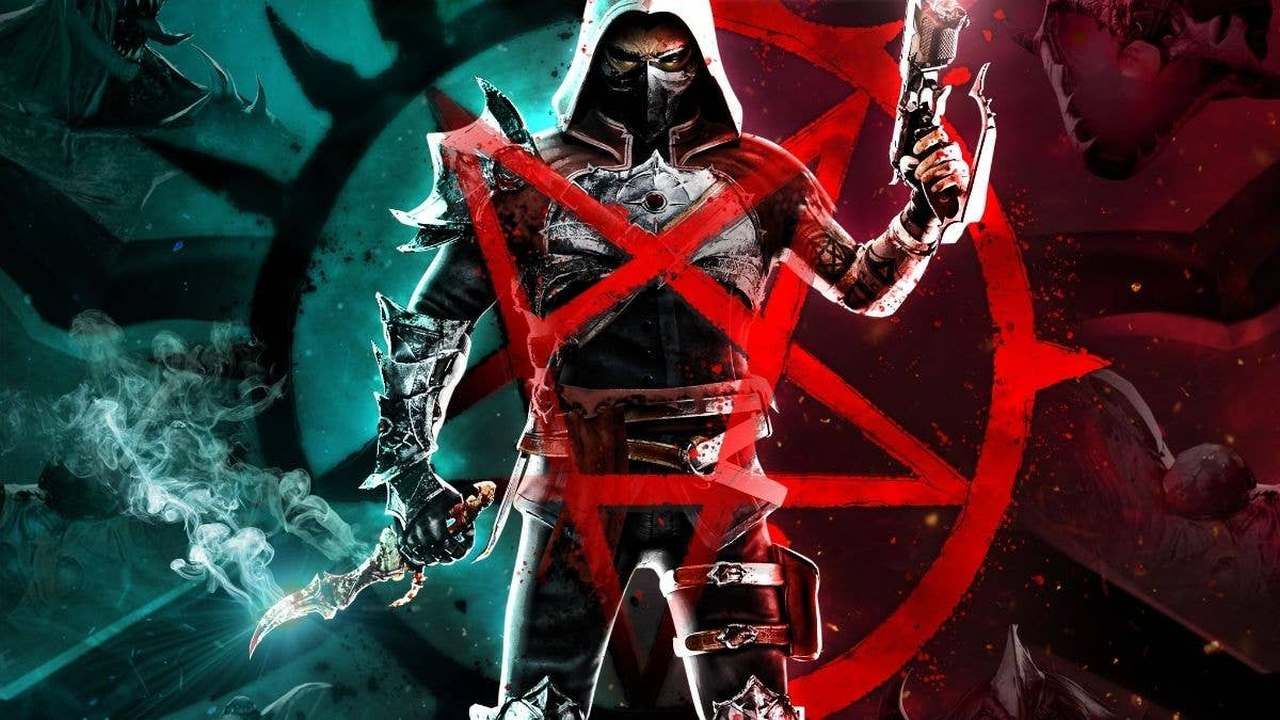
REVIEW – Blood Reaver is direct about what it wants to be: a dark fantasy wave FPS built for tight arenas, relentless demon pressure, and a simple loop that keeps asking one question – can you hold the line one more round. The gothic look lands immediately, the blood-magic layer gives the gunplay a second brain, and the pacing can snap into something genuinely addictive. But it is still Early Access, and you feel that roughness in content breadth, combat feedback, and readability when the screen turns into a fireworks show.
At its core, this is classic horde DNA: survive rounds, earn currency, unlock weapons and space, and use demon blood to fuel abilities that can flip a wave in your favor. It is not trying to be a story-driven campaign shooter. The hook is momentum – decisions made mid-run, small advantages stacked fast, and the constant risk of getting cornered because you got greedy two seconds ago.
When it clicks, Blood Reaver hits that old-school comfort zone where you stop thinking in minutes and start thinking in patterns. Where do the threats spill in, which lanes do you control, when do you spend, and when do you hold because the next wave is about to test you. The issue is that the current build does not always deliver the clean feedback and clarity that this kind of loop needs to feel fair every time.
One Map, Plenty of Rounds, and a Small Arena That Bites Back
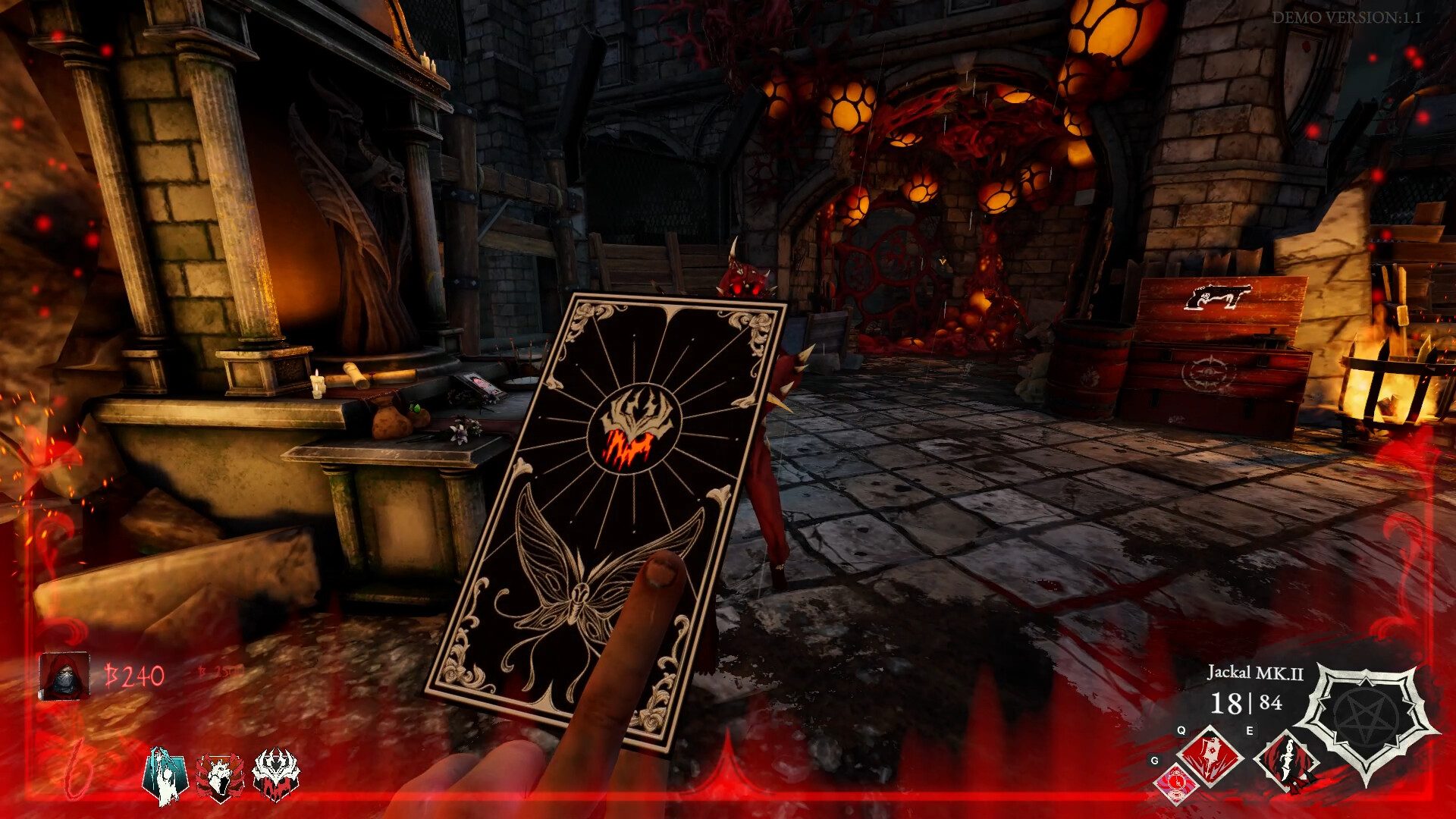
Right now, content is the big limiter. The game launches with a single map, and even if that arena is well-made, repetition shows up fast. The environment does its job, though – ruined castle vibes, hell-bunker corridors, stormy skies, and enough debris and barricade logic to sell the idea that you are holding a collapsing position against a tide that does not care.
Progression is practical: money opens weapon crates and blocked areas, expanding your room to breathe as the waves get thicker. You can also rebuild certain barriers, which buys precious seconds once the horde starts coming from every angle. It is a small touch, but it matters when the map is tight and the pressure is constant.

Guns and Blood Magic – A Great Combo When the Impact Is There
The twist is the blood-powered layer. You are not just upgrading damage numbers – you are building a rhythm between weapons and abilities, choosing when to slow time, when to drop a damage-boosting zone, and when to burn a lane to stop the wave from snowballing. The concept encourages synergy instead of pure shooting, and it gives runs a bit more personality than a standard gun-only horde mode.
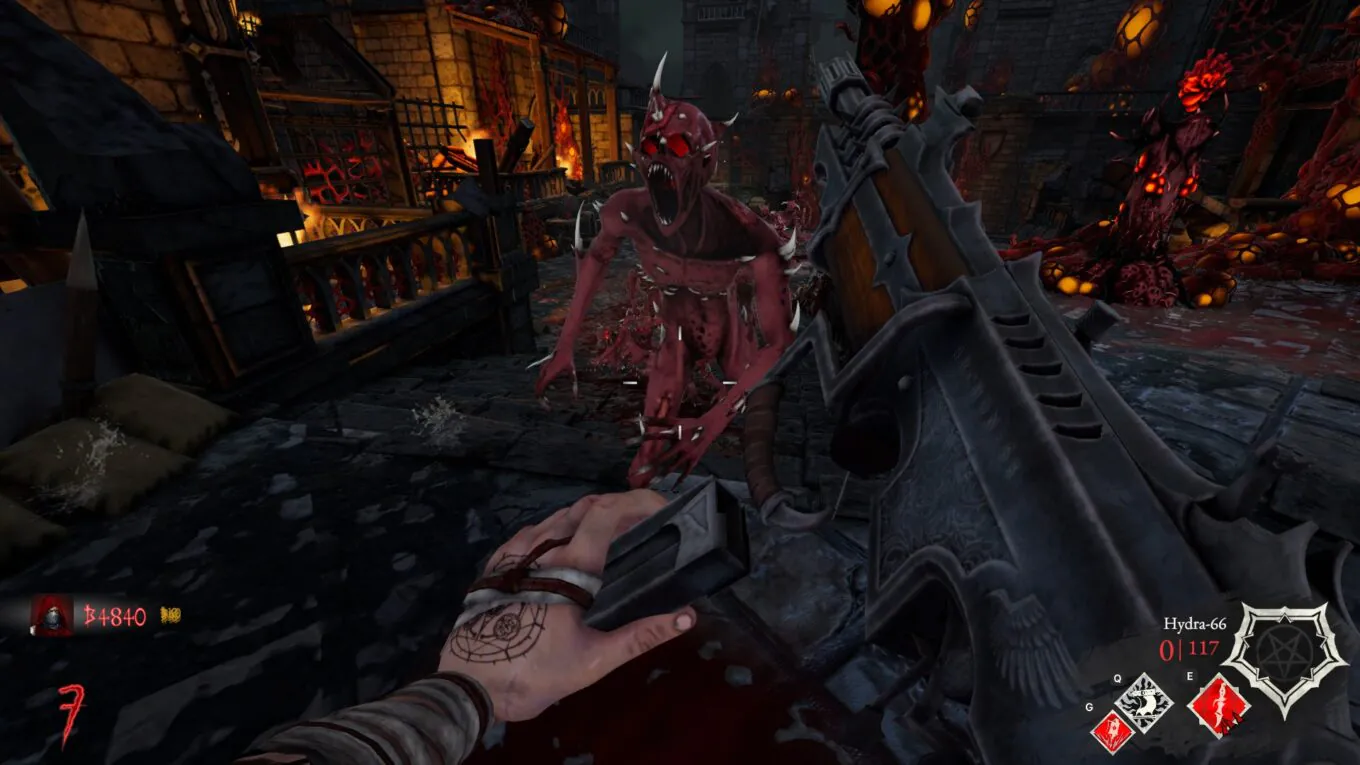
Combat is fast, but the current feedback can feel light. Some weapons do not always communicate weight the way they should, and enemy reactions can be muted, which softens the intensity. In a wave shooter, every hit is part of the soundtrack – if the game does not sell impact, the loop starts feeling flatter than the art direction deserves.

When Everything Overlaps, Readability Becomes a Gameplay Problem
Clarity is the other major issue. Once abilities, enemy groups, and visual effects stack, priorities can get hard to read in the middle of a wave. That matters because the genre is built on fast decisions and positioning. When the screen is noisy, survival stops feeling skill-driven and starts feeling like you got unlucky with visibility.
This is not about stripping style away. It is about making sure the important information survives the spectacle: where the real threats are, what is flanking you, and what you can safely ignore for three seconds while you reset your position.
Build Variety Is the Promise, but the Run-to-Run Spice Is Still Thin
The long-term appeal is clearly meant to be experimentation – mixing loadouts, stacking upgrades, and letting your blood abilities define your approach. There is potential here, and the system already hints at deeper layering beneath the surface.
But two things hold the loop back in its current form: the single map, and the lack of meaningful variation in where key unlocks sit. When the important elements are always in the same places, you gain convenience but lose surprise, and surprise is what keeps a wave shooter feeling fresh after the first few good runs. Endgame goals also feel light for now – you can chase higher waves, but the structure is still waiting for stronger long-term hooks.
Co-op Could Be the Version That Really Sings
Blood Reaver is built with up to four-player co-op in mind, and that is where the design could shine the most. Waves, roles, positioning, and ability synergy all become sharper when a team is coordinating instead of one player juggling everything.
As it stands, the foundation is solid and the identity is clear, but it needs refinement – more content, stronger combat punch, and better readability under pressure. If the roadmap delivers, this could turn into a reliable “one more run” demon-horde shooter instead of a stylish prototype you admire and move on from.
-Gergely Herpai “BadSector”-
Pros:
+ Strong art direction and atmosphere with a satisfying arena feel
+ Blood magic adds real decision-making and synergy to the wave loop
+ Co-op structure has serious upside if content and balance grow
Cons:
– Limited content right now, with only one map
– Combat impact can feel light, which dulls the intensity
– Visual clutter can hurt readability and decision-making mid-wave
Developer: Hell Byte Studios
Publisher: Hell Byte Studios
Release: Early Access – April 15, 2026
Genre: dark fantasy, round-based horde FPS, Early Access
Platform: PC (Steam)
Blood Reaver
Gameplay - 7.3
Graphics - 7.6
Story - 6.4
Music/audio - 7
Ambience - 7.7
7.2
GOOD
Blood Reaver nails the vibe and already has a wave-shooter core that can become genuinely addictive once you find your rhythm. Right now, the single-map content, softer combat impact, and readability issues keep it from fully delivering on its own promise. If the roadmap lands with more variety and polish, it could grow from a stylish early access project into a real co-op staple.



![Moon Studios Has Postponed the Release of No Rest for the Wicked! [VIDEO]](https://thegeek.games/wp-content/uploads/2024/04/thegeek-no-rest-for-the-wicked-2024-302x180.jpg)

![Dragon’s Dogma II: Dark Arisen: Major Free Update Ahead of the DLC [VIDEO]](https://thegeek.games/wp-content/uploads/2026/09/dragons-dogma-dark-arisen-1280x720-2-302x180.jpg)





Leave a Reply