
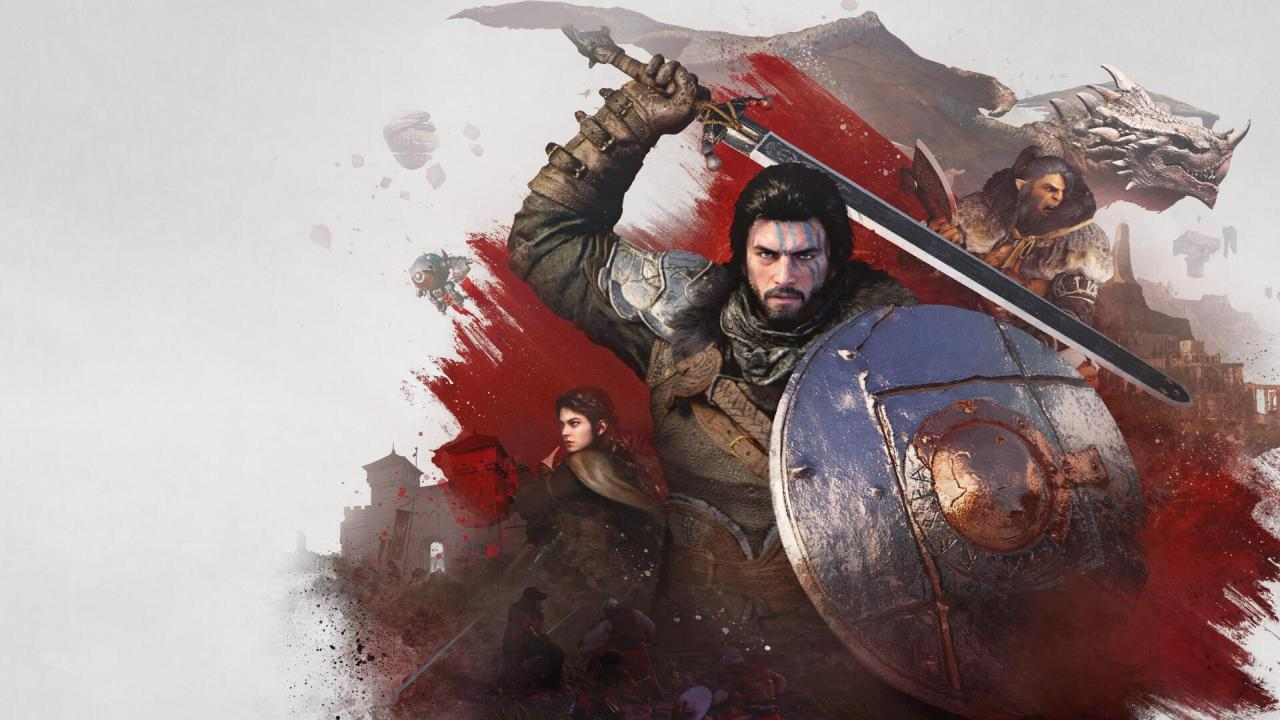
Crimson Desert is no longer just a major commercial success for Pearl Abyss. According to South Korean Prime Minister Kim Min-seok, the open-world action game represents a turning point that has opened a new chapter for “K-content”, the broader wave of Korean cultural exports that has already conquered global audiences through music, film, television, and streaming. Now, in his view, video games have officially entered that same conversation.
As reported by 3DJuegos, Kim Min-seok publicly praised Crimson Desert after it surpassed five million copies sold, but his statement went far beyond a routine political congratulations message. The Prime Minister stressed that the game became the fastest Korean console title ever to reach that milestone, and argued that Pearl Abyss had helped elevate the status of the entire Korean gaming industry on the global stage. That alone is a strong endorsement, but Kim went even further in the way he framed the game’s significance.
According to his comments, Crimson Desert stands out not only because of its sales, but because of the way it presents a living game world built with proprietary technology, photorealistic visuals, and a style of communication that managed to attract players worldwide. Kim also emphasized the game’s natural inclusion of Korean cultural elements such as taekwondo and Korean cuisine, arguing that this helped open a new chapter in K-content. That wording matters, because it suggests South Korea is now beginning to treat games in the same strategic cultural category as K-pop, Korean dramas, and cinema.
The Government Is Now Openly Treating K-Games as Part of the Country’s Cultural Export Strategy
Another major point in Kim’s statement is that he sees Crimson Desert as proof that South Korea’s domestic game industry can expand more aggressively into the console market. That is especially notable in a country where PC and online gaming have traditionally carried far more weight than console development. In that context, Crimson Desert is not just another successful release. It is being presented as evidence that Korean studios can compete on a different scale and on different platforms, while still carrying their own identity into the global market.
Kim Min-seok also said the government would actively support the conditions needed for K-games to shine as part of K-content. That is more than polite applause. It sounds like a signal that Korean authorities may now push game development more directly as a matter of national prestige and soft power. If that happens, Crimson Desert may end up being remembered not just as a blockbuster game, but as the moment when Korean gaming formally stepped into the same cultural spotlight already occupied by other Korean exports.
The success has also translated into something concrete inside Pearl Abyss itself. According to the reports cited by 3DJuegos, the company has decided to award every developer involved in the game with a bonus of 5 million won, or roughly 2,900 euros. CEO Heo Jin-young described the achievement as a powerful source of momentum for overcoming future challenges. In other words, Crimson Desert is now operating on several levels at once: as a commercial hit, as a political symbol, and as a morale-boosting internal victory for the studio that made it. Very few games manage to become all three at once.
Sources: 3DJuegos, Aju Press, Inven Global









![Stranded Deep 2: After Two Years, We Finally Get to See More of It! [VIDEO]](https://thegeek.games/wp-content/uploads/2026/09/Stranded-Deep-2-1280x720-1-302x180.jpg)
![Sony Is Following the Same Path Xbox Took in 2013! [VIDEO]](https://thegeek.games/wp-content/uploads/2026/09/Live-TV-on-PS5-1280x720-exact-302x180.png)




Leave a Reply