
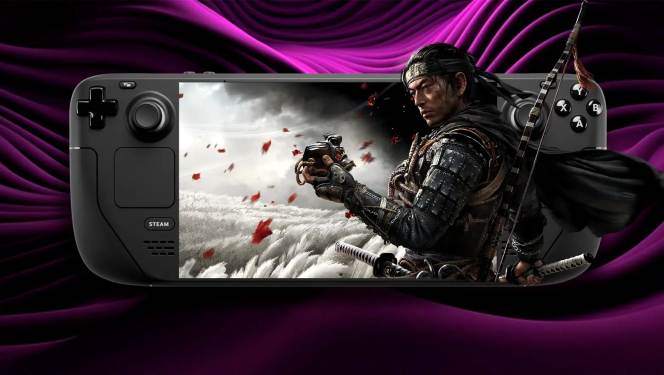
HANDHELD NEWS – The next Steam Deck is not arriving anytime soon, and Valve has made that clear once again. The company is still working on Steam Deck 2, but it has no interest in rushing out a quick follow-up. Instead, it wants to build the next generation around everything it learns from the rest of its 2026 hardware lineup, because the Steam Controller, Steam Machine, and Steam Frame are not side projects in Valve’s eyes. They are all part of the road leading to the future of its handheld platform.
According to 3DJuegos, Pierre-Loup Griffais said in an interview with IGN that Valve is “working hard” on Steam Deck 2, but he also stressed that the company is not interested in pushing out a minor revision and pretending it counts as a true next step. Griffais framed Valve’s hardware history as a straight line running from the original Steam Controller and early Steam Machine ambitions to the first Steam Deck, and now to the new devices being launched or prepared for 2026.
That matters because Valve still does not want a sequel that only offers a modest technical bump. Griffais had already explained last year that the company was not aiming for a mere 20, 30, or even 50 percent performance boost at the same battery life. Valve wants something more meaningful, something that actually justifies calling the machine a next-generation handheld. In its view, the current SoC market still does not provide the kind of leap it is looking for, which is why the company continues to wait rather than force out a product that would feel too incremental.
Valve Is Not Just Preparing a New Handheld, but Refining an Entire Hardware Ecosystem Around It
That is where the rest of the company’s hardware strategy becomes important. The newly revealed Steam Controller, along with the still-developing Steam Machine and Steam Frame, are all being treated as sources of lessons for the future. Input design, ergonomics, wireless performance, living-room use cases, VR-related features, and the way SteamOS behaves across different devices can all feed into the eventual design of Steam Deck 2. Valve is not treating these products as isolated experiments, but as connected pieces of one larger hardware evolution.
That approach fits the company’s history perfectly. Valve has never really behaved like a manufacturer interested in annual refresh cycles. It prefers longer arcs, multiple experiments, and slow accumulation of experience before locking in a platform. The first Steam Deck did not appear out of nowhere either. It was the result of years of ideas, false starts, and lessons taken from hardware that did not fully land at the time. Now the company seems to be following the same logic again, except this time it is working from a much stronger position, because the Deck has already proven there is a real audience for Valve’s handheld vision.
So the picture is fairly clear. Steam Deck 2 is still some distance away, but Valve is already laying the groundwork for it in a very deliberate way. The company does not want to ship a machine that is simply faster on paper while carrying over the same core compromises. It would rather wait until the technology and its own hardware experience line up in a way that produces a genuinely bigger step forward.















Leave a Reply