
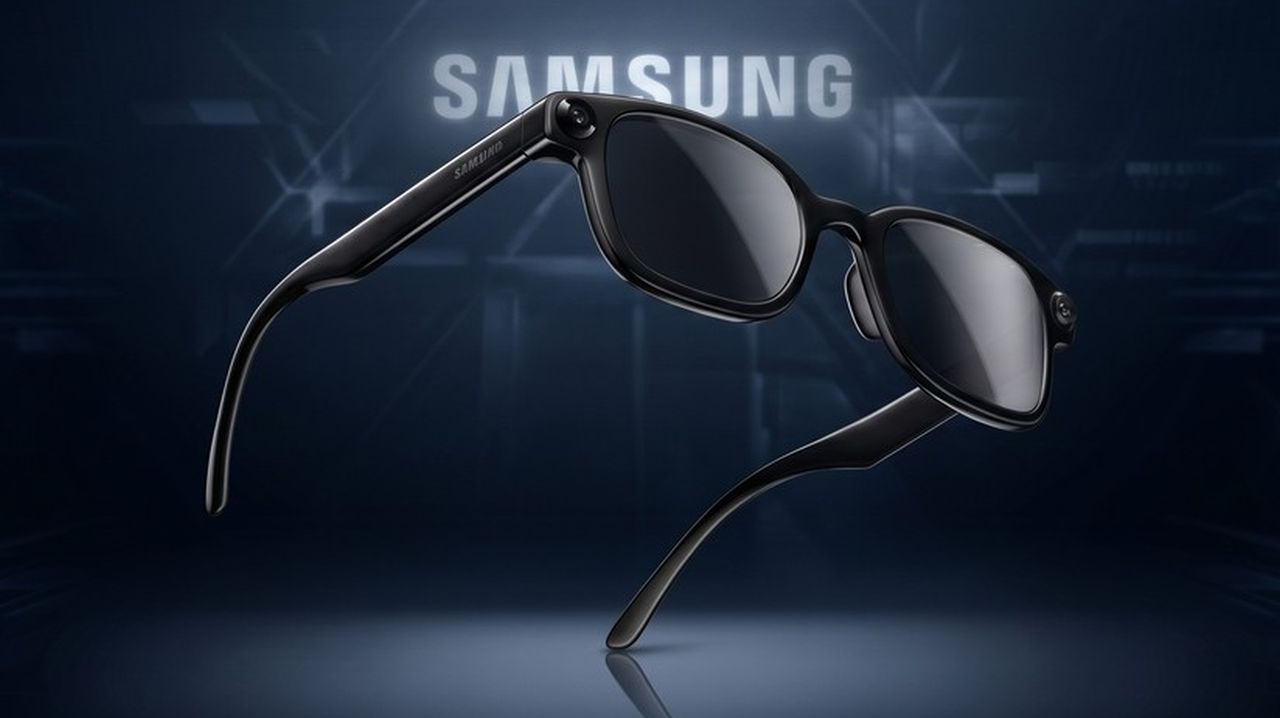
TECH NEWS – This year’s version will still be a little incomplete, but judging by its other features, it could still turn into a very promising product.
Samsung’s long-awaited entry into the rapidly expanding augmented reality, or AR, market is finally taking shape in the form of the Galaxy Glasses. The first early renders of the new AR device have now surfaced, and based on them, it appears the hardware borrows several design cues from Meta’s Ray-Ban smart glasses and Google’s Gemini Glasses. OnLeaks and Android Headlines published the first renders of the upcoming Samsung Galaxy Glasses, which will run on the Android XR platform and use Google Gemini.
This version, identified internally by the codename Jinju and shown in the latest renders, will not include a built-in micro-LED display, although Samsung is also working on another variant that will feature one, codenamed Haean. That largely confirms the information that leaked back in November. Samsung is expected to launch the display-less Galaxy Glasses later this year at a price between $380 and $500. The micro-LED version is currently expected to debut in 2027 at a price ranging between $600 and $900.
Late last year, Samsung announced that it was working with Warby Parker and Gentle Monster on a range of stylish Galaxy Glasses frames. In terms of hardware specs, the device will use Qualcomm’s Snapdragon AR1 processor and carry a 155 mAh battery. The 2026 Samsung Galaxy Glasses will feature photochromic transition lenses, a 12-megapixel Sony IMX681 camera, directional speakers with possible bone-conduction support, and a weight of only 50 grams. The glasses will also support Wi-Fi and Bluetooth 5.3.
Thanks to Gemini’s capabilities, the Samsung Galaxy Glasses will be able to translate signs through voice commands, take photos, check the weather, and request route guidance from Google Maps. The main point remains unchanged, though: smart glasses are going to spread gradually, and there is a reason Samsung wants to enter the field alongside Meta and Google. This may not end up being the kind of trend that only attracts a small niche of consumers.
Source: WCCFTech, Android Headlines










![Stranded Deep 2: After Two Years, We Finally Get to See More of It! [VIDEO]](https://thegeek.games/wp-content/uploads/2026/09/Stranded-Deep-2-1280x720-1-302x180.jpg)
![Sony Is Following the Same Path Xbox Took in 2013! [VIDEO]](https://thegeek.games/wp-content/uploads/2026/09/Live-TV-on-PS5-1280x720-exact-302x180.png)




Leave a Reply