
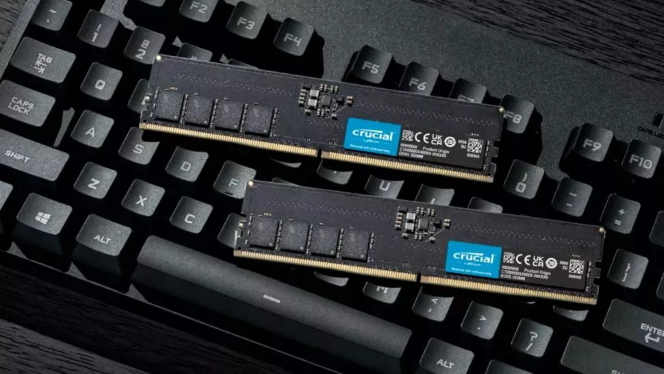
TECH NEWS – It looks like we’ll have to prepare ourselves for the long haul, as both RAM and SSDs will only be available at premium prices.
Since memory is a key topic in discussions about AI hardware, an analysis by Korea Investment & Securities, KIS, suggests that prices won’t necessarily decrease. Because memory directly affects the performance of AI GPUs, hyperscalers have placed long-term capacity orders. According to KIS, the impact of the shortage on memory prices may persist even after this period ends, as chips play a decisive role in the key performance metrics of AI GPUs.
Expanding memory capacity increases GPU utilization, making the GPU more cost-effective by enabling the processing of more tokens. Therefore, AI companies have ordered more memory modules to increase efficiency and reduce the cost per processed token. Greater memory capacity allows for the storage of more tokens in close proximity to the GPU. This enables the GPU to process more tokens because they do not need to be “transferred” from storage devices. According to KIS, this increase in efficiency has led hyperscalers not only to place long-term capacity orders but also to continue doing so in the future.
KIS, which I consider one of the top three Korean sell-side firms, published a memory report, and there’s a comment from it that I wanted to share with you all:
Memory is the critical variable that determines GPU utilization. In particular, when HBM and DRAM capacity is…
– Jukan (@jukan05) April 30, 2026
As a result, DRAM prices, which have tripled since last year, may remain high even though the market expects prices or demand to decline. KIS adds that this expectation may be mistaken because, although prices are higher, the benefits of better GPU utilization are also greater since more memory improves system-level performance rather than the performance of individual chips. High demand for HBM and DRAM memory modules, as well as resulting capacity constraints, are driving up demand for NAND chips. This contradicts the belief that increased NAND chip demand could ease pressure on the DRAM market as companies integrate NAND into AI systems. Another factor contributing to persistently high NAND demand is its lower price relative to DRAM, which allows for greater flexibility, even amid extremely high demand.
Tight HBM capacity and demand from AI hyperscalers are driving innovation in the sector. Companies such as SK Hynix are seeking to increase the number of memory chips on a single die by employing techniques like hybrid bonding to eliminate copper bumps from the packaging.
Source: WCCFTech











Leave a Reply