
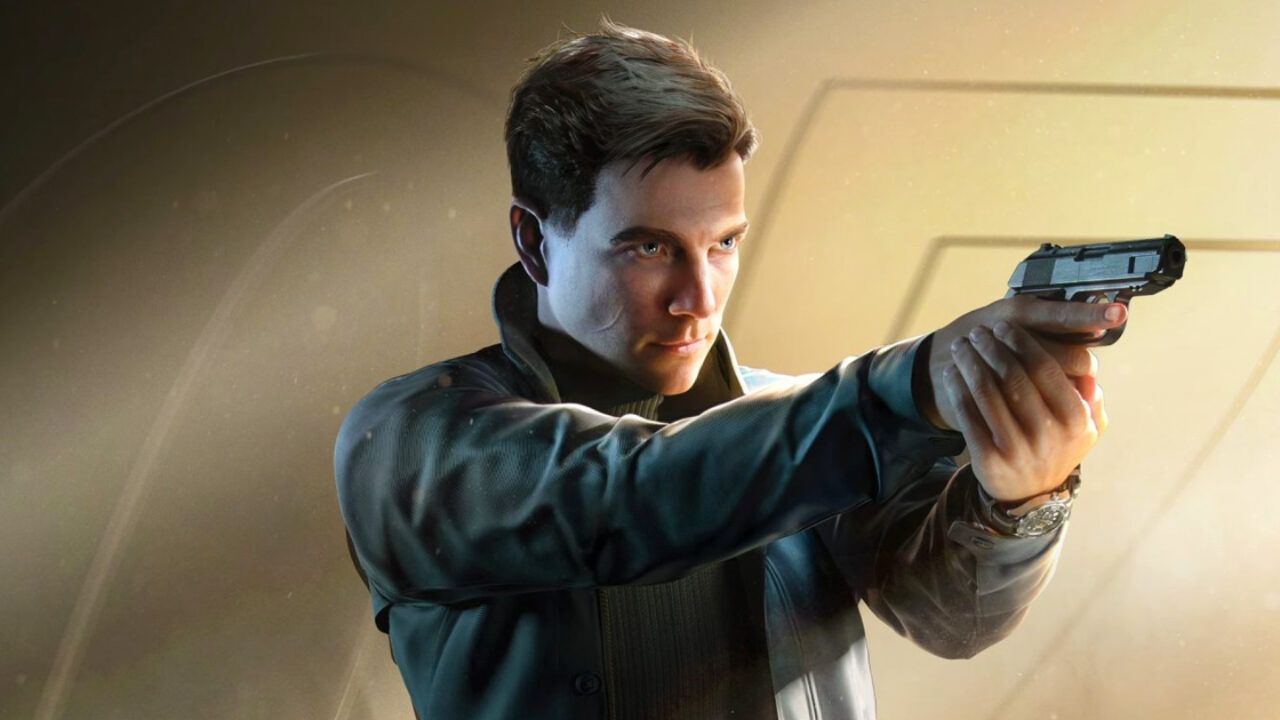
Sometimes bad ideas work best in the right place, and 007 First Light may be heading straight into that territory. IO Interactive’s new James Bond game is already reminding some players of one of the studio’s most controversial Hitman entries, but what felt wrong for Agent 47 may fit Bond far better than expected.
Ever since the new James Bond game was revealed, and since its creators turned out to be none other than IO Interactive, the comparisons between 007 First Light and the Hitman series have been impossible to avoid. That is not only because both games share the same developer, but also because the two styles appear easy to place next to each other at first glance: stealth, infiltration, situational awareness, targets, disguises, gadgets, and tense decisions. After the first impressions of First Light, however, not everyone felt reassured. For many players, the alarm bells started ringing because certain parts of the game recall an IO Interactive title that a portion of the Hitman audience still considers one of the weakest entries in the series.
That game is Hitman: Absolution. The concern is understandable, because Absolution really did break away from many of the things fans expected from the series. The question, though, is not whether the parallel exists. The question is whether the same idea works the same way for James Bond as it does for Agent 47. The two characters and their worlds demand very different kinds of experiences: Agent 47 is a cold, almost engineering-precise assassin, while Bond is a cinematic spy who improvises, charms, lies, makes mistakes, and then pulls himself out of trouble with varying degrees of elegance.
The Weakest Hitman, The One That Nearly Derailed The Series
To understand the issue, we need to go back to the release of Hitman: Absolution in 2012. The game broke with a tradition that had defined the earlier entries: instead of freer, smaller sandbox levels where players could decide how to complete their assignments, Absolution leaned more heavily into linear stealth, undetected movement, and a more cinematic structure. The game’s level design director, Jacob Mikkelsen, later admitted that this shift in gameplay direction was “a product of its time.” At the time, grindhouse cinema and more cinematic video games such as Epic Games’ Gears of War and Naughty Dog’s Uncharted were major influences, but for fans who had waited six years for the next Hitman chapter, the result felt like a betrayal.
That still does not make Absolution a simply bad game, and its reviews were not disastrous. The more accurate version is that many people considered it a bad Hitman. It brought more reliable AI, better interpretation of NPC behavior, and a more visceral presentation, but it also pushed against the freer, more experimental DNA that had defined the series. IO Interactive later admitted that not every decision worked, but the studio managed to salvage useful elements from the experiment. When Hitman returned in 2016, it essentially made amends by restoring the emergent sandbox gameplay of the earlier games while keeping the greater accessibility that many saw as the best legacy of Absolution.
007 And Agent 47 Are Not Shooting The Same Movie
That brings us to 007 First Light. After three hours with the game, Iván Lerner described his overall experience as positive: variety, a strong gameplay loop around exploration and level approach, multiple ways to tackle situations, and mechanics that feel better justified in Bond’s world than some of their equivalents did in Hitman: Absolution. Seeing enemies through walls, for example, can feel strange inside a colder assassin fantasy, but it is easier to accept in Bond’s gadget-heavy intelligence universe. That does not mean the concerns are baseless: the AI in the tested build did not always feel like something from a 2026 game, enemies could seem clumsy or inconsistent, and there was a sense that the mission sandbox sometimes felt narrower and more scripted than some players expect from IO Interactive.
But there is one fundamental difference the studio seems to understand: James Bond is not Agent 47. First Light narrative director Martin Emborg has explained that the Bond experience is much more focused on narrative, sometimes even with time limits, which means World of Assassination-style total freedom would not necessarily serve the needs of Ian Fleming’s world or the visual and narrative language of the films. Bond is not a silent, sterile killing machine, but a cinematic spy hero whose presence is as much about style, charm, risk, and improvisation as it is about entering a place unnoticed.
Many players may already be calling 007 First Light Hitman in a tuxedo, which is not exactly the freshest label anyway, since Agent 47 has been wearing elegant suits to work for a very long time. The point is not the suit, but what each character does with a situation. Bond cannot and should not simply shoot or beat up every first bad guy who gets in his way, even if the game literally gives him a license to kill. Agent 47 can approach that question much more freely, as long as he accepts the consequences. That is why the idea becomes interesting: the bad ideas of Absolution may not be bad ideas when placed inside a Bond game.
When One Game’s Flaw Becomes Another Game’s Strength
The most controversial choices in Hitman: Absolution revolved around three main points: more rigid and linear objectives, sandbox systems that felt too limited, and stealth that could sometimes be pushed aside without enough penalty. In a game about a professional assassin, those ideas could collapse because Agent 47’s appeal lies in cold, creative, precise freedom. With James Bond, however, the narrative often demands more contained situations, cinematic pacing, bigger reversals, and the sense that the player is controlling a leading man inside a Bond film rather than a perfect killing machine. If First Light uses smaller, more confined sandboxes while still giving enough room for choice, that may not be a weakness but a form shaped around the character.
According to Iván’s impressions, the game is trying to move along exactly that delicate line: it guides with an invisible hand, but leaves enough room so the player does not feel completely dragged along rails. The second mission reportedly offered more freedom, and that is where the comparison starts moving closer to the much more acclaimed Hitman: Blood Money. That matters because it suggests 007 First Light is not building itself around one single formula. There is cinematic direction, tighter action, broader level-solving, and a change of rhythm that may matter more in a Bond game than total systemic freedom.
Stealth can also mean something different for Bond. If he is discovered, he can use charm, talk his way out, manipulate the room, and avoid solving every problem with silent, surgical precision. That would feel alien for Agent 47, but it is part of Bond’s identity. And if the seemingly simpler AI raises concerns, that should also be kept in perspective: the guards and villains in Bond films have not always been famous for responding to every situation like geniuses. The AI obviously can and should improve, and major games such as Ghost of Yōtei have shown how much smarter NPCs can matter in a new entry. But Bond is fundamentally lighter, flashier, more cinematic spy-thriller action, not a hardcore stealth simulator.
The best moments in 007 films often come from not knowing what Bond will do next: bluff, charm someone, start a fight, open fire, walk out of trouble, or turn the whole room into chaos. In a game, the good version of that idea is giving the player the ability to decide what kind of Bond scene they want to create. That is why the real question is not whether First Light is too similar to Hitman: Absolution, but what we actually expect from a James Bond game. Even GoldenEye 007 on Nintendo 64, still considered by many to be the best Bond game, could not fully hide its flaws, yet it recreated the film’s best moments brilliantly within its limitations. 007 First Light may not become the greatest spy and stealth game of all time, but if it delivers a cinematic, fast-moving, unmistakably 007 experience while carrying over the parts of Absolution that fit the character, then the comparison many people fear may end up working in its favor.
Source: 3DJuegos, IO Interactive













Leave a Reply