
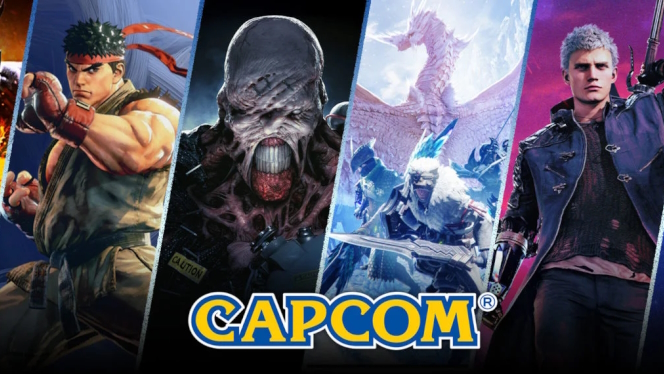
Capcom’s latest financial report is not only about another record year. It also points to the franchises the company sees as possible future growth engines. Alongside Resident Evil, Monster Hunter, and Street Fighter, the publisher specifically names series such as Devil May Cry, Ace Attorney, Dragon’s Dogma, Onimusha, Okami, Dead Rising, and Mega Man. According to the report, these brands are being considered for sequels, remakes, ports, and similar opportunities.
Capcom has had another strong year. The company has published its financial results for the fiscal year ended March 2026, continuing its run of record profits with an 11th consecutive year of operating profit growth above 10%. According to the report, the performance was driven by year-over-year increases in game sales, particularly the breakout success of Resident Evil Requiem.
The document does not only summarize the company’s recent wins. It also lays out how Capcom wants to build its portfolio in the years ahead. The central brands remain obvious: Resident Evil, Monster Hunter, and Street Fighter are still treated as leading pillars. At the same time, Capcom says it wants to raise other series to a level where they can produce similar results.
In polished investor language, the company calls this “a flywheel-driven business model for continuous IP value expansion.” In plain terms, that means Capcom wants to make and sell strong games, use those successes to expand the brands through secondary products such as anime, licensed arcade games, and merchandise, then use that broader fanbase to sell more games. It is not a radical idea, but the company’s sales record over the last decade suggests that the model has been working.
Capcom’s Three Biggest Series Are Near 400 Million Sales
One slide in the report says Capcom’s three best-selling brands – Resident Evil, Monster Hunter, and Street Fighter – have sold almost 400 million units combined. It is not surprising, then, that the company wants more of its older franchises to become stronger contributors. In a slide about the ongoing maximization of IP value, the report lists the following series as opportunities for sequels, remakes, ports, and related projects:
- Mega Man
- Devil May Cry
- Dead Rising
- Onimusha
- Ace Attorney
- Dragon’s Dogma
- Okami
Some of those names are not surprising because they are already connected to announced projects. Onimusha: Way of the Sword is scheduled for later this year. Mega Man: Dual Override, the first mainline Mega Man entry since 2018, was revealed at the most recent The Game Awards. An Okami sequel was also confirmed to be in development in 2024.
The more tempting part of the list is the set of brands that have not yet received that same level of fresh detail. The mention of Devil May Cry, Ace Attorney, Dead Rising, and Dragon’s Dogma is not a game announcement, but it does show that Capcom is not treating those series as forgotten decorations in the archive. It also echoes a December 2025 statement from Capcom COO Haruhiro Tsujimoto, who said the company wants to grow these brands into core IPs.
The Hope Comes With An AI Slide
For Ace Attorney fans, this can either be welcome news or the beginning of yet another long cycle of hope and disappointment. The mention of Dragon’s Dogma is also notable, because after the second game, many players want to know whether Capcom intends to keep investing in that world. The report still does not announce a specific game, date, or development team. It simply confirms that the series is part of the publisher’s growth thinking.
Two slides later, the report moves into less exciting territory: generative AI. Capcom says AI use can contribute to its growth strategy by reducing the time spent on routine development tasks, including research, draft generation, error checks, and clerical work, while increasing the time invested in what it calls true value creation. The company does not appear to present generative AI as a replacement for human developers.
That distinction matters because Capcom’s human resources strategy says it plans to increase its developer workforce by more than 100 people annually. At a time when parts of the game industry use AI as a cost-cutting slogan, Capcom is at least presenting it as an efficiency tool alongside continued hiring. For fans, the simpler takeaway is this: the company is financially strong, its biggest franchises are still working, and it has once again named several series that many players would gladly see return through sequels, remakes, ports, or any serious modern revival.
Source: PC Gamer





![An ex-Bethesda Dev Says Including More than 1,000 Planets in Starfield Was a Bad Decision! [VIDEO]](https://thegeek.games/wp-content/uploads/2025/09/thegeek-starfield-nagy-1-302x180.png)







Leave a Reply