
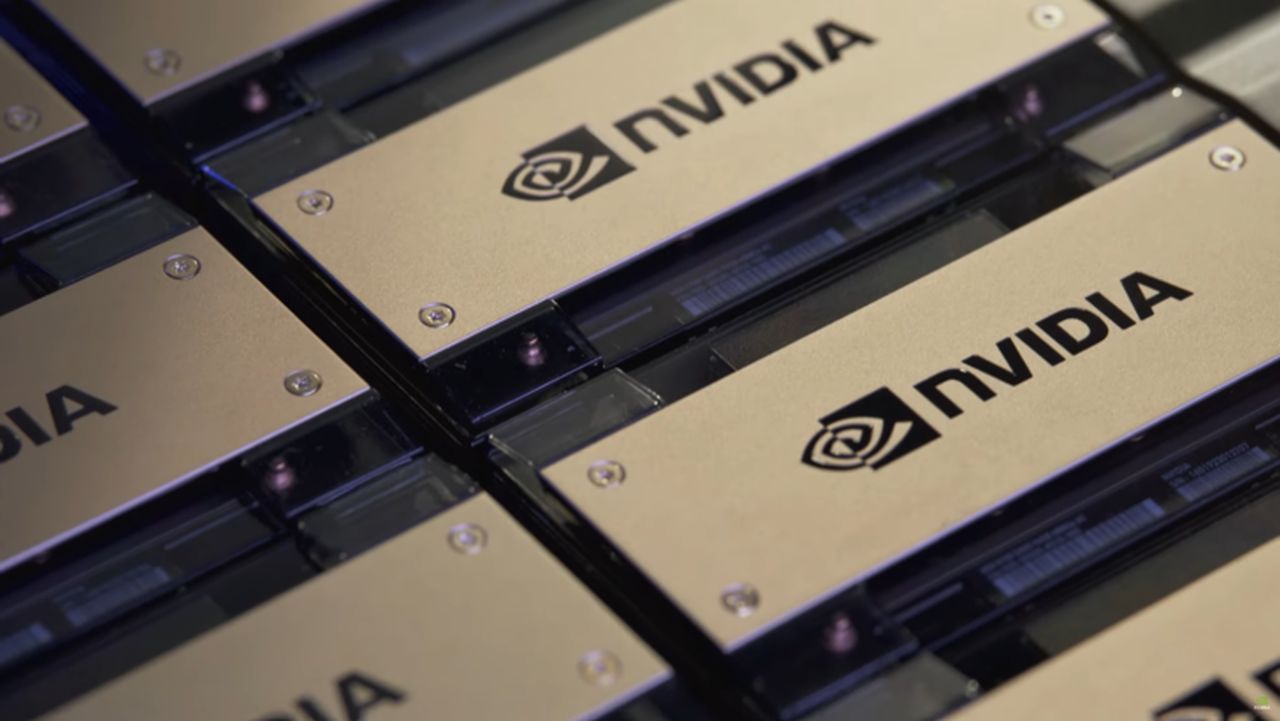
TECH NEWS – Even five-year-old Nvidia GPUs are in high demand due to the increased interest in artificial intelligence.
Thanks to the AI supercycle, demand for GPUs is huge, and even the prices of five-year-old chips are rising. Nvidia’s CEO calls this phenomenon “like fine wine.” This expression has long been associated with GPUs since the AMD Vega era and now applies to Nvidia GPUs as well. The reason for this is the opposite of how we think of good wine when talking about chips. Previously, the term was used to describe GPUs that achieved massive performance gains through driver stack optimization. Now, however, it is used in the context of pricing.
As Nvidia’s CEO states, demand for GPUs is exploding. Every data center that uses AI needs GPUs. While demand for CPUs is also rising dramatically, GPUs remain the primary computing components. This demand has led to a severe GPU shortage, causing semiconductor manufacturers to face massive production and supply constraints. Consequently, prices have increased for every technology component, including GPUs. However, this growing demand affects not only new GPUs but also older ones. Demand is now causing price increases for 4- to 5-year-old GPUs as well.
$NVDA CEO on rising GPU prices:
“GPU consumption is going through the roof and over, you know, even GPUs we sold four or five years ago now are rising in price faster than, you know, good wine. And so it has defied what every buying Nvidia GPU is like, investing in art.” https://t.co/pnMcZ3Rv04
– The Transcript (@TheTranscript_) May 12, 2026
Jensen Huang stated that the prices of older GPUs are rising faster than fine wine, meaning they are “aging” very well. While the 4-5-year-old category refers to Nvidia’s Hopper-generation GPUs, these chips remain well-suited for AI and computational tasks thanks to continuous optimizations, software updates, and other improvements. Coreweave’s CEO even says that demand for older GPUs is accelerating and that the prices of older GPUs (e.g., Hopper H100, H200, L40S, and the previous generation, A100) are higher than in the previous quarter.
According to him, the capacity of their entire fleet is largely exhausted, a trend observable across all industry segments. Semiconductor manufacturers have depleted their inventory of silicon wafers, GPU/CPU/DRAM manufacturers have depleted their inventory of certain components, and AI cloud service providers are running out of computing capacity. Meanwhile, demand for new AI models continues to accelerate.
Source: WCCFTech















Leave a Reply