
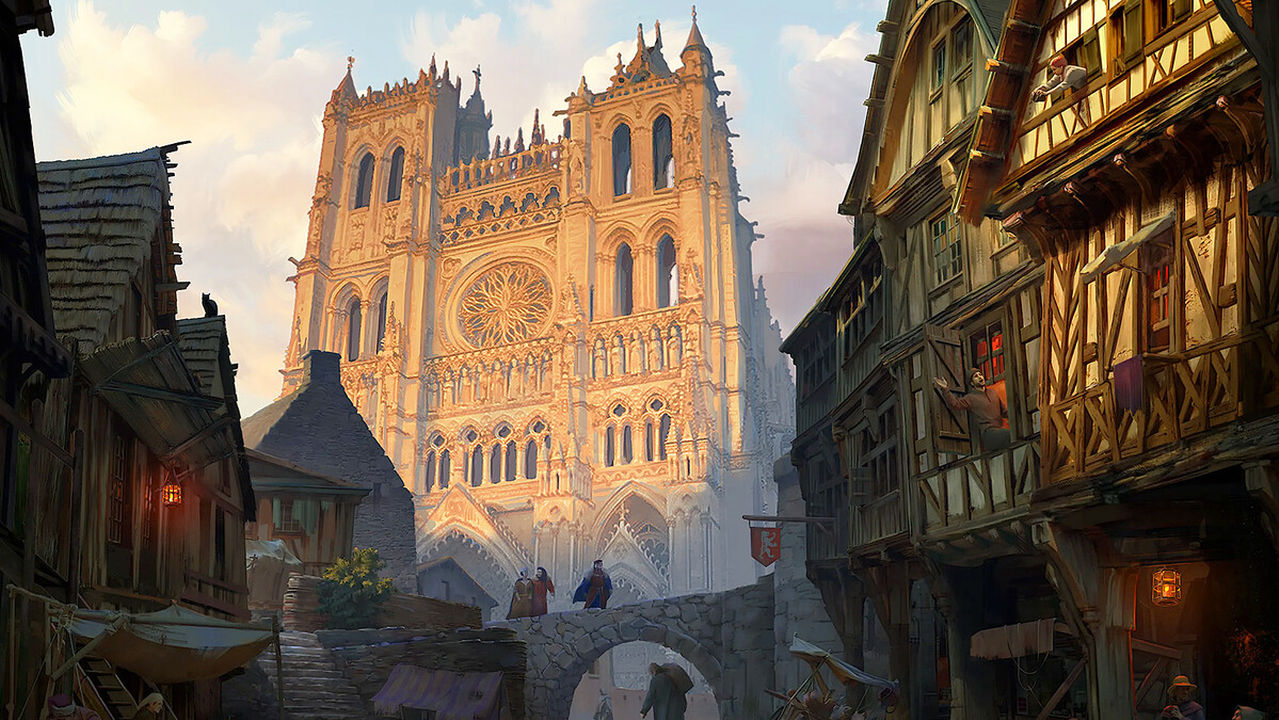
Total War: Medieval III is not moving toward traditional RPG-style character progression, according to Creative Assembly. Creative Director Leif Walter has made it clear that the studio currently has no plans for conventional skill trees, and instead wants to focus on dynasties, inherited traits, relics, transferable items, and long-term political identities.
Ten years ago, it might have seemed almost unthinkable, but today it is officially in development: Total War: Medieval III is underway at Creative Assembly. The new historical strategy game is being produced alongside the studio’s ambitious Total War: Warhammer 40,000 project, which aims to translate its Games Workshop fantasy experience into science fiction warfare. Right now, however, the focus is not on the grim battlefields of the forty-first millennium, but on one of Medieval III’s major design decisions: the developers are not planning to use the kind of traditional character-by-character skill tree system seen in several previous Total War games.
The information emerged almost casually from a discussion on Creative Assembly’s official forums, where the community was debating whether Medieval III should include skill trees similar to those in Total War: Warhammer III, Total War: Rome II, Total War: Attila, or Total War: Three Kingdoms. During that debate, Leif Walter, the project’s creative director, stepped in to explain the team’s thinking. He said there are currently no plans for skill trees in Medieval III, because such systems can easily produce repetitive optimization patterns when many characters are involved: players find the “best” path, then repeat that same progression from campaign to campaign and character to character. Walter argued that this can be interesting early on, but later, when the roster grows, it becomes busywork rather than a meaningful strategic decision.
Creative Assembly Wants to Make the Game Less Predictable
Instead of traditional skill trees, Creative Assembly wants to build progression around attributes, traits, ancillaries, heirlooms, relics, and transferable items. Walter said choices around character development will still exist, but they will not operate through rigid ability trees. The goal is for characters to be shaped more organically by campaign events, family background, inherited qualities, and the wider political environment. That could bring Medieval III closer in spirit to Medieval II: Total War or the original Rome: Total War, where character development often emerged from actions, roles, and context rather than from a menu full of passive bonuses.
The most important shift, however, may be the central role of dynasties. Walter explained that the team wants some progression to live not in individual characters, but in families, houses, and dynastic identities. Since Medieval III spans a long historical period, individual figures will appear, die, disappear, and be replaced by successors, while powerful dynasties may endure for long stretches or even the entire campaign. One house might develop into an independent, proud, and fierce military identity, while another could become known for civic administrators and strategic empire builders. The game would therefore track not only what bonuses a single general has, but how a political or military culture is inherited by children, relatives, and later generations.
This approach is less RPG-like, but it could also be stronger from a strategic perspective because the focus shifts toward long-term power building. The death of a great general would not simply mean losing a well-developed character; it could also mean that his house, heirs, and inherited qualities carry part of that campaign history forward. Creative Assembly wants a more dynamic and less predictable system, one where players are not clicking through the same skill tree again and again, but managing the social and familial structure of their realm over time. If it works, Total War: Medieval III may feel deeper not because more icons appear on a character sheet, but because power, inheritance, and loyalty genuinely shape the campaign.
When Creative Assembly first introduced Medieval III, the studio described its vision as the definitive Total War sandbox set in the Medieval world, a “what if?” strategy space where history is not a fixed track but something players can bend. This new direction fits that idea. Rather than simply copying old Medieval II mechanics, the studio appears to be searching for systems that better express medieval politics, family power, and multi-generational rule. The real question is how fans, who have been waiting years for this sequel, will respond to a Medieval III that offers less RPG-style character management, but potentially more dynastic and campaign-level consequence.
Source: 3DJuegos, PCGamesN, Creative Assembly












Leave a Reply