
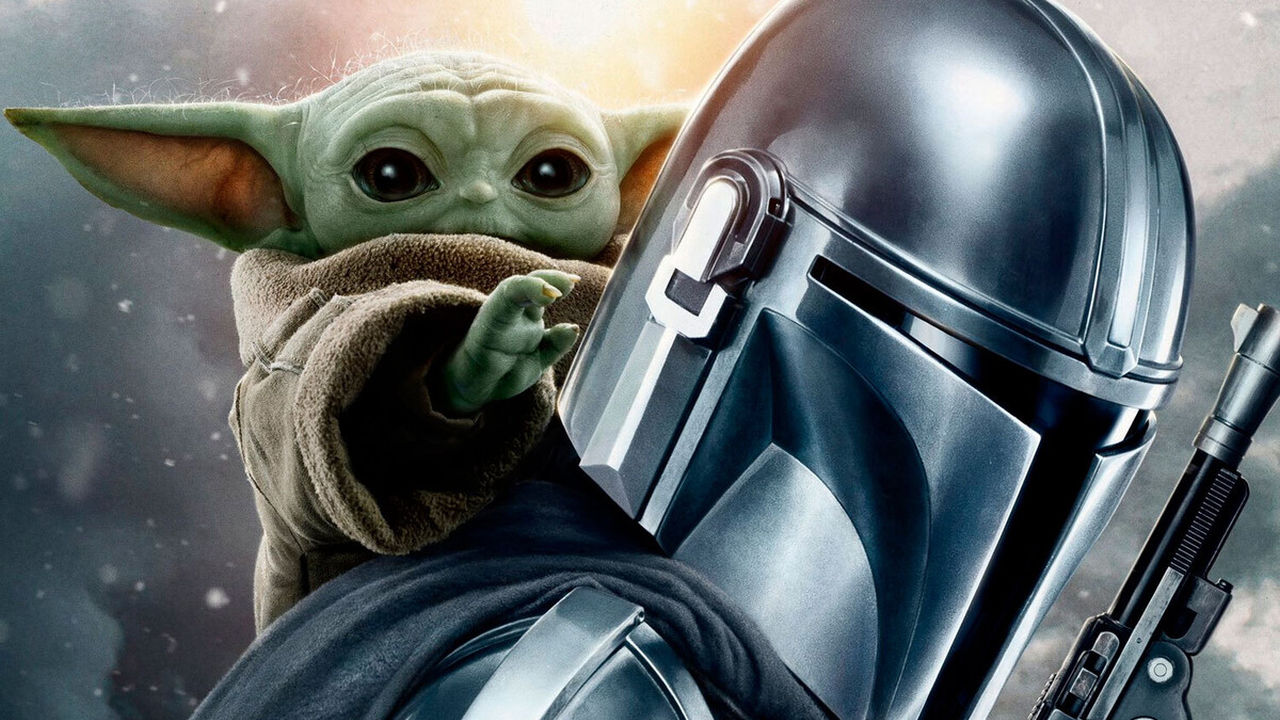
MOVIE REVIEW – The Mandalorian and Grogu is supposed to mark the franchise’s grand return to cinemas, yet it often feels like someone stitched together the cutscenes from a moderately ambitious video game and called it a feature film. Din Djarin and Grogu’s adventure is occasionally cute, occasionally flashy, and occasionally close to working, but far too often it plays like a fanmade DLC for Star Wars Outlaws, hastily modded into a Mandalorian mission pack. The result is not a disaster, but that almost makes it worse: this is not a triumphant comeback, just an expensive, shiny, empty save file.
Before The Mandalorian and Grogu, the pieces were all there for the galaxy far, far away to breathe again on the big screen. According to the official setup, the Empire has fallen, scattered Imperial warlords are still lurking across the galaxy, and the New Republic enlists Din Djarin and Grogu to help clean up this half-collapsed political mess. At first glance, that could work: a bounty hunter, a tiny green merchandising deity, a few remaining Imperial creeps, some Hutt underworld business, and a cinema screen that badly needed something more substantial than another streaming side quest.
The problem is that Jon Favreau’s film rarely behaves like a film. It feels more like an enlarged episode of The Mandalorian, pushed into IMAX scale in the hope that size might magically turn into significance. It does not. Scenes arrive one after another like video-game campaign cutscenes: the mission is assigned, the heroes move to the next location, a strange new figure appears, a creature attacks, a shootout begins, Grogu blinks cutely, and everyone moves on to the next level. The only difference is that there is no controller in your hand, so you are left passively watching something that might have been more fun to play than to sit through.
That is especially frustrating because the theatrical comeback after seven years should feel like an event. After The Rise of Skywalker, the franchise hid behind streaming for a long stretch, and while that period gave us Andor, Ahsoka, The Book of Boba Fett, The Acolyte, and of course The Mandalorian, the absence of the big screen was hard to ignore. Yet The Mandalorian and Grogu does not return like a great cinematic saga. It returns like a Disney+ episode that accidentally wandered into theatrical ticket pricing.

This Movie Moves Like A Fanmade DLC
The biggest issue is not that the film is simple. This universe was never at its best because it held galactic constitutional seminars every five minutes. The problem is that the simplicity of The Mandalorian and Grogu does not pulse; it just sits there. The story does not tighten into a clean, direct adventure. Instead, it falls into a series of mission modules placed next to one another. It is as if the film itself is thinking: here is a new planet, here is a new creature, here is a new reference, here is a new action figure, surely that counts as cinema.
It does not. Cinema is not created simply by making the sets bigger, the CGI shinier, the Hutt more muscular, and the Grogu plush more expensive. Scenes need inner rhythm, stakes, weight, and consequence. Here, too many moments feel like transitions between playable sections. Din Djarin receives a task, sets out, someone gets in the way, something ugly appears, the camera confirms that the money was indeed spent, and then we move on. It could have been a perfectly acceptable Star Wars Outlaws expansion if Ubisoft had handed it to the Lucasfilm modding community for a long weekend. As a movie, it is thin.
And yet Din Djarin and Grogu are not completely exhausted as a duo. Pedro Pascal’s presence still works, even when the helmet, stunt doubles, and the rigid concept of the character restrict what he can actually do. Grogu is still Grogu: he stares, blinks, eats, touches things at the worst possible moment, occasionally saves the day, and triggers a cash-register sound somewhere in the viewer’s brain. The film sometimes uses that dynamic well, but far too often it relies on the little green figure simply being adorable. In 2019, that still felt fresh. In 2026, it feels more like franchise muscle memory.
Sigourney Weaver brings a measure of seriousness as Colonel Ward on the New Republic side, but the character mostly remains functional. She assigns the mission, tries to lend strategic weight to the plot, and then the film occasionally remembers that it might help if she were more than a galactic quest-giver. Weaver’s professionalism carries plenty, but Ward never becomes a new Leia-level icon. She is a well-played mission-starting NPC in the galactic menu.

The Villains Feel Like Factory-Default Imperial Templates
The film’s weakest area is the negative side of the board. Commander Coin, the Imperial warlord thread connected to Jonny Coyne, Hemky Madera’s Imperial figure, the Hutt subplot, Embo, and the underworld scenery should all help make the post-Empire galaxy feel genuinely dangerous. Instead, these characters are mostly dead boring and shapeless. Not because they say too little, but because they have no memorable menace. They feel as if someone opened the villain-design software, selected “Imperial Warlord – Default,” and then left for lunch.
That is especially annoying because great antagonists in this universe were never just obstacles. Vader, Palpatine, Thrawn, Maul, and even Dedra Meero worked because they represented fear, systems, obsession, ideology, or corruption, not merely plot resistance. Here, the negative figures appear, threaten, stare severely, and then evaporate from memory like a badly rendered background asset. The film talks about Imperial warlords, but it rarely feels as if these people truly control anything beyond their own costumes.
Rotta, the “good kid Hutt,” deserves his own exhibit in the museum of galactically bad ideas. Jeremy Allen White’s voice is not the issue by itself, but the concept of the character is forced, ridiculous, and strangely sanitized. The idea of a gladiator Hutt could have been perversely entertaining if the film had enough madness, humor, or grimy underworld energy to support it. Instead, Rotta often feels like a sentence left on the table after a marketing meeting: “What if Jabba’s son were muscular, but also more likable, because that might sell?”
The whole point of the Hutts has always been that they are repulsive, greedy, corrupt, and dangerously grotesque. A “good kid Hutt” could work as an ironic twist if the film actually did something with him. Here, it just feels awkward. Rotta is not funny enough to function as comedy, not threatening enough to register as an underworld force, and not tragic enough to matter as a son living in Jabba’s shadow. What remains is a muscular slug-man accompanied by the faint but persistent hum of Disney product development.

Grogu Is Cute, While The Movie Dozes Off
The positives are not imaginary. Ludwig Göransson’s score occasionally injects real energy into the film, and a few action beats briefly recover the grimy, adventurous, western-flavored texture that made the first season of The Mandalorian work. There are odd creatures, a handful of atmospheric shots, a few visual ideas, and occasional flashes of Saturday-matinee spirit, where not everything needs to be explained and the story simply has to move, shoot, run, grumble, and rescue the little green merchandise.
But those moments are too brief to carry the whole thing. The rhythm is oddly sleepy even though something is constantly happening. That is the worst kind of boredom: not the kind where nothing moves, but the kind where everything moves and nothing matters. Monsters attack, ships fly, blasters fire, creatures appear, cameo-adjacent faces pop up, yet the emotional temperature barely rises. The Mandalorian and Grogu often feels like a flashy screensaver running on the franchise’s hard drive.
Din Djarin does not end up anywhere particularly interesting either. The series had time to build his Mandalorian identity, fatherhood, faith, responsibility, and bond with Grogu. The film, by contrast, uses him more than it advances him. Din is once again competent, quiet, armored, and reliable, but he rarely receives a conflict that truly shakes him. The film opens no new wound, asks no uncomfortable question, and pushes him to no point where the viewer feels: yes, this needed the big screen.
Grogu has a similar problem. He remains lovable, but it is increasingly difficult not to notice that the film often uses him less as a character than as a reaction generator. Need a joke? Grogu is there. Need a cute beat? Grogu is there. Need a quick emotional hook? Grogu is there. The question is no longer what will happen to him, but how many more times the same charming trick can be repackaged.
The Galaxy Far, Far Away Is Now Very Close To Mediocrity
The greatest sin of The Mandalorian and Grogu is not that it is bad. A bad film can at least provoke anger, become ridiculous, collapse into cult failure, or go spectacularly wrong. This one is merely average. Professionally manufactured, occasionally entertaining, sometimes charming, mostly watchable, and still painfully short on actual cinema. It does not hurt like the worst moments of the franchise, but it also never lifts off the way a theatrical return should. It just exists. It floats. It checks the franchise boxes and then waits for the viewer to be grateful for another serving of galaxy.
Viewed sarcastically, Disney has solved it: the great space saga is back in theaters, but apparently forgot that cinema is not just bigger television. This is not a true disaster, more a product. A well-packaged, sometimes shiny, sometimes embarrassingly empty product in which Grogu can still sell half a scene, Din Djarin still looks good in armor, the Hutts are still slimy, and the Imperial warlords still pretend they have personalities.
The saddest thing is that somewhere inside this material there could have been a good, grimy, strange underworld adventure. A movie where Din Djarin genuinely has to compromise with the Hutts, where Rotta is grotesque, dangerous, and tragicomic, where Commander Coin and the Imperial remnants pose a real political or military threat, and where Grogu is not just an adorable icon, but a narrative stake. Instead, we get a medium-grade mission chain that the big screen tries to lie into importance.
That is why 5.6 is not harsh; it is merciful. The Mandalorian and Grogu does not collapse, it is not unwatchable, and it is not an embarrassment from start to finish. It is simply too often dull, flat, and unimaginative to celebrate as the franchise’s theatrical rebirth. Grogu survives. Din survives. Disney’s box office probably survives too. The viewer, however, once again believes a little less that the galaxy far, far away still contains anything that could not be replaced by a streaming cutscene.
-Gergely Herpai “BadSector”-
The Mandalorian and Grogu
Direction - 5.4
Actors - 5.8
Story - 4.9
Visuals/Music/Sounds/ - 6.5
Ambience - 5.4
5.6
AVERAGE
The Mandalorian and Grogu is not the grand theatrical rebirth of the franchise, but an expensive, occasionally entertaining, mostly flat collection of cutscenes that too often resembles a fanmade Star Wars Outlaws DLC. Din Djarin and Grogu still carry some of the weakest scenes, but the bland Imperial opponents, the laughable “good kid Hutt,” and the video-game mission logic drag the whole thing down. This is not a scandalously bad space adventure, which makes it more dangerous: it is average, forgettable, and so safely engineered that it hurts.








Leave a Reply