
TECH NEWS – Lisuan’s graphics cards are approaching the price of Nvidia’s products. But what kind of performance do we get for our money?
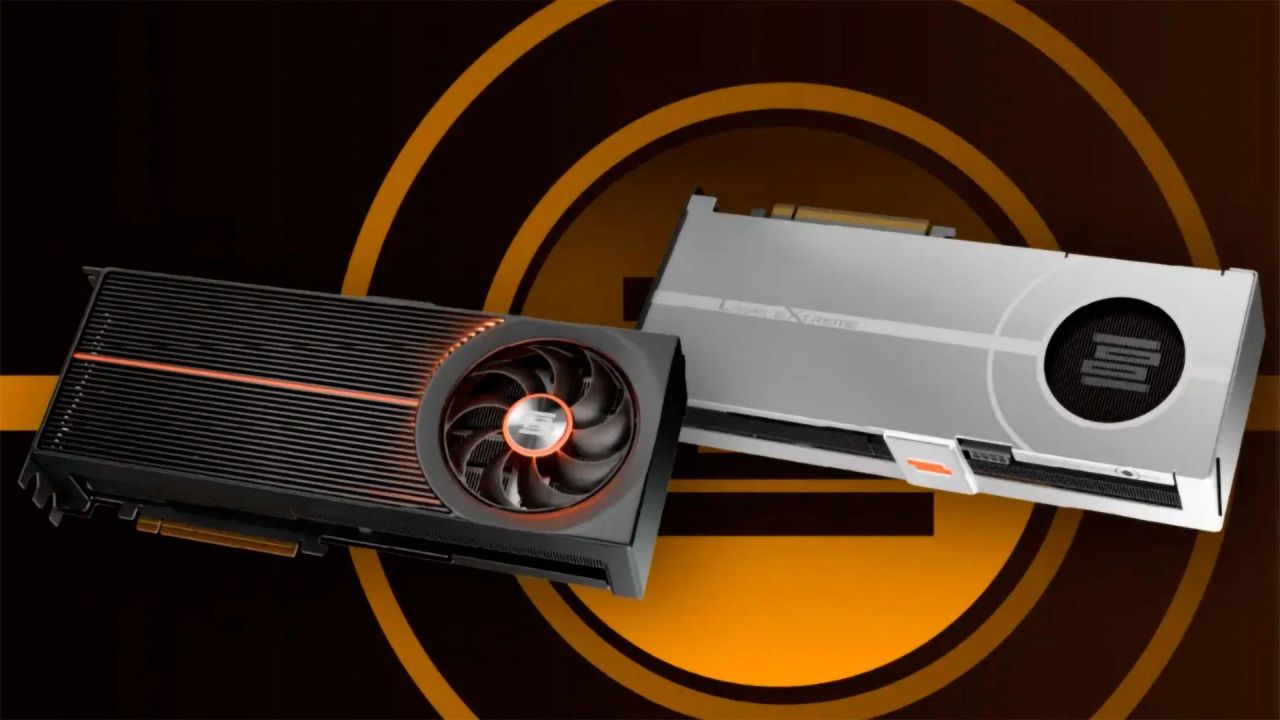
In March, China’s Lisuan Tech unveiled its new line of consumer and prosumer products based on the 7G106 GPU. The series included four models: three aimed at the professional/AI segment and one designed for gamers. The model intended for gamers is the Lisuan Extreme LX 7G100. It was designed with gamers’ needs in mind and supports the latest APIs and game engines.
The Lisuan Extreme runs on the 6nm 7G106 GPU and is the company’s first graphics card designed specifically for gamers. It features 12 GB of GDDR6 memory, a 192-bit bus interface, and PCIe 4.0 x16 compatibility. The card has 192 TMUs and 96 ROPs with a maximum TDP of 225W and is powered by a single 12-pin connector. The card occupies two slots and has three fans, two of which are covered by the top shroud. The card has four DisplayPort 1.4a outputs and supports 8K60Hz HDR FreeSync, AV1 4K@30 FPS encoding, HEVC 8K@30 FPS encoding, and AV1/HEVC 8K/60 FPS decoding. The card also supports all modern APIs, including DX12, Vulkan 1.3, OpenGL 4.6, and OpenCL 3.0. The GPU is one of the first domestic products to receive Microsoft WHQL certification.
Unlike previous models available in China, this GPU reportedly supports the latest AAA games right out of the box, such as Baldur’s Gate III, Cyberpunk 2077, Elden Ring, Black Myth: Wukong, The Witcher III, Monster Hunter Rise, Resident Evil 4 Remake, and Sekiro: Shadows Die Twice. Based on previous benchmarks conducted exclusively in synthetic applications (e.g., Geekbench OpenCL, 3DMark), the 7G100’s performance was estimated to be comparable to that of the RTX 4060.
In 3DMark tests, the Lisuan Extreme LX 7G100’s performance is on par with or worse than that of the RTX 3060, which was released five years ago. However, these are synthetic benchmarks. In games, the GPU performed much worse. In Cyberpunk 2077 at 1080p, for example, the GPU averaged only 88 frames per second (FPS), while a five-year-old RX 6600 XT delivered over 200 FPS. The Lisuan LX 7G100 could not keep up with 3- to 5-year-old GPUs (RX 6600 XT, RTX 3060, and RTX 4060) in any of the games. Using FSR, standard TAA, or no anti-aliasing yielded the same results; the other GPUs were more than twice as fast.
The only positive thing that can be said about the graphics card is that it did not crash and there were no serious driver issues regarding game compatibility. The games ran, but the performance was unsatisfactory. The hardware itself does not support ray tracing. Other issues include frequent stuttering and a low frame rate during gameplay. Future driver updates may resolve these issues, but Chinese consumers still cannot access a gaming GPU that can compete with products from Nvidia, Intel, or AMD at the time of launch. Currently, Lisuan is offering the Founders Edition model on JD for 3,300 RMB (roughly $500) – a limited quantity of 1,000 units. This is equivalent to the price of an RTX 5060 Ti.
While this card has 12 GB of VRAM, other 5060 Ti models are available for 2,999-3,099 RMB. These models offer faster performance, RT/PT support, and reliable gaming support via drivers, as well as excellent AI computing capabilities. Even the much cheaper Arc B580 offers better value with the same 12 GB of VRAM. A special pre-order price of 2,969 RMB is mentioned, which is still high considering the card’s performance. The first GPUs will ship on May 22.
The Lisuan is a step forward for Chinese GPUs, some of which lacked basic driver and game support. China is placing an increasing emphasis on domestically produced products, banning consumer-level products from foreign brands such as Nvidia. Thus, the Lisuan has the potential to find a large domestic market for its latest gaming graphics card.


Source: WCCFTech















Leave a Reply