
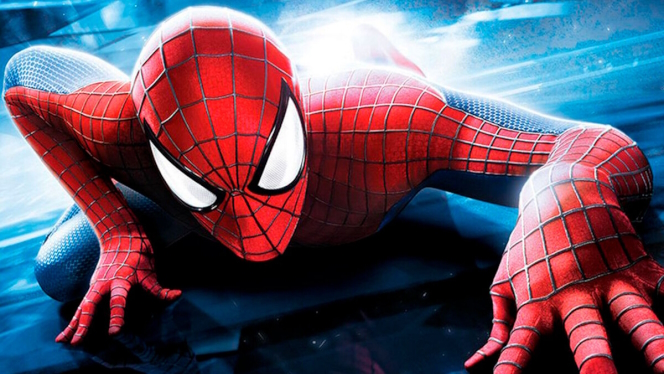
MOVIE NEWS – Nicolas Cage has now stepped into one of the darker corners of the Spider-Man universe himself through Spider-Noir, but he also has a very clear opinion on who has played the best cinematic Spider-Man so far. For Cage, Andrew Garfield delivered the strongest version of both Peter Parker and Spider-Man, because his performance had the kind of actorly charge that made the character genuinely compelling to watch.
Nicolas Cage has had a strange and deeply personal connection to comic book movies for decades. He played Ghost Rider, nearly became Superman in the 1990s, named one of his children Kal-El, and previously voiced Spider-Man Noir in Spider-Man: Into the Spider-Verse. Now he returns to that world in live action with Spider-Noir, although not as the exact same figure he voiced in animation: this time he plays Ben Reilly, an aging and down-on-his-luck private investigator in 1920s and 1930s New York, known as The Spider, the city’s only superhero, until old enemies and unfinished business drag him back into the life he tried to leave behind. Cage is not talking about Spider-Man as a casual observer. He is a long-time comic book fan, a former Marvel antihero, and now a live-action Spider-Man variant himself.
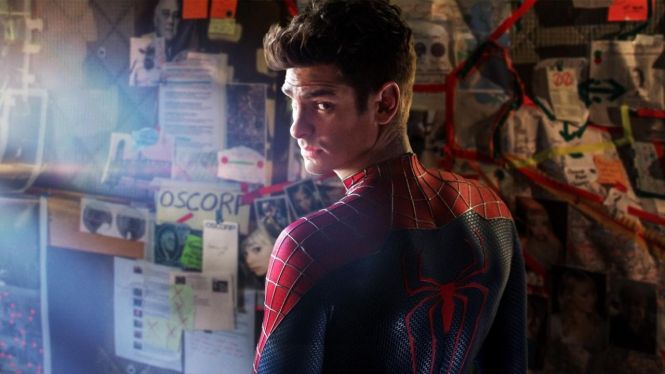
His answer is Andrew Garfield. Speaking with Complex, Cage named Garfield’s Peter Parker as his favorite live-action Spider-Man, and he did not hedge the praise: “I thought Garfield was a really great Spider-Man. I thought he did a terrific job; he’s a marvelous actor. For all the younger Peter Parker/Spider-Men, he was the one that I thought was really something to watch. I would put Garfield as, in my view, the best Spider-Man in cinema.” It is not the safest answer, because Garfield’s era has long occupied an awkward middle position. Tobey Maguire had Sam Raimi’s classic trilogy behind him, Tom Holland had the full machinery of the MCU, while Garfield was left with two solo films where studio planning, franchise pressure and critical debate often became louder than the performance at the center.
Garfield first played Peter Parker in 2012’s The Amazing Spider-Man, then returned in 2014’s The Amazing Spider-Man 2. Marc Webb’s two films never received the same clean wave of fan and critical support that Raimi’s first two Spider-Man movies enjoyed, nor the event-scale MCU backing that later powered Holland’s biggest appearances. Still, Garfield’s performance was difficult to dismiss even then. His Peter Parker was wounded, sharper, more emotionally exposed and more openly sarcastic, while his Spider-Man often captured the fast-talking comic-book energy of the character better than the films around him could fully support. The Gwen Stacy tragedy remained the defining emotional wound of that run, because Garfield could play not only the spectacular hero, but also the damaged young man left behind after the fall.
The real turn came in 2021, when Garfield returned in Spider-Man: No Way Home alongside Tobey Maguire and Tom Holland. The multiverse story worked as a fan event, but for Garfield it also became something more valuable: a delayed emotional resolution for a Spider-Man whose own series had been cut short. His Peter Parker’s grief over Gwen Stacy returned with real weight, and the moment he saved Zendaya’s MJ was not just fan service, but a reversed echo of his deepest trauma. After that, calls for Garfield to return grew louder, whether in a third Amazing Spider-Man film or another multiverse project. Spider-Man: No Way Home earned just under $2 billion worldwide, and Garfield emerged from it not as a background guest, but as one of its most memorable emotional anchors.
Cage’s comment therefore lands as more than a friendly bit of professional praise. It gives voice to a late reassessment that has been growing around Garfield’s Spider-Man for years. Whether Garfield ever wears the mask again remains uncertain, but his version of the character clearly did not disappear into the shadow of two divisive films. Cage’s choice reinforces the idea that Garfield’s Peter Parker left a deeper mark on Spider-Man’s screen history than many were willing to admit during his original run.
Source: MovieWeb












Leave a Reply