
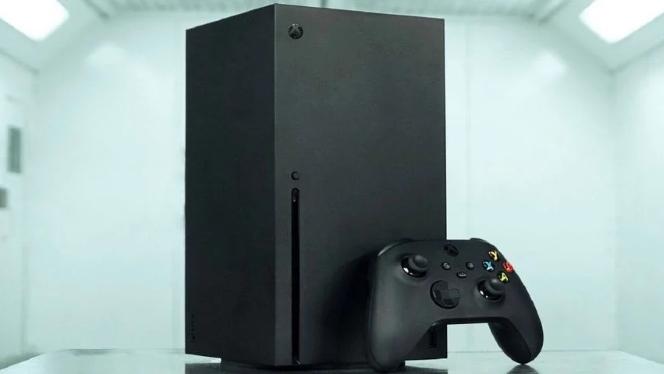
Asha Sharma’s appointment earlier this year, followed by sweeping layoffs and a major reorganization across Xbox, has renewed speculation about the long-term fate of Microsoft’s gaming division. Some observers believe the company may be reshaping Xbox with a future sale in mind, but analysts question whether any potential buyer would have both the resources and the appetite to acquire the entire operation in a single deal.
Since Asha Sharma became CEO of Xbox, uncertainty surrounding Microsoft’s ambitions for its gaming business has steadily intensified. The job cuts, studio changes, and canceled projects announced over the past few days have given fresh momentum to theories that the company could eventually consider selling Xbox. The central question is whether this week’s decisions are meant to prepare the division for a transaction or whether Microsoft is simply carrying out a drastic overhaul of a business model that has become increasingly difficult to sustain. The scale of the operation makes that distinction particularly important. Microsoft no longer owns only a collection of development studios, but an enormous and expensive ecosystem spanning console hardware, online services, publishing, infrastructure, and some of the most commercially valuable franchises in the industry.
An earlier report suggested that Sharma wants the broader reset to accelerate work on new The Elder Scrolls, Fallout, and Halo titles. The Information, whose reporting was relayed by Reuters, also claimed that Microsoft had not dismissed the possibility of restructuring Xbox as a wholly owned subsidiary. Such a model could eventually allow the brand to operate alongside outside partners in a joint venture, while also creating a clearer path toward a possible sale at a later stage.
The shape of Sharma’s Xbox reset has become much easier to understand since then. Microsoft dismissed 1,600 employees on Monday, and another 1,600 positions are expected to disappear before the current financial year ends. Even workers who survived the first wave may therefore spend the coming months wondering whether their own jobs remain at risk. Four studios have already left the Xbox organization, while a fifth could either be sold or closed, and several projects have been canceled. According to Bloomberg journalist Jason Schreier, Obsidian Entertainment, the developer of Avowed and The Outer Worlds, lost roughly one quarter of its workforce, while Avowed 2 was abandoned. Obsidian has since been assigned to a new Fallout project. id Software, the studio behind DOOM, was also hit by severe reductions, while employees at Bethesda Game Studios are reportedly concerned that the cuts there may affect the development of The Elder Scrolls VI.
The major video game franchises under Xbox after the Activision Blizzard acquisition
Call of Duty
There is little reason to soften the point: Xbox now controls a franchise that routinely delivers one of the biggest-selling games of any given year. Call of Duty became a central issue throughout the debate surrounding Microsoft’s purchase of Activision Blizzard, and its importance was obvious given the series’ repeated dominance of annual sales charts. The next major release at the time was Call of Duty: Modern Warfare III, scheduled for November 10, 2023, with the return of several classic multiplayer maps designed to appeal directly to longtime fans. The accompanying gallery contained 70 images.
Diablo
The Activision Blizzard deal also brought Microsoft ownership of another franchise that ranked among 2023’s biggest gaming successes: Diablo. The fourth installment launched in June, which made another full sequel unlikely in the near future, but Blizzard had already committed to supporting the action RPG with yearly expansions. Diablo IV became a major hit and attracted more than ten million players during its first month.
Halo
No overview of Xbox’s most important properties would be complete without Halo, the brand’s defining first-party series. Master Chief appeared prominently in Microsoft’s video welcoming Activision Blizzard into the company, an unsurprising choice given that the character has represented Xbox for decades. Although many players believe the franchise lost some of its consistency after 343 Industries took over from Bungie, both the campaign and multiplayer components of Halo Infinite received an “amazing” verdict from IGN. The game continued to receive regular updates, but no official sequel had been announced.
World of Warcraft
For almost two decades, World of Warcraft has continued to generate value for both its community and Blizzard, and that long-running success now also benefits Microsoft. Released in 2004, the massively multiplayer online RPG helped define its entire genre and became a cultural phenomenon whose influence extended far beyond gaming. A direct sequel has never been necessary because Blizzard continues to sustain the game through regular updates and large expansions released every few years. Dragonflight arrived in 2022, while the tenth expansion was expected around the game’s twentieth anniversary and was positioned as an especially important addition.
Is the restructuring meant to make Xbox easier to sell?
Some observers believe that the current reorganization and accompanying layoffs are intended to make Xbox more attractive to potential buyers. Analysts consulted by The Verge, however, argued that very few companies could realistically purchase the entire division in one transaction. Microsoft spent $69 billion on Activision Blizzard alone. Once Xbox’s workforce, studio network, hardware operations, services, infrastructure, and intellectual properties are added to the calculation, acquiring the complete business could easily require several hundred billion dollars.
For that reason, analysts consider a piecemeal breakup far more plausible than a complete takeover. Large corporations may be more interested in acquiring selected studios, teams, or franchises while Microsoft continues reducing the size of the broader organization. The Verge noted that this process has already begun in certain areas. Ninja Theory, the developer of Hellblade, and Undead Labs, the studio behind State of Decay, were sold to buyers whose identities were not disclosed. Double Fine, known for Psychonauts, and Compulsion, the developer of South of Midnight, became independent and retained their own back catalogues and franchises. Microsoft also plans to sell Arkane Lyon, the team working on Marvel’s Blade, although the structure of that transaction remains uncertain.
Yoshio Osaki, president and CEO of market research company IDG Intelligence, told The Verge that one possible outcome would be the “sale or separation of individual studios, intellectual properties, and teams on a case-by-case basis.”
Another difficult issue is identifying who would want to acquire Xbox at a time when Microsoft itself acknowledges that the business is in poor condition. Xbox ended the financial year with a reported accountability margin of 3%, apparently referring to a profit-margin measure, and that result was lower than the previous year’s. Excluding Activision Blizzard King, Microsoft spent more than $20 billion over the past five years on what Sharma described as support for content, platforms, and hardware. During the same period, annual revenue declined by almost half a billion dollars.
“Our margins are between three and ten times lower than those of comparable platform and publishing companies,” Sharma wrote in the blog post announcing the layoffs. “We entered the ninth console generation with a smaller installed base and a more expensive operating structure. To pursue growth, we invested in Game Pass, a multiplatform strategy, and a broader content portfolio. Those businesses created meaningful value, but they failed to expand at the pace we had anticipated. At the same time, our core operation weakened, and we responded by adding more teams, more investment, and more time in the hope of producing a better result. The industry is now confronting the most serious hardware crisis it has ever faced. Xbox needs a reset.”
Microsoft has also raised the price of Xbox consoles. The company attributed the increases to storage and memory costs that had climbed to more than two and a half times their previous level, while warning that those costs could double again by the fall of 2027. “The current component shortage is affecting the entire consumer electronics sector, but consoles are being hit particularly hard,” Microsoft said when the new prices were announced. Sharma echoed that concern in the Xbox reset memo, stating: “The industry is facing the most severe hardware crisis in its history.”
For the time being, Sharma’s restructuring continues, while uncertainty grows around the future of Game Pass and the ways in which the service may change over the longer term. Reports also suggest that Microsoft could once again keep more of its major releases exclusive to Xbox consoles. Even if the company succeeds in persuading players to buy new hardware, it remains unclear whether enough units can be manufactured to satisfy demand or whether consumers will be able to afford them. Some speculation places the launch price of the next-generation Project Helix console above $1,000, potentially without a disc drive. That possibility raises an uncomfortable final question: is Microsoft already preparing for Xbox console sales to collapse?
Source: IGN

![Harry Potter Fame Did Not Pay the Bills – OnlyFans Saved Jessie Cave [VIDEO]](https://thegeek.games/wp-content/uploads/2026/08/theGeek-Jessie-Cave-OnlyFans-302x180.jpg)









![Harry Potter Fame Did Not Pay the Bills – OnlyFans Saved Jessie Cave [VIDEO]](https://thegeek.games/wp-content/uploads/2026/08/theGeek-Jessie-Cave-OnlyFans-300x365.jpg)
Leave a Reply