Chet Faliszek believes that consumer purchasing habits, rather than a corporate conspiracy, have pushed physical game releases into the background. However, the veteran writer of Half-Life 2 and Portal 2 once again supported his argument with the already debunked claim that 85 percent of game sales are digital.
The debate of July had one obvious protagonist: PlayStation. Sony’s decision to end production of its exclusive games in physical format starting in 2028 has set a dangerous precedent in an industry that has spent more than a decade forcefully pushing consumers toward a purely digital ecosystem. In this context, numerous experts and industry figures have shared their perspectives, including Chet Faliszek, a former Valve writer and one of the creators of Left 4 Dead, Half-Life 2, and Portal 2, who believes that consumers themselves are responsible for the disappearance of physical media.
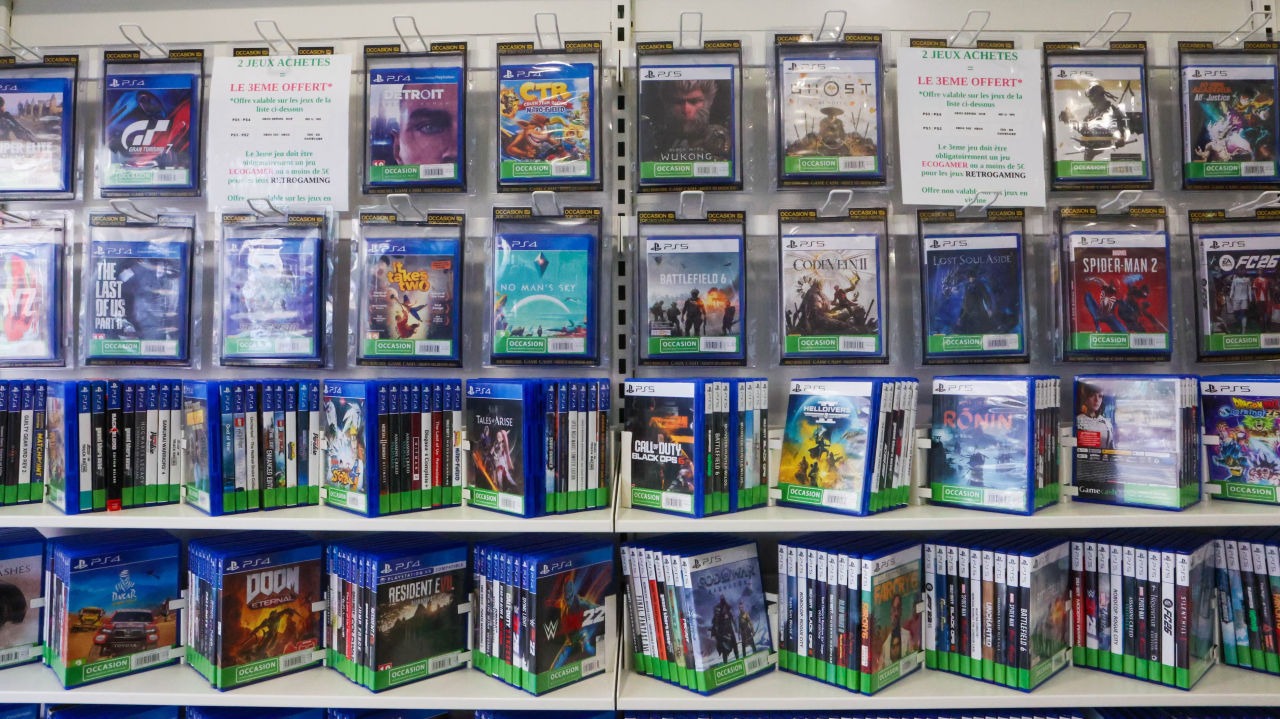
In a video posted on his YouTube channel, Faliszek openly argued that there is no “conspiracy” to harm gamers and that theories about strategies designed to minimize the impact of physical media on platform sales are simply user inventions. “You, the consumers, have made a decision, and your decision has been to go digital,” he stated. The writer maintains that many gamers are now demanding alternatives to preserve physical media, but points out that the games they are defending have been sitting on store shelves for years and that they simply did not buy them because they chose digital versions instead.
To support his argument, the former Valve employee referred to market figures. Faliszek once again cited the frequently repeated but already debunked claim that “85 percent of sales are digital,” a percentage used by many analysts and even by Sony in its financial report to justify the definitive shift toward digital distribution. “Some people think that, in some way, they’re benefiting from it. No, they’re just responding to your purchases. They had an established system, and you said, ‘No, we don’t like it. We like to buy digitally. We want it immediately. We want to be able to download it immediately and play it,’” he added.
He also argued that even standard software sales figures underestimate the true weight of digital distribution because they do not include platforms such as Steam and, in many cases, fail to account for other ecosystems such as the mobile market. He cited Xbox as an example, which has been committed to digital distribution for years with Game Pass leading the way. “Game Pass is digital consumption. You, as consumers, have forced large corporations to stop selling in physical format. Now Sony has to create a digital sales system that will last 10 or 15 years, and it’s doing so because it’s paying attention to trends. Trends that point to digital because that’s where the consumer is headed,” he said.
From Faliszek’s perspective, consumer behavior has been far more decisive than any single business decision made by Sony, Xbox, Nintendo, or another company. Although he focused primarily on the responsibility of gamers, the former Valve employee also expressed understanding toward those who did not personally contribute to this transformation, even if he believes the vast majority of consumers did.
Faliszek Says Players Should Have Protested Earlier
The writer recalled Kurt Vonnegut’s novel Player Piano, which portrays a society that voluntarily surrendered control to machines because they were more efficient, until automation ultimately displaced human workers. Faliszek believes something similar has happened to physical video games: companies are not eliminating discs entirely on their own initiative, but are instead responding to a format that players have weakened for years by purchasing digital games, subscribing to services such as Game Pass, and abandoning physical stores.
“You should have protested when you had the chance, but you didn’t. You should have stopped buying digitally, stopped using Game Pass, but you didn’t because it’s easy. But I don’t blame you. And, speaking of Player Piano, back in the 1950s there were people who had the same fear as you, of social and intellectual change in favor of what’s easy. It’s like an irony where we’re debating with our past selves. And again, I don’t blame you. I buy digitally, it’s what I prefer, but I understand that there are people who don’t want to,” he said.
These statements come at a particularly delicate time, with an active boycott against Sony, considerable doubt over whether the company will ultimately implement its decision despite player demands, and major uncertainty surrounding the future of physical media. Chet Faliszek concluded with the following message: “There are other things we could be spending our energy on to defend our rights. I wish we had the same initiative with those issues as we have with what we created.”
Source: 3DJuegos




![[TGA 2025] Diablo IV: Lord of Hatred: A Character Class Returns! [VIDEO]](https://thegeek.games/wp-content/uploads/2025/12/theGeek-diablo-4-expansion-2-lord-of-hatred-paladin-skovos-horadric-cube-302x180.jpg)