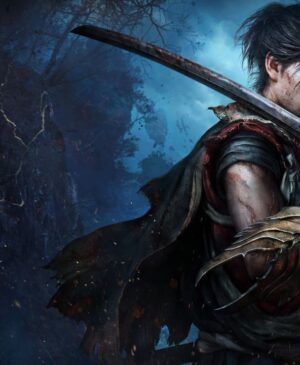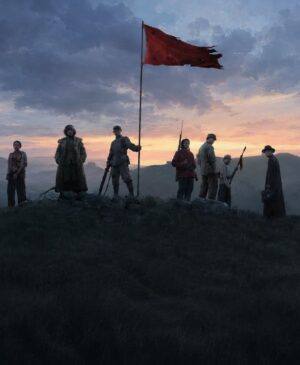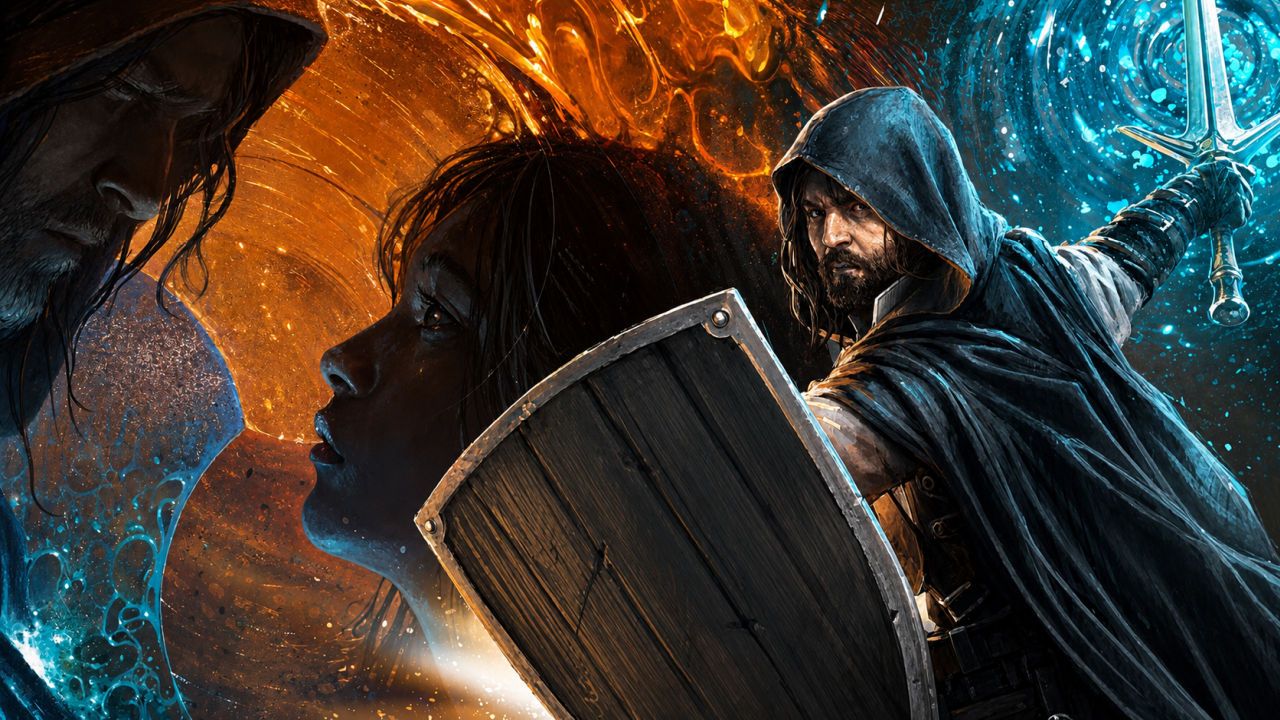
REVIEW – The Relic: First Guardian set out to resurrect a dead world, but mostly succeeds in draining the life from the player. Project Cloud Games’ dark fantasy action RPG arrives with more than eighty bosses, flashy combat and a console launch currently exclusive to PS5, while quality apparently remains trapped somewhere behind its thirty-second loading screens.
Every so often, a game arrives that instantly transforms everything previously dismissed as mediocre into a beloved classic. The Relic: First Guardian provides precisely that public service: by the time we escape the fog-covered ruins of Arsilthus, even a badly designed Ubisoft side quest feels like an old friend waiting with open arms. Games that merely recognize every controller input now appear to be engineering miracles.
The original May release was delayed to give the developers more time for polishing. That polish presumably fell into the same Void that swallowed the kingdom, because the finished version welcomes paying customers with unstable performance, sluggish loading, incorrect button prompts, an unruly camera and controls that occasionally stop functioning altogether. The problem is no longer a few rough edges, but the growing suspicion that nobody ever located the workshop.
It is particularly thoughtful that, alongside the PC release, PS5 owners are currently the only console audience able to enjoy this privilege. Here you go, PlayStation console-launch exclusive: Sony’s expensive SSD can now display thirty-second loading screens while a $49.99 product demonstrates that the next generation is not legally required to move forward.
The Great Relic Broke, but the Story Was Already Cracked
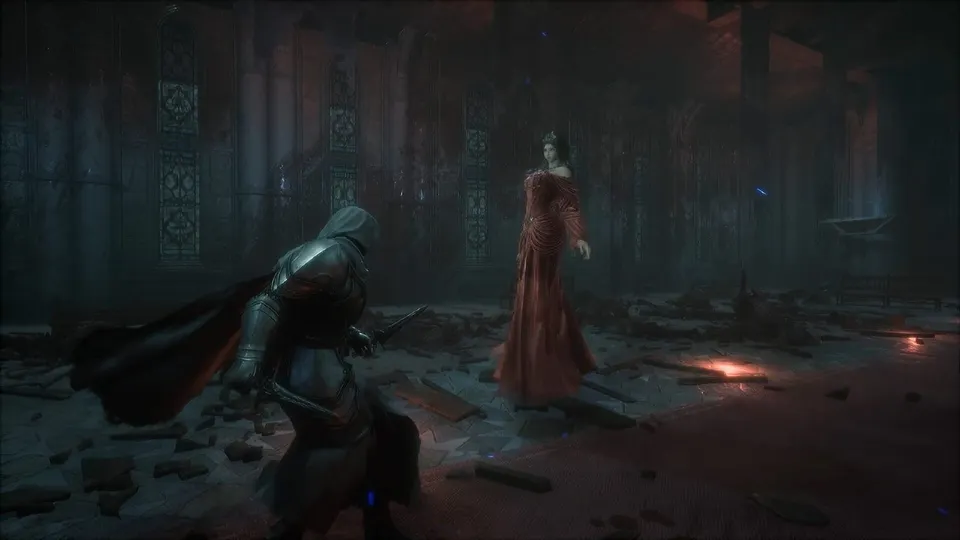
The kingdom of Arsilthus was protected by a Great Relic, the Relic shattered, the Void opened, darkness consumed the land, and we play the last Guardian tasked with collecting the fragments and saving the world. The premise has arrived so freshly from the dark fantasy assembly line that its production number and optional tragic-backstory sticker are still attached. There is a fallen kingdom, a silent hero, mist, monsters, cursed warriors and enough sorrowful lore to suggest that even the local bread was bent by unresolved family trauma.
A familiar setup would not be fatal on its own. Video game history is full of simple plots elevated by memorable characters, convincing dialogue, imaginative places or exceptionally strong gameplay. The Relic offers only the vague outline of an interesting setting, while the rest of its narrative repeats the first page of the dark fantasy dictionary as though page two were being reserved for paid DLC.
Voices begin speaking apparently at random while we explore, never asking whether we want another mournful monologue and offering no option to skip it. The people of Arsilthus have suffered greatly, although at least they were not forced to listen to their own dialogue. We are less fortunate, and the game occasionally places its storytelling directly above the player’s right to control the character.
While someone is speaking, the program can ignore player input completely, even during combat. An enemy is therefore free to move behind us and prepare a sword strike large enough to require planning permission. This is no longer badly timed narration, but an interactive audiobook whose cover repeatedly beats the reader to death.
At those moments, we are not merely hearing an uninteresting story; we are listening to the narration of our own demise. The NPC finishes the sentence, the monster finishes the protagonist, and the game sends us back to a loading screen so we can consider which production meeting produced the suggestion: “What if dialogue simply switched the game off?”
Soulslike in the Window, Button Masher in the Warehouse
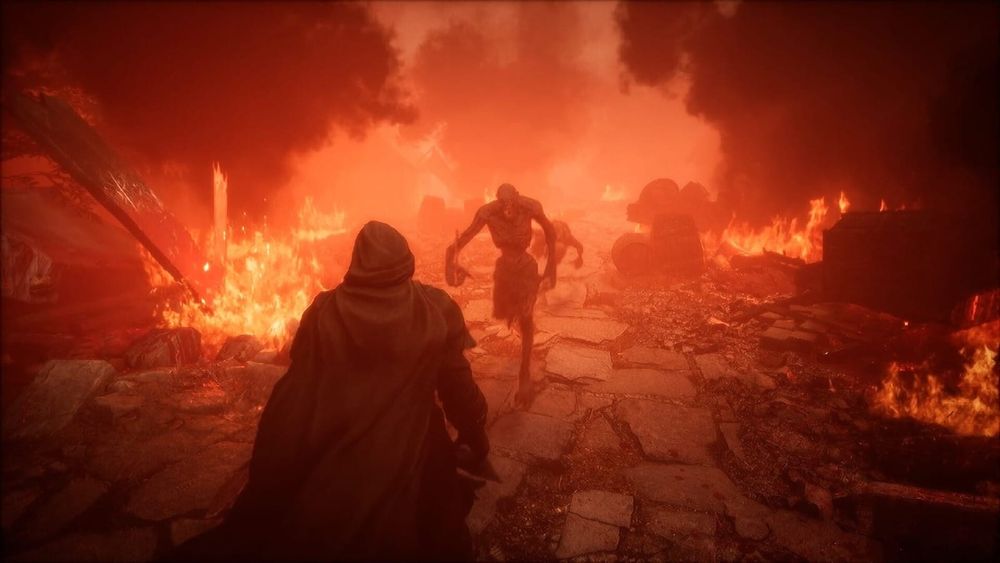
Its appearance, marketing and industrial quantities of fog make The Relic easy to mistake for a Soulslike. It has a stamina bar, enormous weapons, a grim world, bosses and enemies capable of returning us to the latest checkpoint with two well-placed blows. In practice, however, it is closer to a confused hack and slash wearing the genre’s cloak without understanding why the game underneath it was supposed to work.
Stamina limits only sprinting and dodging, while attacks cost nothing. Death does not remove currency, there is no corpse run, and the sword can be swung continuously until either the player’s finger or the controller resigns. This could still support a fast and aggressive action game, but that would require precise controls, a dependable camera and readable enemy attacks. The Relic borrows excitement from the genre label and then discovers it cannot pay the interest.
Dodge is a long forward dash rather than a roll, frequently launching the Guardian beyond the enemy. On other occasions it carries us directly into the nearest abyss, because the safest way to avoid an attack is apparently to leave the battlefield altogether. Our hero can therefore abandon both the opponent and solid ground with one elegant movement.
Dodge is assigned to the X button, and the control layout cannot be freely remapped. This could eventually be learned, despite years of action games teaching players different instincts, but the program completes the arrangement with incorrect on-screen instructions. Certain abilities are described as requiring L2 and a face button when the actual command uses L1. This is not difficulty, mysterious design or a test of skill; it is a distress signal abandoned by quality assurance.
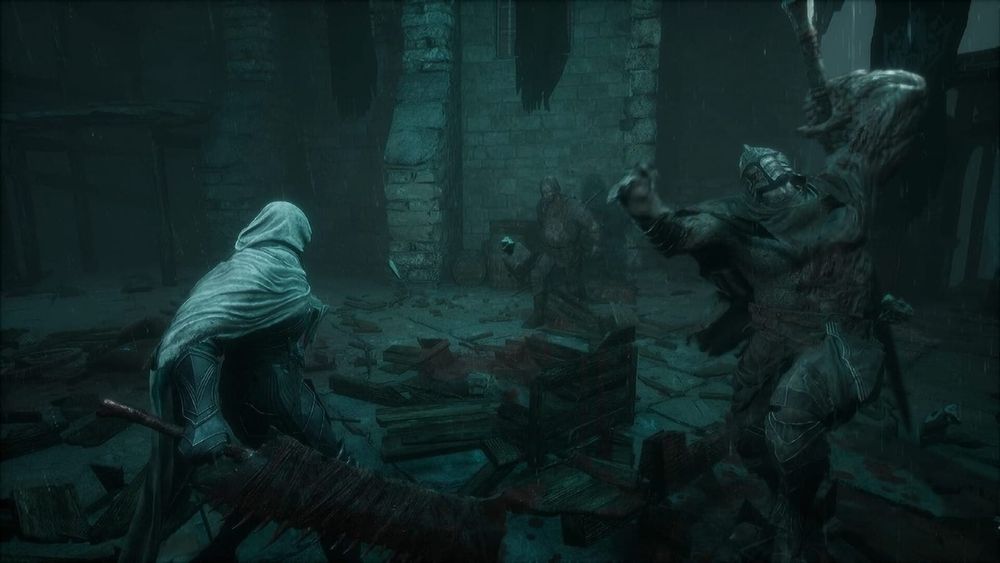
The camera regularly positions itself as though the boss secretly hired it as an additional enemy. It wedges against walls, hides incoming attacks behind absurd angles and covers the display with so many particles, flashes and clouds that combat starts resembling the interpretation of a hostile weather radar. When several enemies attack together, the spectacle does not become intense but illegible, and players take damage not because they reacted poorly, but because they could not see what required a reaction.
Enemies can lock the Guardian into long stun chains, while our own attacks frequently lack convincing weight or feedback. Opponents also possess a stagger gauge, which suggests a critical strike, execution or at least some meaningful event when depleted. Usually nothing happens, as though the mechanic submitted the correct paperwork but the supervising boss has not yet approved the application.
Every Road in Arsilthus Leads to the Cashier
Traditional character levels and experience points have been removed, which is one of the game’s more interesting ideas on paper. Gold is invested in skill trees tied to five weapon categories, while Relics obtained from bosses provide passive effects, ability modifications and different build combinations. Occasionally, two or three Relics interact in a genuinely useful way, briefly raising the suspicion that a functioning video game may be forming underneath everything else.
The weapon classes theoretically support different rhythms and approaches, allowing players to find a style that suits them. In practice, unreliable feedback and the camera frequently matter more than the qualities of the selected weapon. The progression system attempts to suggest depth, but the foundations of combat repeatedly drag it back into shallower water.
The economy drowns even faster in one-dimensional rewards. Ordinary enemies drop gold, treasure chests mostly contain gold, side paths lead to gold, and the entire kingdom resembles a cursed bank branch staffed by armored monsters. Weapons and armor do appear occasionally, but their rarity only makes the repetition of every other reward more obvious.
Why leave the main path? Gold. Why open the chest? Gold. Why fight the enemy? More gold, which eventually has almost no meaningful purpose. Exploration is rewarded not with curiosity, distinctive equipment or memorable discoveries, but with the next industrial shipment of the same currency.
A particularly fine merchant accepts six hundred gold repeatedly in exchange for what appears to be a permanent health increase. The game is less enthusiastic about explaining that the bonus is granted only once, allowing players to feed the man a small fortune for no effect. At least the merchant has perfected his build: one hundred percent resistance to consumer protection.
Once the skill tree for a preferred weapon has been purchased, much of the currency becomes meaningless. Relic combinations and the parade of bosses remain, but the former lacks sufficient depth and the latter lacks sufficient variety to conceal the economic emptiness for very long. Gold continues to pour in while motivation disappears as though every opened chest removes a little more of it.
Eighty Bosses, at Least Seventy-Nine of Them Sad
The advertising promises up to eighty bosses, each carrying a tragic personal story. That initially sounds generous, but quantity serves the same purpose as it does at a cheap buffet: there is plenty on display, yet by the third plate everything tastes suspiciously similar. Eighty looks impressive at the end of a trailer, but the number of bosses and the number of memorable encounters are not the same statistic.
A few feature acceptable designs and attack patterns, but most lack enough mechanical or visual identity. Eventually, the important question is no longer which curse, famine, betrayal, doomed romance or disastrous mortgage transformed the next unfortunate soul, but when the speech will end and when the next Relic will be handed over.
The supposedly tragic stories rarely connect strongly enough to the fights to make us care about the opponents. The game explains that the next twisted creature was once a great warrior, loving sibling or loyal protector, then hides half of its attacks behind a misbehaving camera. Drama repeatedly collapses into technical farce, which was presumably not the narrative team’s original intention.
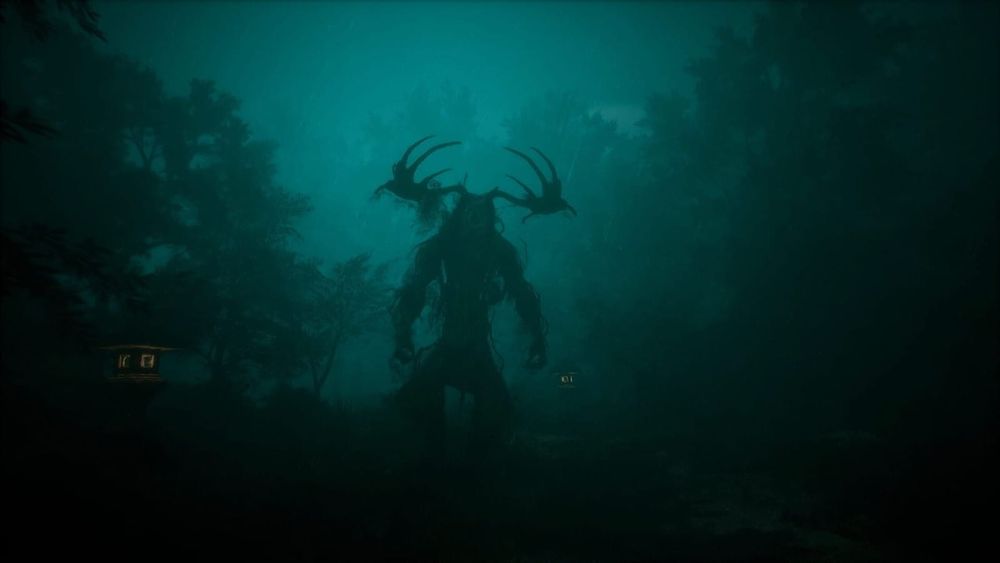
The world is covered in dense fog, presented as atmosphere but functioning more convincingly as a technical curtain. What eventually emerges from the mist is frequently blurry, late-loading and visibly recycled, with familiar environmental pieces, enemies and shades of grey ruin migrating from one region to the next. Arsilthus may be large, but somebody forgot to fill that space with enough different things.
The visuals occasionally reveal traces of the Korean folklore-inspired direction that made the early footage interesting. A piece of armor, shrine or distant building can hint at a far more distinctive world, but these moments quickly disappear behind soft image quality, texture pop-in and layers of post-processing. It resembles a beautiful painting displayed behind a fog machine, dirty glass and a defective projector, followed by somebody complimenting the atmospheric lighting.
The audio is similarly undisciplined. Some areas contain no music, ambience or detectable atmosphere, while other effects suddenly scream at a volume suggesting a personal grievance against the television speakers. Tiny text and erratic paragraph spacing complete an interface resembling a badly typeset instruction manual distributed during the apocalypse.
The PS5 SSD Would Like to Apologize
Technical performance is where The Relic: First Guardian stops being merely poor and begins conducting experimental research into human patience. The frame rate stutters regularly, inputs occasionally fail to register, and there are no separate performance or quality modes, only one configuration that underachieves consistently in both areas. Sometimes the game struggles when almost nothing is happening, then behaves during crowded battles as though every individual particle effect requires approval from a separate committee.
Loading times exceeding thirty seconds are especially embarrassing on PlayStation 5. The console’s SSD was one of the defining marketing points of the generation, yet here it displays suspiciously synthetic-looking artwork long enough for players to reconsider major life decisions, including the decision to purchase the game. By the time the next area appears, the Guardian’s lost past matters less than our own lost time.
It is reasonable to note that this is the debut title of a very small studio and should not be judged against a production involving several hundred AAA developers. It does not need to be. Functional controls, correct prompts, acceptable performance and the modest expectation that dialogue will not confiscate the controller are not AAA luxuries; they are the admission requirements for commercial release.
The publisher nevertheless asks $49.99 for the package. This is not an inexpensive experiment, an Early Access build or an openly presented technical prototype, but a full-priced product that feels unfinished across nearly every important layer. Of all its tragic bosses, the player’s wallet ultimately receives the most carefully developed backstory.
It is hardly a glorious showcase for PlayStation either. This is not an internally developed Sony title and it launched on PC as well, but its current PS5 console exclusivity means this is presently the only console where players can experience the holy trinity of incorrect prompts, lengthy loading and stuttering fog. Here is your exclusive title: this is what it can do, and owners of other consoles are temporarily spared the expense of discovering it for themselves.
The Relic system and level-free progression contain workable ideas, but they are buried beneath the controls, camera, repetitive rewards, recycled environments and technical state. The Relic: First Guardian is not one of 2026’s worst games because of one spectacular catastrophe; it earns that position by finding the less functional option in almost every smaller decision. When the camera behaves, the controls fail; when the controls work, a voice begins speaking and removes them; when everything finally becomes quiet, the atmosphere disappears with the sound.
Several months of updates may eventually turn it into an acceptable action RPG, but the reviewed version is not a diamond waiting to be polished. It is a cracked piece of glass discovered in the fog, sold as a Relic for fifty dollars, followed by thirty seconds of loading the receipt.
-Gergely Herpai „BadSector”-
Developer: Project Cloud Games
Publisher: Perp Games
Genre: third-person fantasy action RPG, hack and slash
Release: July 31, 2026 (PC, PlayStation 5; Xbox Series X|S and Nintendo Switch 2 later)
Pro:
+ Relics can occasionally produce a few useful build combinations.
+ Abandoning traditional character levels is interesting in theory.
+ It teaches players to appreciate every other game released in 2026.
Contra:
– Disastrous performance, lengthy loading and unreliable controls.
– Terrible camera work, incorrect prompts and unreadable battles.
– Repetitive environments, a pointless economy and an absurd asking price.
The Relic: First Guardian
Gameplay - 3.2
Graphics - 3.4
Story - 2.7
Music/audio - 2.9
Ambience - 3.1
3.1
BAD
The Relic: First Guardian buries a handful of interesting progression ideas beneath imprecise controls, a hostile camera, repetitive content and nearly constant technical struggles. Lengthy loading, incorrect instructions, inconsistent audio and the fifty-dollar price make it one of the hardest games of 2026 to recommend. As a PS5 console-launch exclusive, it proves at least one thing conclusively: exclusivity alone is no guarantee of quality.