
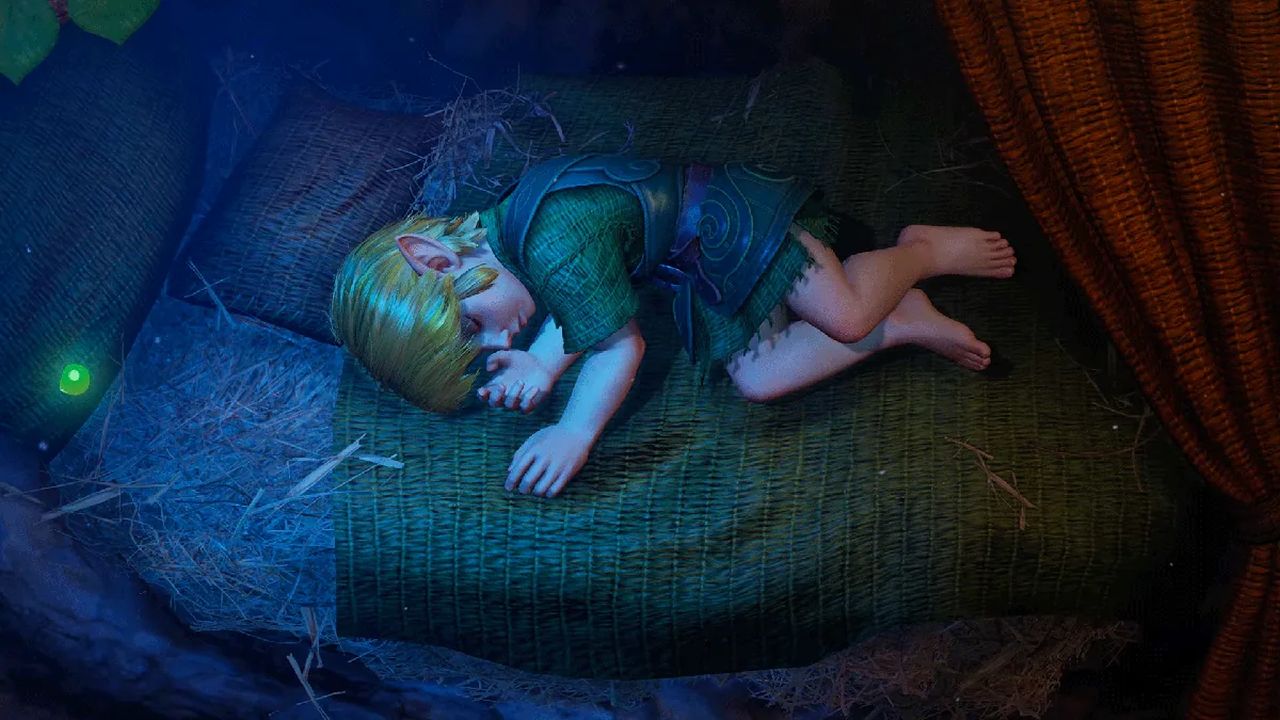
The The Legend of Zelda: Ocarina of Time remake launches for Nintendo Switch 2 on November 5, but its first substantial showing has already sparked a heated debate over Nintendo’s new visual direction. While many fans are excited to see the 1998 classic rebuilt with modern technology, others argue that the more realistic presentation strips away some of the original game’s personality and makes the remake resemble an Unreal Engine 5 fan project.
Nintendo recently confirmed the November 5 release date for The Legend of Zelda: Ocarina of Time on Nintendo Switch 2, but discussion quickly moved beyond the launch date and toward the remake’s new art direction. Despite the technical limitations of the Nintendo 64, the original game established an extremely distinctive visual identity, making any attempt to modernize it an unusually delicate task. The remake features far more detailed environments, more realistic materials, modern lighting and completely rebuilt character models, yet those very improvements are now at the center of the controversy.
Some players believe Nintendo has moved too far away from the stylized presentation that made the original instantly recognizable. One of the most widely shared reactions argues that the rebuilt Hyrule resembles the kind of Unreal Engine demonstration in which a fan tries to recreate a classic Nintendo world with contemporary graphics. The criticism is not simply directed at texture quality or lighting technology, but at the overall visual identity, which some fans describe as generic modern fantasy rather than something unmistakably associated with Nintendo.
Joshua Bailey said this was precisely why he had hoped the remake would not be a completely one-to-one reconstruction. In his view, the largest area in the original game already feels small by 2026 standards, while the remake’s visual treatment reminds him of an Unreal Engine fan project from 10 or 15 years ago. His reaction highlights one of the central questions surrounding the project: simply rebuilding every old element with dramatically more detailed graphics may not automatically make it feel modern. If the scale, structure and fundamental design remain largely unchanged, newer technology can sometimes make the age of those underlying ideas even more obvious.
The character models have attracted even more criticism. Some players feel that Link and the supporting cast now occupy an awkward middle ground between Nintendo’s strongly stylized character designs and more realistic fantasy characters. As a result, certain faces and expressions have been described as uncanny. The Nintendo 64 original and the later 3DS version both used obvious stylization to work within their technical boundaries, while the remake’s additional detail creates very different expectations.
Several fans have also compared the situation to Bluepoint Games’ Demon’s Souls remake. That project was widely praised as a technical showcase for PlayStation 5, yet some longtime fans argued that Bluepoint’s interpretation altered important visual motifs and changed parts of the original atmosphere. The same debate is now emerging around Ocarina of Time: how much can a developer redraw and reinterpret a classic before the new version begins to feel artistically different from the game people remember?
Some reactions have been considerably harsher. The phrase “AI slop” has already been thrown at the remake, with critics arguing that its visual direction resembles the kind of generic image a generative AI system might produce from a prompt asking for “realistic Ocarina of Time.” There is, of course, no evidence that Nintendo used generative AI to create the game’s visuals. The expression is simply being used as an insult by players who believe the remake lacks the distinctive artistic character of the original.
The criticism represents only one side of the argument, however. Plenty of players are impressed by the remake’s presentation and believe Nintendo has found an effective balance between preserving the structure of the original and bringing Hyrule into a modern technical environment. Supporters frequently point to the denser environments, dramatically improved lighting and greater environmental detail as evidence that the remake finally approaches what the original developers may have imagined but simply could not render on Nintendo 64 hardware.
The Nintendo 3DS release The Legend of Zelda: Ocarina of Time 3D has become another common point of comparison. Some fans believe the Switch 2 remake is dramatically more impressive because the changes go well beyond sharper textures and cleaner models, with lighting, vegetation and the overall atmosphere being rebuilt from the ground up. Others disagree and argue that the 3DS version remained much closer to the artistic identity of the original game despite its more limited technology.
The debate carries unusual weight because The Legend of Zelda: Ocarina of Time is not simply another old title receiving a remake. The 1998 original remains one of the most celebrated games in the history of the medium, meaning almost every redesigned character, environment or visual choice can become emotionally charged for longtime fans. Nintendo is rebuilding a game that millions of players remember in extremely specific ways, which makes it nearly impossible to choose an artistic direction that satisfies everyone.
There is still plenty of time before the November 5 launch for Nintendo to show more gameplay and provide a better sense of how the remake looks during extended play, so it would be premature to judge the final result from isolated screenshots and social-media reactions. The rebuilt Hyrule could feel very different in motion, on a proper display and across the full adventure. One thing is already certain, though: the remake has not even launched yet, and nearly three decades later Nintendo has everyone arguing once again about how one of Link’s most famous adventures is supposed to look.
Source: Tech4Gamers













Leave a Reply