
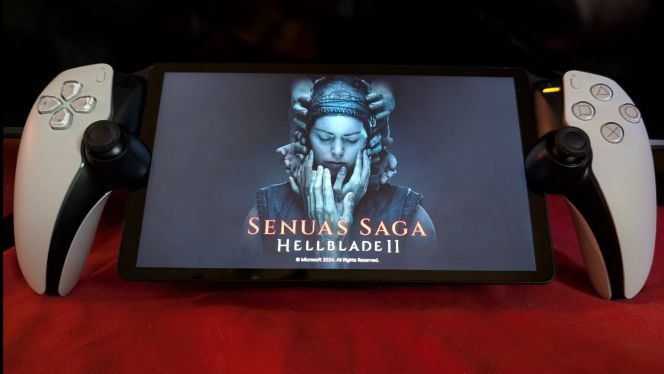
REVIEW – In today’s jungle of video games, it’s a rare gem when a developer dares to strip away all the padding and deliver a truly linear adventure—yet that’s exactly what Senua’s Saga: Hellblade II does. Forget grinding, skill trees as long as a Viking saga, or endless side quests: it’s just Senua, her demons, and the looming presence of Norse legend, in a 6-7 hour uncompromising, cinematic journey. The original already proved that Ninja Theory wasn’t afraid of darker themes, but the sequel now approaches Norse mythology with an even more mature, almost artistic touch. What unfolds is a raw, intense, yet surprisingly sensitive tale, delivered with jaw-dropping visuals—now available on PlayStation 5, which is why this review has been updated.
You’d think Senua has already endured every torment a digital heroine possibly could: hallucinations, shattered spirits, wandering through Nordic legends—and an entire horde of Vikings who’d probably retreat to their cupboards at the mere mention of her name. But now, with the PlayStation 5 release, her journey is reborn—this time in another dimension, ablaze with fresh lights and tactile sensations. The DualSense controller’s immersive vibrations and 3D audio push the surreal voyage into new territory, deepening every step into the Norse underworld. Will Sony’s faithful join the legion of Senua fans, or will everything remain as before? One thing’s certain: those stepping onto the abyss with Senua for the first time are in for an experience that even the bravest PS5 adventurers won’t soon forget.
Stunning Visuals and Soundscapes
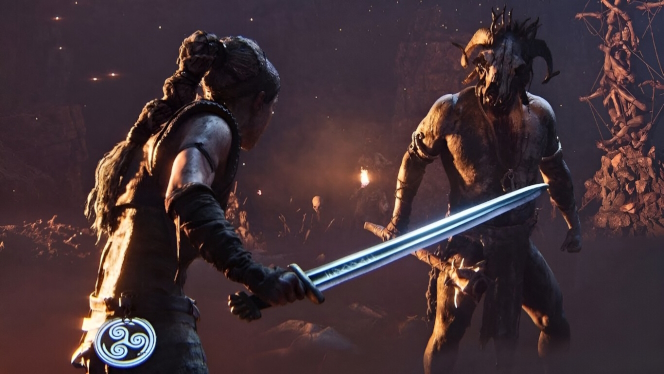
One thing must be said about Hellblade II: the game’s graphics are simply breathtaking, as are its cinematic, hyper-realistic cutscenes. It feels like you’ve been dropped right into the middle of a Viking horror film! Ninja Theory are masters of storytelling, and in Senua’s Saga: Hellblade II, they have taken this skill to new heights with scenes that rival the choreography and direction of Sony’s best studios. Senua’s Saga: Hellblade II is simply one of the most visually impressive games I’ve ever played. The environments and character details showcase how close gaming can get to photorealism in 2024 when talented developers aren’t forced to render vast open worlds.
However, the true triumph is the game’s visual world, which artistically depicts the raw violence, horror, and filth of the Viking world like never before. Compared to Senua’s Saga: Hellblade II, God of War looks like a Marvel film. Here, every location is intensely dark, ominous, and haunting, filled with ruined, decaying villages, brutally massacred villagers, and mystical forests that Senua travels through.
This visual splendor is supported by a unique soundscape. Senua is still accompanied by the two voices, the Furies, whose advice, encouragement, warnings, and rebukes flow into your headphones through binaural audio technology, creating a convincing and sometimes terrifying 3D sound environment. It almost feels like the Furies are speaking to you, not just Senua! Thankfully, due to the character development from the first game, the Furies are now more positive and supportive, a welcome change from their often stressful and cruel demeanor in the first game. They are the signature of the soundtrack, but the rest of the cast also delivers excellent performances, and the background music can thunder epically or create delicate string arrangements, depending on the situation.
A New Level of Storytelling
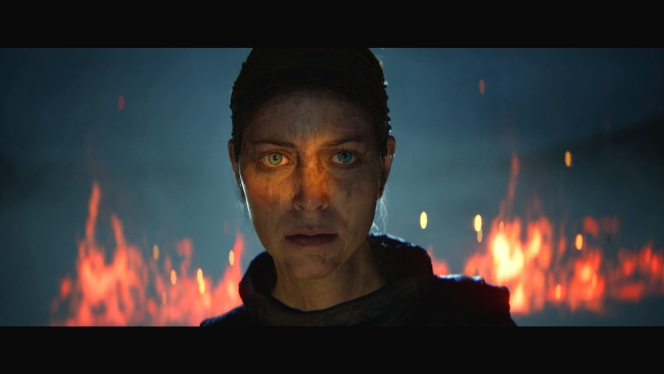
Ninja Theory are masters of storytelling, and in Senua’s Saga: Hellblade II, they have elevated this skill to new heights. This game explores themes of revenge and forgiveness, heritage and environment, and fate versus free will. While Senua’s Sacrifice looked inward, Senua’s Saga looks outward to see if Senua can move forward and use her powers to help those in greatest need. At the start of the game, Senua is on her way to Iceland, seeking revenge on the Vikings who attacked her village in the first game’s prelude. She allowed herself to be captured and enslaved on a ship, only to escape and seek vengeance, to plunge her sword into the heart of the monster who took everything from her. However, what starts as a simple revenge plot soon evolves into a larger societal narrative thanks to the people she meets along the way, who change her perspective and goals.
The big stars of mythology (the gods) take a back seat this time to a more grounded Viking saga, where extraordinary but mortal humans take center stage. This doesn’t mean the supernatural elements are completely gone (more on that later), but the Iceland we encounter in Senua’s Saga: Hellblade II is still very much Middle-earth, with all the associated beliefs and superstitions. It’s a wise choice, making the game feel more realistic and lifelike for the period, compared to the more fantastical treatment of mythology in God of War. Robert Eggers’ film The Northman feels like an obvious reference point, and the two works beautifully complement each other in depicting Iceland during the Viking Age.
Magical Combat
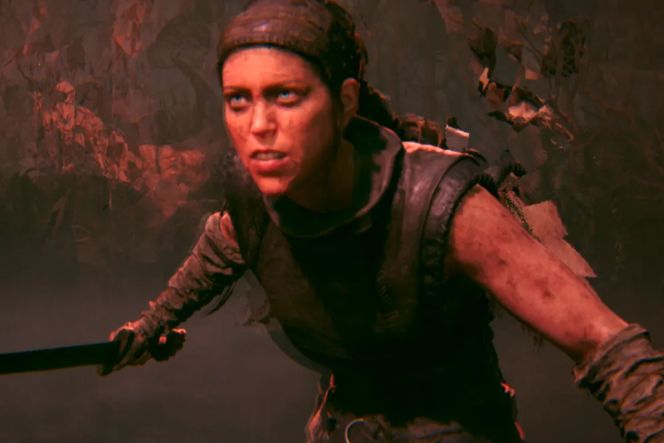
Senua’s renewed mission is no less bloody than the first. In fact, Senua’s Saga: Hellblade II offers some of the most spectacular and well-choreographed combat I’ve ever seen. In closed one-on-one duels, you have classic light and heavy attacks, a block, and a dodge maneuver. Often, you need to open your opponent to attacks by parrying or dodging, giving the fights a rhythmic quality. Most enemies use melee weapons exclusively, but some will throw spears or axes at you, or attack with a torch, requiring you to dodge sideways. Plenty of special animations make the battles cinematic, but they undeniably flirt with quick time event style. And while the Draugr and Vikings you slash through look incredible, they eventually become monotonous.
However, the monotonous combat isn’t as big of a problem because Ninja Theory uses it sparingly. There are long segments where you either follow the story or solve relatively easy puzzles. The latter involves manipulating reality and switching between two dimensions to either identify runes in the landscape or find magical stones for an altar. As you switch from one dimension to another, the landscape changes, making certain things disappear or appear. The goal is to switch at the right time to move forward. It’s not something that will tax your brain, but that’s not the point. Rather, Ninja Theory’s intention seems to be to create just enough friction to keep players engaged with their story.
And it works because it’s not about making every activity fresh or remarkable, but about elevating every element through fantastic presentation. For example, the fight against the giant Ilthauga, where you have to run between stone pillars to avoid waves of fire, is a classic task I don’t usually enjoy. But Ilthauga’s terrifying appearance, the hellish lava flow surrounding the combatants, and the rhythmic pounding of the bass drum, which seems to create waves of flame, make it an excellent sequence.
Visually, however, nothing compares to the battle against another giant, where Senua almost literally throws herself into the eye of a hurricane, dodging tidal waves and falling rocks. It’s simply breathtaking, even overwhelming.
An Unforgettable Journey Through the Viking Underworld
When Senua’s Saga: Hellblade II hits its peaks, it’s impossible not to be fully immersed in Ninja Theory’s dark and stunning vision of the Viking Age. The memorable scenes are practically visual poetry, and in those moments, it doesn’t matter that the game’s mechanical elements can sometimes be simpler and more superficial because this is more of an interactive experience than a traditional game. In the moments when the magic fades, the game can feel mundane and even boring. Fortunately, the magic is present more often than not, making Senua’s Saga: Hellblade II a beautiful testament to the medium’s ability to tell deep and meaningful stories. These experiences touch the eyes, ears, and heart. I sincerely hope many players will discover this unique creation that goes beyond the traditional gaming experience and takes you on an emotional journey through Senua’s bloody and brutal adventure in the land of the Vikings.
-Gergely Herpai (BadSector)-
We received the PS5 review code for the game from Microsoft.
Pro:
+ Impressive sights and sounds
+ A deep, emotional story
+ Excellent fight choreography
Cons:
– Monotonous combat items
– Too linear at times
– Short playing time
Publisher: Microsoft
Developer: Ninja Theory
Style: action-adventure
Release: May 21, 2024.
Senua's Saga: Hellblade II
Gameplay - 7.4
Graphics - 9.5
Story - 8.2
Music/Audio - 9.2
Ambience - 9.2
8.7
EXCELLENT
Senua's Saga: Hellblade II is a visually stunning and emotionally charged sequel that delivers a breathtaking visual and auditory experience. While some combat elements may become repetitive and the game is relatively short, the deep and touching story and exceptional presentation make it well worth playing.





![The System Requirements for Fable Are In! [VIDEO]](https://thegeek.games/wp-content/uploads/2026/08/vnews-05-fable-1280x720-1-302x180.png)

Leave a Reply