
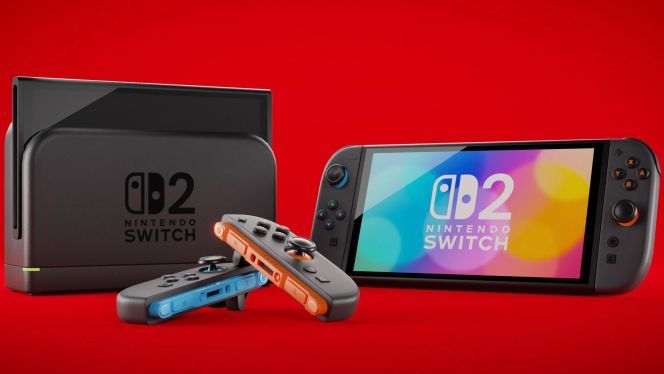
In some ways, it’s closer to the PlayStation 4 with its next-generation hardware, and in others, it’s more on par with the Xbox Series S.
Ever since the Nintendo Switch 2 specs were leaked, fans and experts have wondered whether the new console’s performance is closer to that of the previous generation or the current generation of consoles. In an interview with Virtuos, WCCFTech received perhaps the most in-depth technical explanation yet from Eoin O’Grady, CTO of Black Shamrock (a Virtuos subsidiary), who revealed that games running at 60 FPS on the Xbox Series S will not be difficult to run on the Switch 2.
“The Switch 2’s GPU performance is slightly below that of the Series S, and this difference is more noticeable in handheld mode. However, the Series S does not support technologies like DLSS, which the Switch 2 does. This makes the two consoles’ GPU capabilities comparable overall. CPU-wise, there is a clearer distinction between the two consoles. In this respect, the Switch 2 is closer to the PlayStation 4, having a CPU just a bit more powerful than the PS4’s. Since most well-optimized games tend to be more GPU-bound than CPU-bound, the impact of this difference largely depends on the specific game and its target frame rate. Any game that ships at 60 FPS on the Series S should easily port to the Switch 2. Likewise, a 30 FPS Series S game that’s GPU-bound should also port well. However, games with complex physics, animations, or other CPU-intensive elements may face additional challenges in reaching 30 or 60 FPS and may require extra optimization during the porting process,” O’Grady said.
One of the key performance-boosting tricks of the Nintendo Switch 2 is Nvidia’s DLSS upscaler. WCCFTech asked him why not many games support it yet, and he answered: “For games like Mario Kart World and the upcoming Donkey Kong Banana Kong, which feature stylized, cartoon-like aesthetics, DLSS may not be necessary. Mario Kart, for instance, was in development for many years with the original Switch in mind. These types of games aren’t trying to push graphical fidelity. They have different goals for their artwork and tend to reach 60 FPS without relying on DLSS.
It’s worth noting that Cyberpunk 2077 shipped with DLSS. Compared with the Xbox Series S and PlayStation 4 versions, DLSS evidently offers better upscaling technology, which makes a strong case for developers to implement it. More importantly, other games could benefit from DLSS but don’t currently utilize it, which often comes down to how these titles are ported. It’s not as simple as using the PC DirectX implementation of DLSS on the Nintendo Switch 2. Instead, DLSS must be integrated through Nintendo’s NVN2 graphics API. The extra work required for this may have been deferred by some developers for their initial ports,” O’Grady added.
This is an excellent explanation of how the Nintendo Switch 2 keeps up with Sony and Microsoft hardware.
Source: WCCFTech











Leave a Reply