
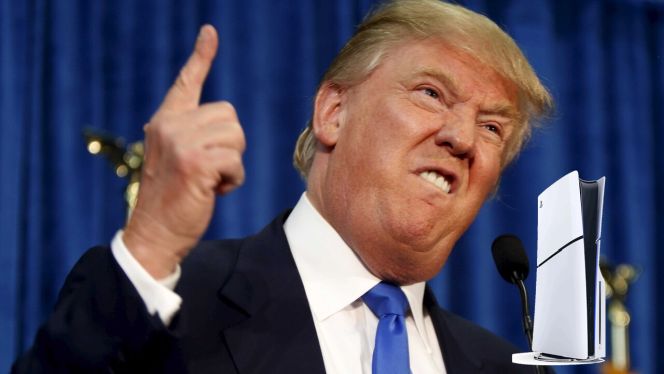
Sony’s recent moves have paid off, potentially avoiding another PS5 price hike. After shifting production out of China and boosting inventory, Trump’s tariffs haven’t hurt the company as much as expected. This strategy could boost profits while protecting gamers’ wallets.
In the video game industry, tariffs can shake up a major company’s financial projections and ripple through the entire production chain—from where consoles are assembled to how much gamers pay at retail. Between factories, logistics, and profit margins, every percentage point matters, forcing quick decision-making. That’s why Donald Trump’s tariffs have pushed Sony to act fast to maintain stable prices and inventory.
How Sony Avoids the Tariff Hit
You may not notice it, but Sony is quietly making decisions to minimize the impact of Trump’s tariffs and protect consumers. The company announced that the effect of U.S. tariffs will be less than expected, raising its annual profit forecast to about $6.6 billion, according to Japanese outlet Asahi.
In the April–June quarter, Sony earned $1.8 billion, a 23% increase year-over-year. Fiscal-year revenue reached $17.7 billion, driven mainly by video games, online services, imaging, and sensors. This growth offset the negative impact of exchange rates and allowed Sony to raise its full-year profit forecast for the fiscal year ending March 2026 from $6.3 billion to $6.6 billion.
Chief financial officer Lin Tao explained that PS5 consoles for the U.S. market are already being produced outside China, with peripherals to follow before September 2025. The Japanese company has also expanded PS5 manufacturing capacity to counter tariff effects. These measures are reducing losses from U.S. tariffs.
While diversifying its PS5 supply chain for greater stability, Sony is confident that its production strategy and inventory capacity will help it weather the tariff storm with fewer losses than expected. This means better availability and less price pressure for U.S. consumers. Nintendo, meanwhile, raised the price of the Switch in the U.S., citing “market conditions.”
Source: 3djuegos














Leave a Reply