
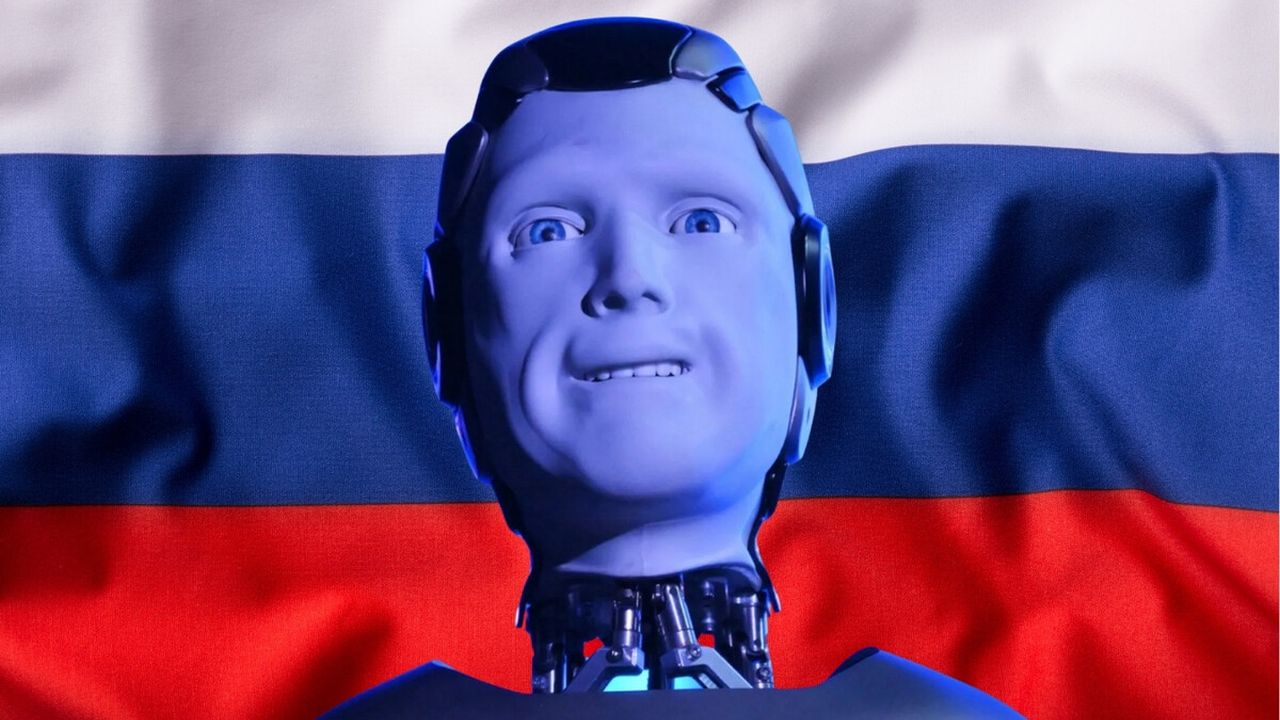
TECH NEWS – Russia hoped to wow the world with Aldol, its first humanoid robot, as proof that it could still compete in high tech despite sanctions, but the big Moscow debut turned into a viral disaster within minutes and went down in history for reasons no one at the launch event had in mind.
In recent years, Russia has tried to jump into the robotics race even as international sanctions and technological isolation weigh heavily on the country. Since the war on the Ukrainian border escalated, many major tech companies have distanced themselves from Moscow, yet the Kremlin pushed ahead and unveiled Aldol, its first humanoid robot, positioned as a rival to projects from companies like Tesla. On paper, Aldol can run for up to six hours on a 48-volt battery, walk at speeds of up to 6 km/h, carry 10 kilos, and even work offline, supposedly guided by artificial intelligence. Shown to the public on November 10 in Moscow, the robot was touted as a humanoid showcase of Russian technological strength – but after just a few shaky steps on stage, it simply collapsed.
Russia unveiled its new humanoid robot, AIdol, in Moscow and it immediately collapsed👏🏼 pic.twitter.com/4ymFUaiYEg
— Saint Javelin (@saintjavelin) November 12, 2025
Russia Has A Lot Of Work Ahead Of It
The presentation was designed as a high-impact spectacle meant to grab global attention. Backed by the iconic Rocky theme, Aldol marched onto the stage, but unlike Xpeng’s humanoid robot it shuffled forward like a frail old man, then ended up face down on the floor, after which two operators had to drag it away. For many observers, the stumble is particularly telling given that Boston Dynamics’ Atlas robot has spent years starring in videos where it jumps, flips and performs gymnastic routines with ease.
Aldol CEO Vladimir Vitukhin tried to put a positive spin on the fiasco, calling the incident “real-time entertainment”. He argued that every failed attempt ultimately turns into experience, stressing that “successful mistakes eventually become knowledge”, because missteps help identify where future versions need improvement. The company blamed the fall on calibration problems and emphasized that the humanoid is still in its testing phase, two talking points used to soften the blow amid a flood of international media coverage mocking the mishap.
Understandably, Russia is not satisfied with this embarrassment, especially since 77% of Aldol’s components are already manufactured domestically, with an even more ambitious target of 93% local production. According to the technical sheet, the robot uses 19 servomotors that let it display more than a dozen basic emotions and hundreds of microexpressions, all wrapped in a silicone skin designed to replicate human facial movement. Even so, if Russia truly wants to become a heavyweight in the technology sector, Aldol’s spectacular fall is a reminder that it still has a very long way to go.
Source: 3djuegos














Leave a Reply