
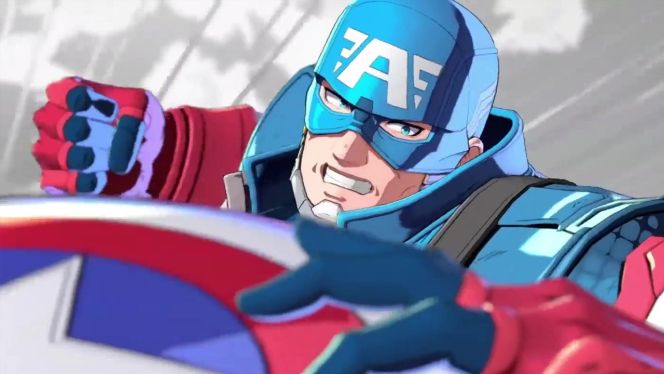
The new project from the creators of Dragon Ball FighterZ, Marvel Tokon: Fighting Souls, may look like a flashy superhero brawler at first glance, but its beta points to a far more layered and high-tempo fighting game. There are still big question marks around overall depth, modes, and content, yet the first impressions are surprisingly encouraging.
Storm calling down lethal lightning, Ms. Marvel unleashing crushing combos, Ghost Rider dragging a hellish car out of nowhere – in most games, these would be rare set pieces, but here they are part of the regular rhythm of every match. Marvel Tokon: Fighting Souls keeps the action relentless and spectacular, while clearly carrying the refined design touch Arc System Works has built up over the years.
The studio behind Guilty Gear is bringing Marvel heroes into a distinctly Japanese-style 2D, four-on-four, team-based fighting game. A modern control scheme with simplified inputs lets players trigger special moves through direction-plus-ability combinations instead of half-circle or more complex motions. That lowers the barrier to entry, but traditional inputs are still there and reward those who use them with stronger, more impactful variations of the same attacks.
This coexistence of modern and classic inputs is one of the system’s smartest hooks. Match tempo and situation dictate when it makes sense to attempt a harder, higher-reward motion and when it is safer to lean on the quicker, simplified commands. On paper, a 4v4 format would demand that players master four full move lists, but the game gradually unlocks the team over the course of a match, so the experience does not collapse into chaos.
Team fights with a different philosophy
Every match starts with just two active characters, and the order you select them defines your opening pair. Additional heroes join as you perform certain actions or even after you lose a round, which turns a weak stretch of play into an opportunity to expand your options instead of a punishment. Health and super resources are shared across the entire squad, so it does not matter if Spider-Man absorbs 99% of the damage and Ms. Marvel takes the last 1% – the round is lost all the same.
As the roster expands, those shared bars also lengthen, giving you more room to maneuver. The four fighters support each other in the expected ways: assists to extend combos, counters, group rushdowns and chained super attacks that can flip momentum. In theory, a highly skilled player could rely on a single main character, but in practice, that means a serious disadvantage if the opponent rotates specialists and leverages the full variety of the team. Even so, the mechanical entry barrier remains lower than the 4v4 structure might suggest at a glance.
Stages that matter as much as the fighters
Another standout element is the stage design, which goes far beyond a simple backdrop. The beta featured three arenas – New York, the Savage Land and the X-Mansion – and each of them treats “wallbreaks” differently. These transitions trigger when you push an opponent to the edge, smash them through a wall, and shift to a new section of the arena, effectively resetting positions and often unlocking new teammates in the process.
Not every stage offers the same number of these transitions: New York has two, the Savage Land has four, while the X-Mansion has none at all. On stages without wallbreaks, a cornered player can stay trapped for longer and continue to take heavy damage. The arenas are also very small, which makes it easy to get pinned down after just a few bad decisions. All of this means that where you fight is nearly as important as which heroes you pick, and smart players will adapt their strategy to the environment.
Beta takeaways and open questions
The most eye-catching additions in this test were two new fighters: Spider-Man and Ghost Rider. Both are agile, but they fill very different roles. Spider-Man excels at zipping around the screen in an instant, while Ghost Rider combines high speed, strong reach and solid damage, making him a powerful and stylish threat. With only eight characters available overall, however, the roster did start to feel repetitive after extended play sessions.
The simplified, modern control scheme naturally raises questions about long-term depth, but the built-in risk–reward balance for more demanding inputs goes some way toward addressing that concern. Each character feels distinct enough that learning to pilot a full squad, rather than memorizing a couple of basic combos, seems genuinely worthwhile, and the unique mechanics for each hero hint at plenty of room for specialization.
One major omission in the beta was the complete lack of a practice mode. For fighting games, training is where players truly explore a system’s limits, set up custom situations and lock in both fundamental and advanced options. Sparring with the CPU or playing online helps, but it cannot fully replace a dedicated lab environment, and that absence makes any early verdict feel incomplete.
There are also lingering doubts about the content. Tag-based fighters rely heavily on a large, varied roster and robust mode selection to keep matches from feeling repetitive over time. With only a small slice of the cast and features visible in the beta, it is impossible to judge how generously the final version will be built out. What is clear already, though, is that in the hands of Arc System Works, Marvel Tokon: Fighting Souls is aiming far beyond a simple fanservice brawler. If the full release delivers on that promise in terms of modes and characters, it could become one of the defining fighting games of the next few years.
Source: 3djuegos









Leave a Reply