
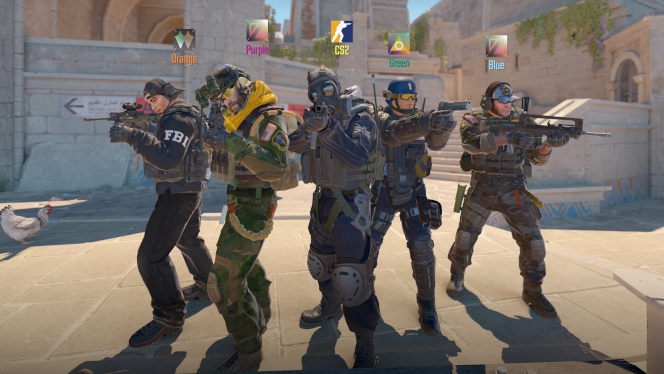
Valve’s latest move might quietly shake up the entire economy of Counter-Strike 2. New Workshop rules introduce fixed-fee deals for community creators, changing how cosmetic items are licensed, distributed, and monetized inside the game. Players and skin designers are now wondering whether this is the beginning of the end for traditional crates or the start of a slow but deep economic overhaul.
All signs point to Valve preparing major changes to the economy of Counter-Strike 2. The company’s most recent decisions suggest a shift in how content creators earn money and how cosmetic items are distributed to players. A new update announced through Steam introduces “optional terms” for Workshop creators, giving them the chance to license their work for a flat payment – 35,000 dollars for weapon finishes and 6,000 dollars for stickers and charms.
In exchange, these community-made items can be distributed freely through the Armory and other parts of the game where Workshop content was previously absent. The change also paves the way for fresh cosmetic ideas. Among the first concepts floated by fans are weapon finishes inspired by Arabic art and mythology, espionage and high-tech themes, and racing-inspired sticker collections. The overarching goal is clear: encourage user creativity with guaranteed payouts, while no longer locking designs exclusively into specific crate collections.
Still, the initiative is making long-time CS players uneasy. Some fear Valve’s long-term plan is to reduce the earnings of top-tier creators who, in extreme cases, have made up to half a million dollars from a single item selected for a case. If fixed fees become the standard, the most successful skins could lose much of their upside. On the other hand, many see the offer as highly attractive for new designers, who can secure immediate income without depending on sales figures, market hype, or the long tail of the trading economy.
Within the community, another theory is gathering momentum: these new rules could be a step toward phasing out classic CS loot crates altogether, triggering a quiet revolution in the game’s internal economy. Some players believe Valve is looking for a way to move away from the lootbox model without a noisy public backlash, replacing it with a more predictable and transparent system for cosmetics. Others argue it is far too early to declare crates dead and that the fixed-licensing system will simply coexist alongside the current structure. What is certain is that Valve’s latest move is a strong signal that the economy of Counter-Strike 2 is not going to stay the same in the years ahead.
Source: GryOnline












Leave a Reply